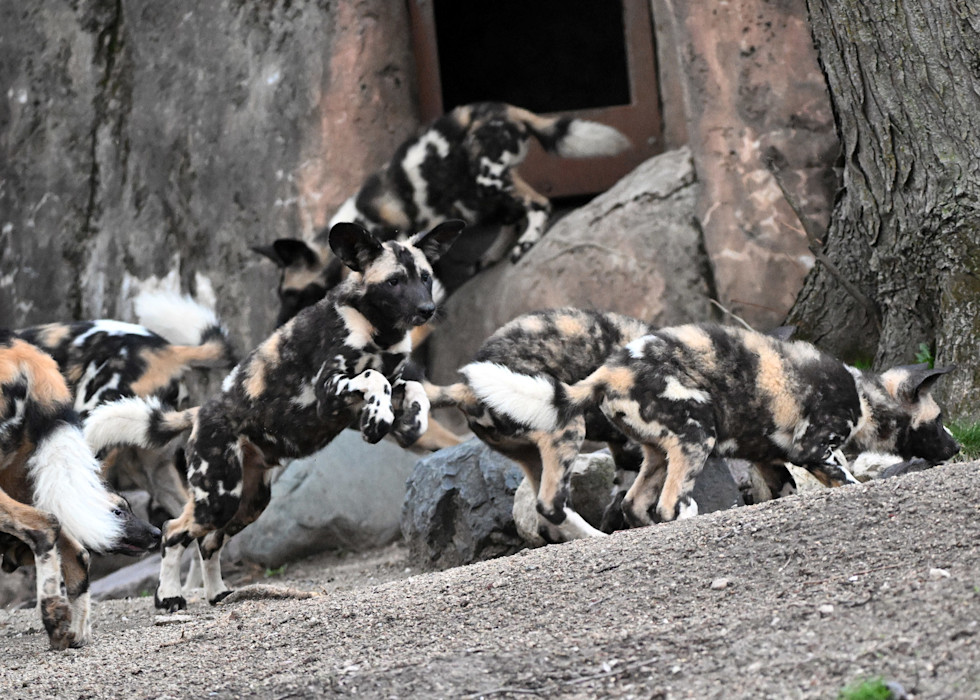
There’s no better way to celebrate spring than with animal babies — and at least ten African painted dog pups are ready to stretch their legs and take to the yard at Brookfield Zoo Chicago!
African painted dogs Roanne and Kellan had a whole litter of puppies in November 2025, and now, they’re headed outside, where you can see them at Habitat Africa! The Savannah. Here’s what you need to know about African painted dog pups as they grow:
1. African painted dogs are born in a den.
African painted dogs are native to savannahs and grasslands in southern Africa, with some small populations in West Africa. When a mother is ready to give birth, she cozies up in a den that’s often underground — and potentially stolen from another animal, like a warthog. A pack typically has one primary breeding pair, so once she’s settled, the other dogs prioritize protecting and caring for her. Litters tend to be large, like Roanne’s, averaging 10 to 12 pups!
The mother and pups stay in the den for around three to four weeks before venturing into the wild.
2. Their coats change colors, eventually becoming unique to each pup.
African painted dogs are born with a dark coat that gradually mottles into a mix of black, brown, gold, and white. Around a month old, their markings start to become more unique, identifying them like fingerprints.
This look, earning them the scientific name Lycaon pictus (painted wolf), sometimes gets them confused with hyenas. But African painted dogs have distinctly more splotchy coats.
3. The whole pack helps care for a litter.
African painted dogs are known for their social bonds and reliance on community. When pups are born, the whole pack pitches in to take care of them. They keep watch for threats, hunt to feed the babies, and eventually, let the pups follow them around to learn how to hunt themselves.
Roanne and Kellan guarded their litter closely, alarm barking to warn the pups to retreat to the den if they saw anything unexpected.
4. The pups eat like birds — with regurgitated food!
The pups can begin eating solid food around four weeks, although they won’t be fully weaned until about eight weeks old. They learn to eat solids with regurgitated food that others in the pack bring back after hunting. So for the first several months at the Zoo, the pups would whine just below Roanne and Kellan’s chins to ask for food.
During this time, the pack hunts closer to home. Once the pups can eat after a kill, the others sit back and let the pups eat first.
5. They typically leave packs in pairs once they grow up.
When it’s time for African painted dogs to leave their packs, they will typically disperse in same-sex cohorts. New packs are formed when these cohorts join together. Some cohorts need to travel long distances before finding another cohort of the opposite sex. Some new packs join together and reproduce the next season, while others split after a "trial period" of a few months.
6. African painted dogs are endangered.
African painted dogs are Africa’s most endangered predator according to the International Union for Conservation of Nature Red List, which means pups face plenty of threats to their survival. Habitat fragmentation, human-wildlife conflict, and disease have significantly reduced their range and wild population — it's estimated there are fewer than 7,000 remaining in the wild.
This litter represents Brookfield Zoo Chicago’s ongoing commitment to protecting threatened wildlife and bolstering populations through the Association of Zoos and Aquariums’ (AZA) SAFE: Saving Animals from Extinction African Painted Dog program. By connecting guests with species like the African painted dog, the Zoo aims to inspire a deeper understanding of wildlife and the role each of us can play in protecting it.
Because African painted dogs’ range has been so decimated, we also support conservation projects in West and South Africa. For example, building protected wildlife corridors can bring together fragmented African painted dog populations. As fast runners and aggressive hunters, painted dogs rely on large territories for hunting and roaming. By boosting on-the-ground conservation efforts to build these corridors, we hope to give African painted dogs back the habitats they need to survive and thrive.
Want to help? Your gift to Brookfield Zoo Chicago’s Wildlife Conservation Fund supports their care and conservation.
Visit the puppies this spring at Habitat Africa! The Savannah to experience them growing and playing together! You can learn more about how our animal care specialist got them ready to go outside with Dr. Mike’s Wild Rounds video series.