Overview
Desert Nomads
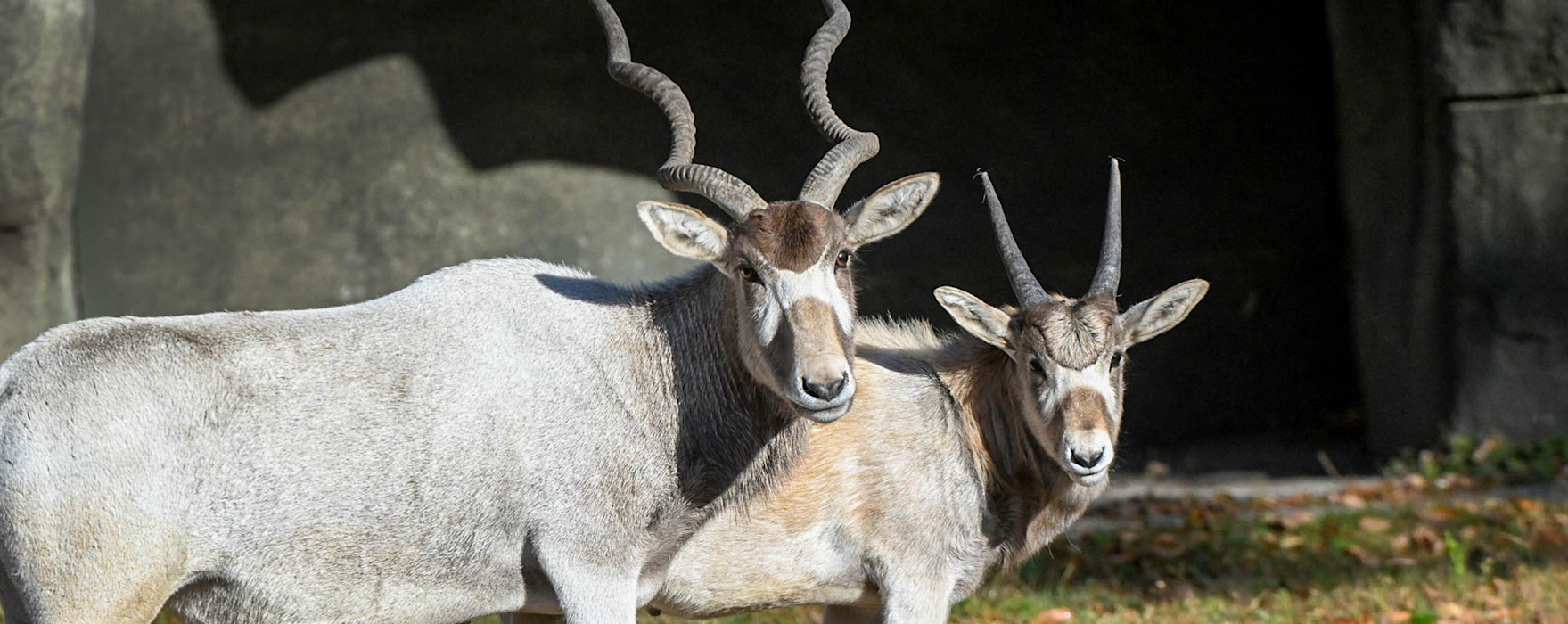
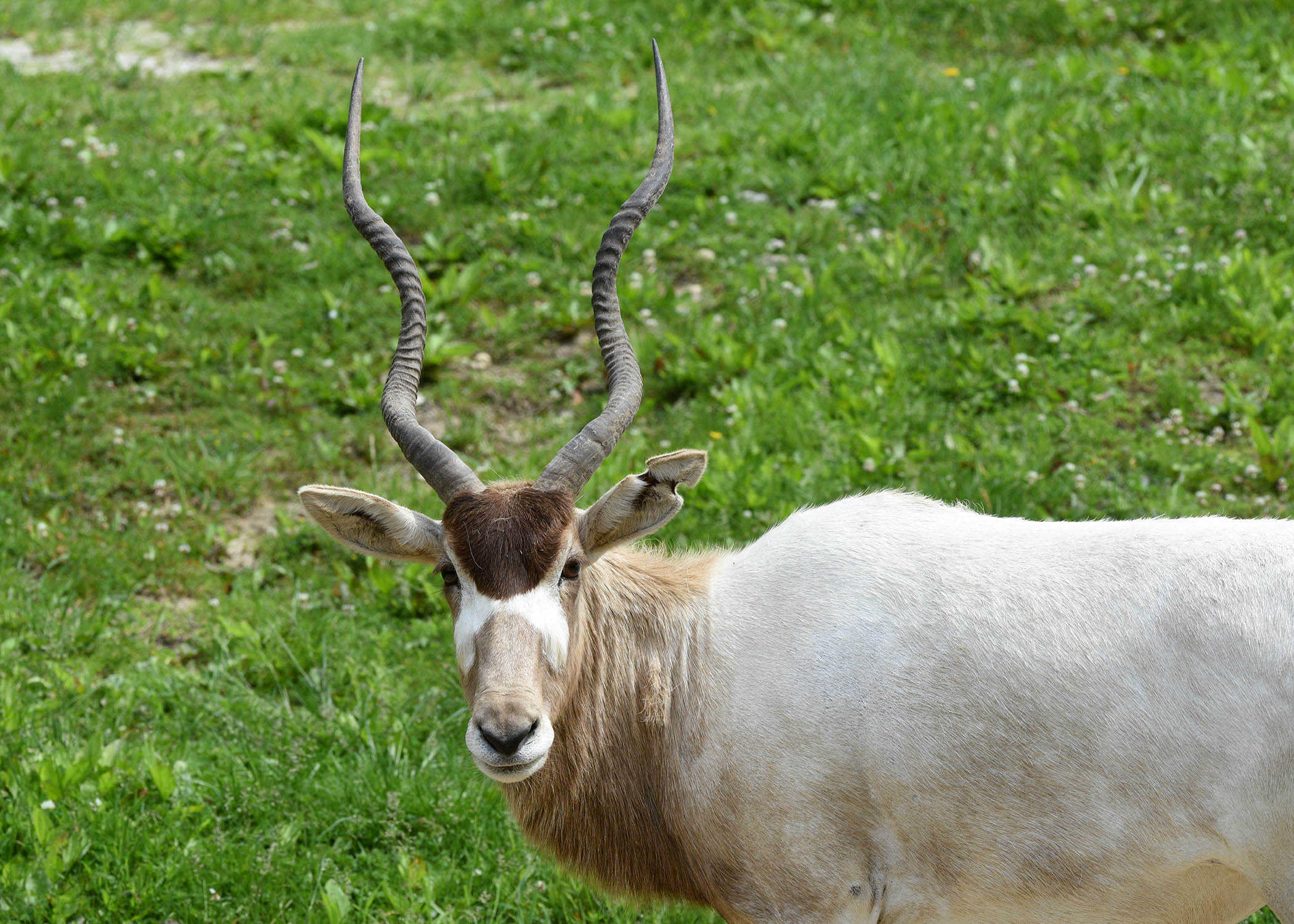
The addax is a critically endangered antelope native to the Sahara Desert and the Sahel region of Africa. It is distinguished by its heavy body, large head, and its impressive spiraling horns. Its diet includes grass and leaves of bushes. The species’ size ranges from 4’6” to 5’6” and 135 to 280 pounds, with males larger than females.
Characteristics
Addax have comparatively heavy bodies and large heads, on which they have impressive spiraling horns. In the summer, they have light-colored coats, but in the winter, they become darker in color. Addax are marked with white on their legs and bellies, but their foreheads are brown. While addax have acute eyesight, they are primarily nocturnal (active at night) in the wild. However, their vision in low light is not very accurate, causing them to rely heavily on their sharp sense of smell and hearing at night.
Behavior
In order to escape the desert heat and sun, addax are mostly active during the night. During the day, they will dig "beds" into the sand, where they rest and take shelter from sandstorms. Addax are nomadic and travel in herds of 5 to 30 individuals. Older animals, especially females, are usually dominant. Addax are not as graceful as their antelope brethren. They move with stiff legs that help them to travel for long periods of time, unlike the short and flighty bursts of other antelopes. They also have large feet, which help them traverse sand.
Diet
Addax acquire the water they need from dew and the sap of the vegetation they eat. They normally graze on grass and leaves of bushes, and travel hundreds of miles to find appropriate vegetation but occasionally consume browse as well.
Threats
Addaxes are listed as "critically endangered" on the IUCN Red List.
The addax has long been extinct in most of North Africa. However, hunting, drought, and agricultural encroachment into deserts have contributed to the addax's decline. Over-hunting is a major cause of decline.
How We're Helping
The addax is part of the Species Survival Plan at Brookfield Zoo Chicago. Learn more this cooperative population management and conservation program here.