Overview
Small but Mighty
The dwarf crocodile, a seldom-seen African crocodile, lives in swamps and still water. They are the smallest crocodile species, reaching about 5 to 6 feet long on average.They are mostly active at night and eat fish, frogs, crustaceans, and small land mammals. During the day, they rests in burrows or shaded water to stay cool. They are listed as “vulnerable” on the IUCN Red List.
Characteristics
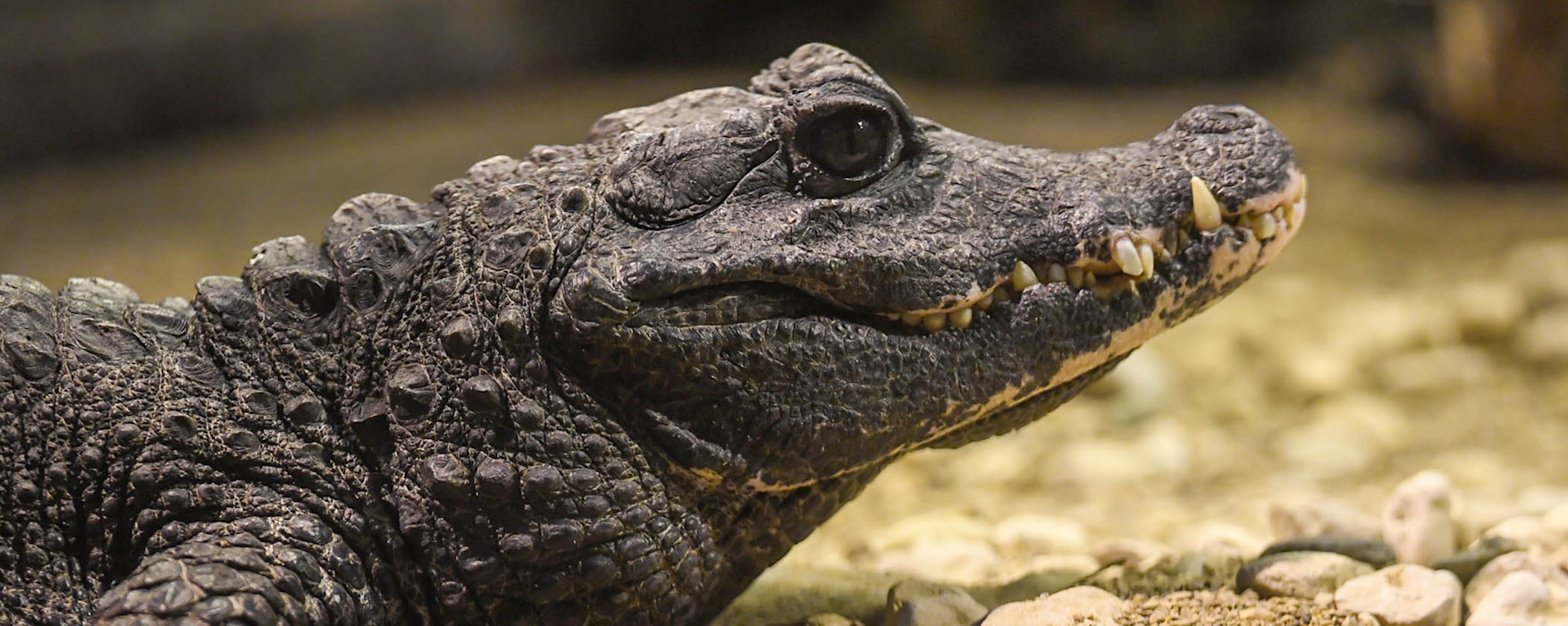
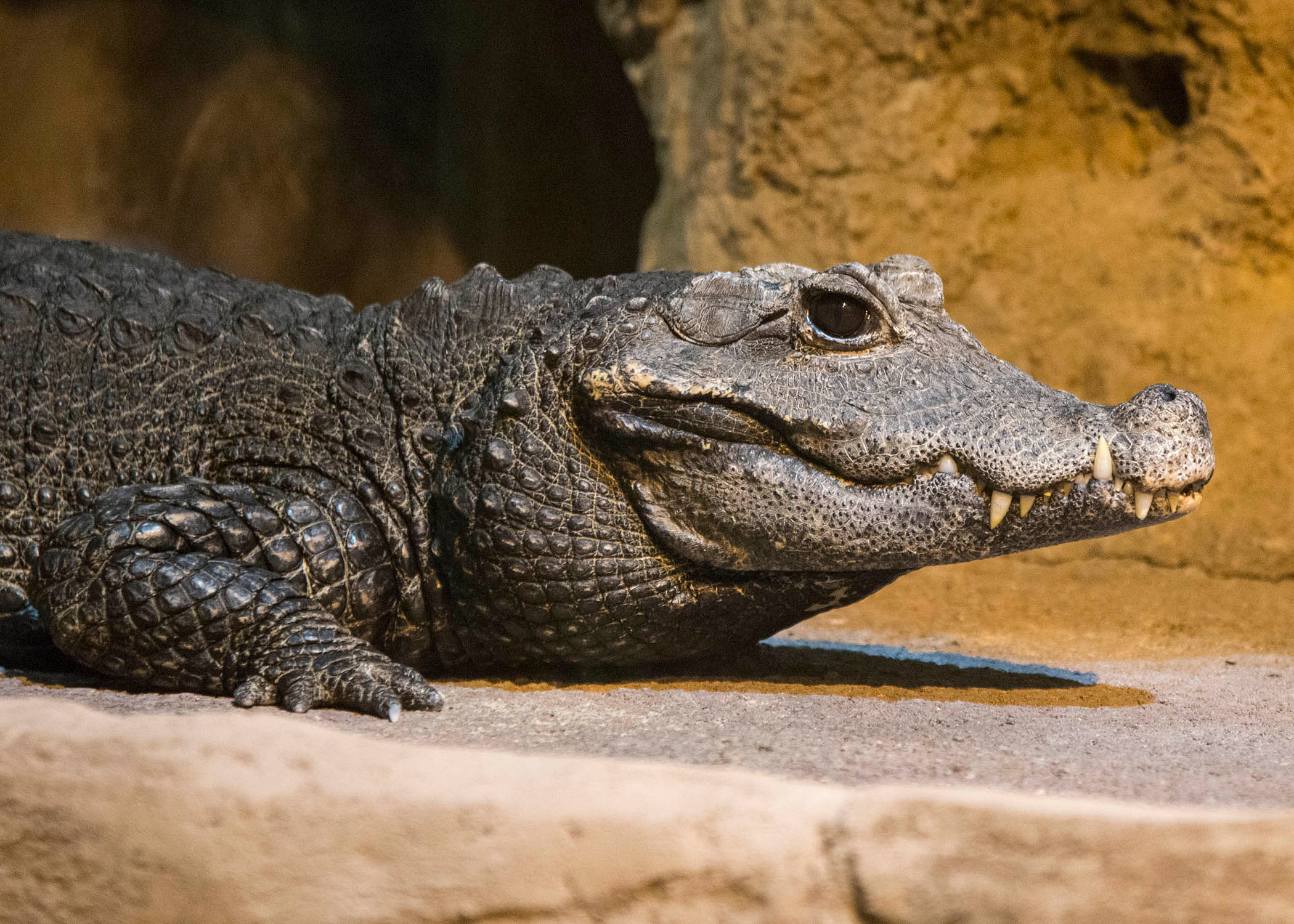
The dwarf crocodile lives in African swamps and prefers still water to moving water. Adult dwarf crocodiles' skin is almost entirely black on the back and sides, with a yellow belly. True to their name, dwarf crocodiles are among the shortest crocodilians. They are usually less than 6 feet long, from snout to tail. Dwarf crocodiles also have relatively short snouts. Their bodies are heavily armored by hard, bony scales to protect it from larger predators.
The eyes of a dwarf crocodile are placed high on its head so that it can see above the water line while stalking prey. They have a transparent membrane that covers the eye so it can still see while under water. They also have ear holes that can close while submerging. When the water is murky, the dwarf crocodile uses vibrations in the water to help with navigation.
Behavior
Dwarf crocodiles are primarily active at night and tend to stay in the water during the day. They are usually solitary creatures, except during the mating season. They are known to dig holes with underwater entrances in the banks of the swamps where they live. They often spend much of the day in the holes and can quickly retreat into them if startled or threatened. They are often timid and do not spend much time basking (lying in the sun or on a heat source).
Female dwarf crocodiles will hiss while protecting their nest. Young crocodiles are much more vocal than their elders, and they make "gnarr" calls. When her young hatch, the mother carries them in her mouth to the water's edge and remains with them for weeks. Young dwarf crocodiles are preyed upon by a variety of birds, fish, mammals, and other reptiles.
Diet
Dwarf crocodiles prey on fish, frogs, and crustaceans. They also may catch small land animals. While foraging, they usually stay close to water for protection against larger predators.
Threats
Dwarf Crocodiles are listed as "vulnerable" on the IUCN Red List. The dwarf crocodiles’ survival in the wild is threatened because their habitat is being destroyed in some areas. They are hunted for their hide and meat, severely reducing their populations in the wild.
How We're Helping
The Brookfield Zoo Chicago Wildlife Conservation Fund supports our animal care and science programs here at the Zoo, and also allows us to invest in and partner with programs dedicated to safeguarding endangered species and their habitats. Learn more about our commitment to conservation.