Overview
The Curious Ground Forager
African red-billed hornbills are small, social birds known for their bright red bills and inquisitive behavior. They’re often seen in pairs or small family groups. These hornbills spend much of their time on the ground searching for insects, seeds, and small animals but roost in trees at night for safety.
Curious and adaptable, red-billed hornbills are a familiar sight across savannas and open woodlands of sub-Saharan Africa.
Characteristics
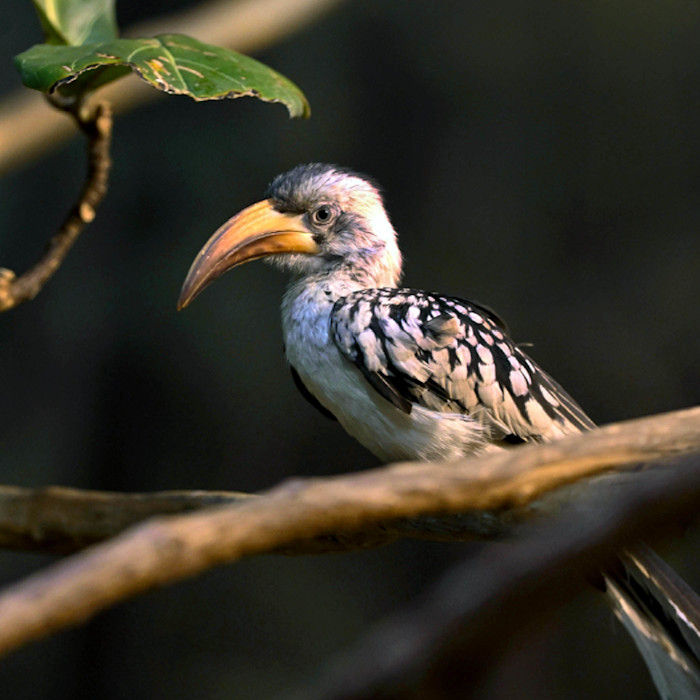
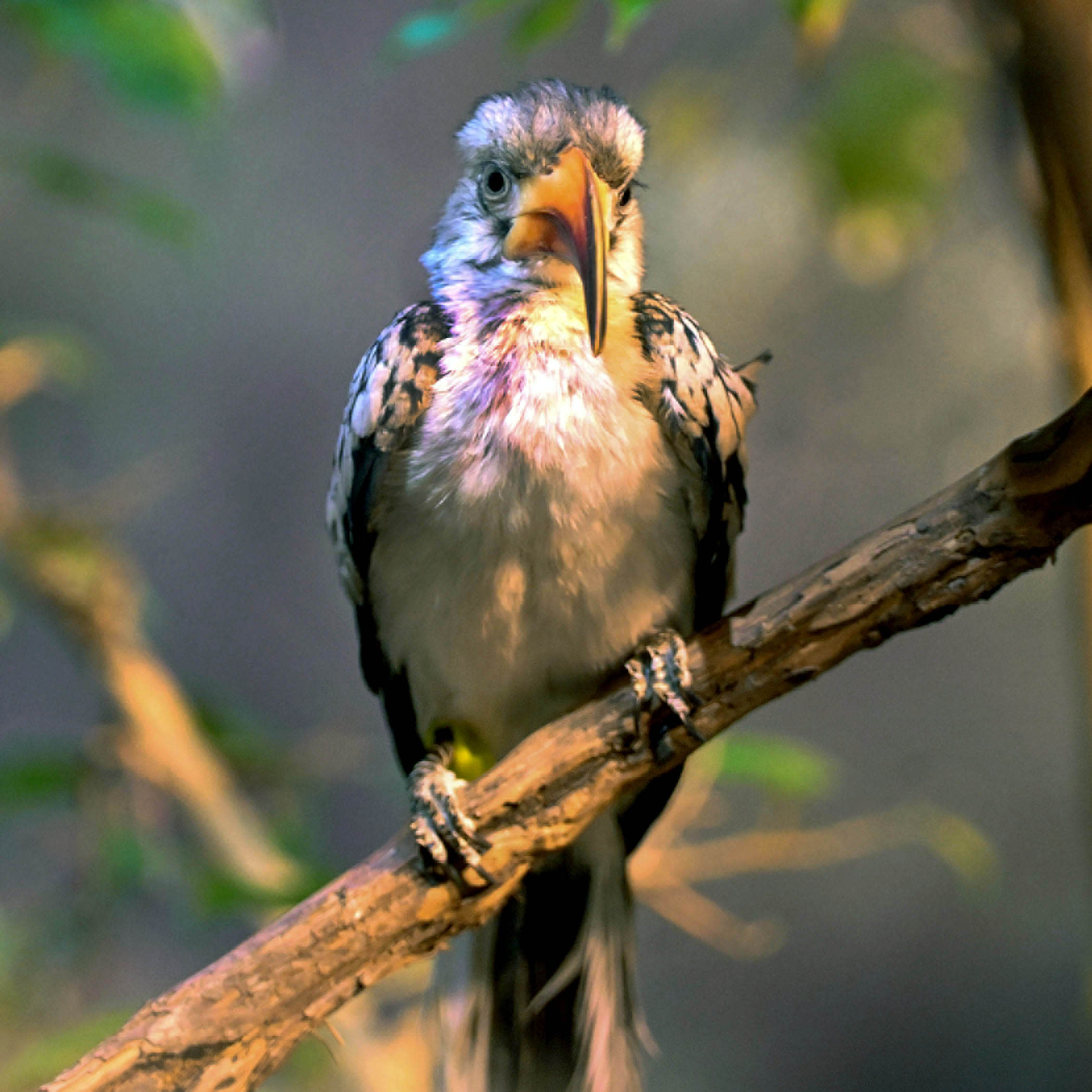
African red-billed hornbills have black and white feathers. Their heads are off-white with a red-orange bill, and pink skin around their eyes. Their wingspan is 12.5 to 15.2 inches. Males are slightly larger than females and have a larger, thicker, and slightly different-colored bill. Baby red-billed hornbills look very similar to adults but have a smaller bill that is plain and brownish-yellow.
Behavior
Red-billed hornbills are social birds usually seen in pairs or small family groups. During the dry season, they spend much of their time on the ground looking for food. They sleep in trees near the trunk, tucking their head between their shoulders and covering their feet with belly feathers. Active during the day, they feed in the morning and again in the late afternoon. Their flight is light and wavy with strong wingbeats, but they can also walk, run, and hop through trees with ease
Curious by nature, they sometimes hang upside down to look under branches. Their call is a series of “kok-kok-kok” sounds that get faster and louder as they bob their heads. For territorial displays, they point their beak down, stand tall, and arch their neck.
When threatened, they face their opponent with raised bills, showing the colored skin on their throat while moving slowly. During fights, they lower their bodies and lock bill tips.
Diet
African red-billed hornbills are omnivores, which means they eat both plants and animals. They eat fruit, greens, insects, and small animals like lizards and rodents. They forage for food using their long, curved beaks.
Threats
African red-billed hornbills are listed as of "least concern" on the IUCN Red List. They are considered to be fairly common in the wild.
How We're Helping
The red-billed hornbill is part of the Species Survival Plan at Brookfield Zoo Chicago. Learn more this cooperative population management and conservation program here.