Overview
Icons of the Great Plains
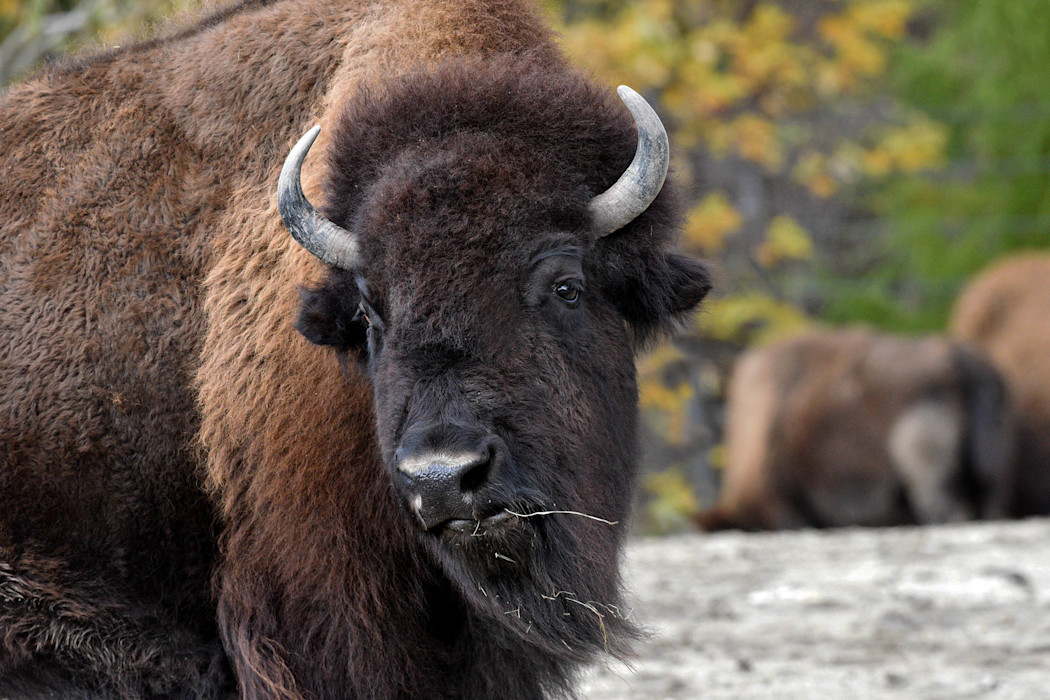
The American bison is a large, powerful animal that once roamed across much of North America. Males can weigh up to 2,000 pounds and reach between nine and twelve feet long, while females reach up to 1,100 pounds and between seven and eight feet in length. Both males and females have horns and a big hump on their shoulders. Their fur is thick and shaggy in the front and shorter in the back. It helps keep them warm in the winter and sheds in the summer.
Bison were almost hunted to extinction, with fewer than 1,000 left at one point. Thanks to conservation efforts, there are now over one million, but most live on private lands. They live in grasslands, plains, and forests, and mostly eat grasses and shrubs. Bison are usually active in the morning and evening and move in herds for safety. Females live in groups with their young, while males live alone or with other males until mating season.
Characteristics
The male bull is larger than the female cow and has a massive head and shoulders. Bison have long, shaggy, coarse hair on their head, shoulders, and front legs. The hair on the back half is significantly shorter, becomes thick in winter, and is shed in spring and summer. Their coloration is shades of reddish-brown to black. Both males and females have permanent, hollow horns that are relatively short and thick at the base. They both also have a distinctive hump that makes raising their head above shoulder level impossible; calves have no hump.
American bison have acute senses of hearing and smell but poor eyesight. They use their senses to detect scents and sounds from very far distances. Because their eyesight is often lacking in strength, they tend to stay together in herds. This increases their chance of escaping predation because there is safety in numbers and a larger number of individuals can look out for predators.
Behavior
Bison herds are maternal (mostly females). Males are usually solitary or in bachelor herds until breeding season. During that time, males fight or show off to win a female’s attention. Bison normally prefer to move in herds of up to 20 and are best described as unpredictable.
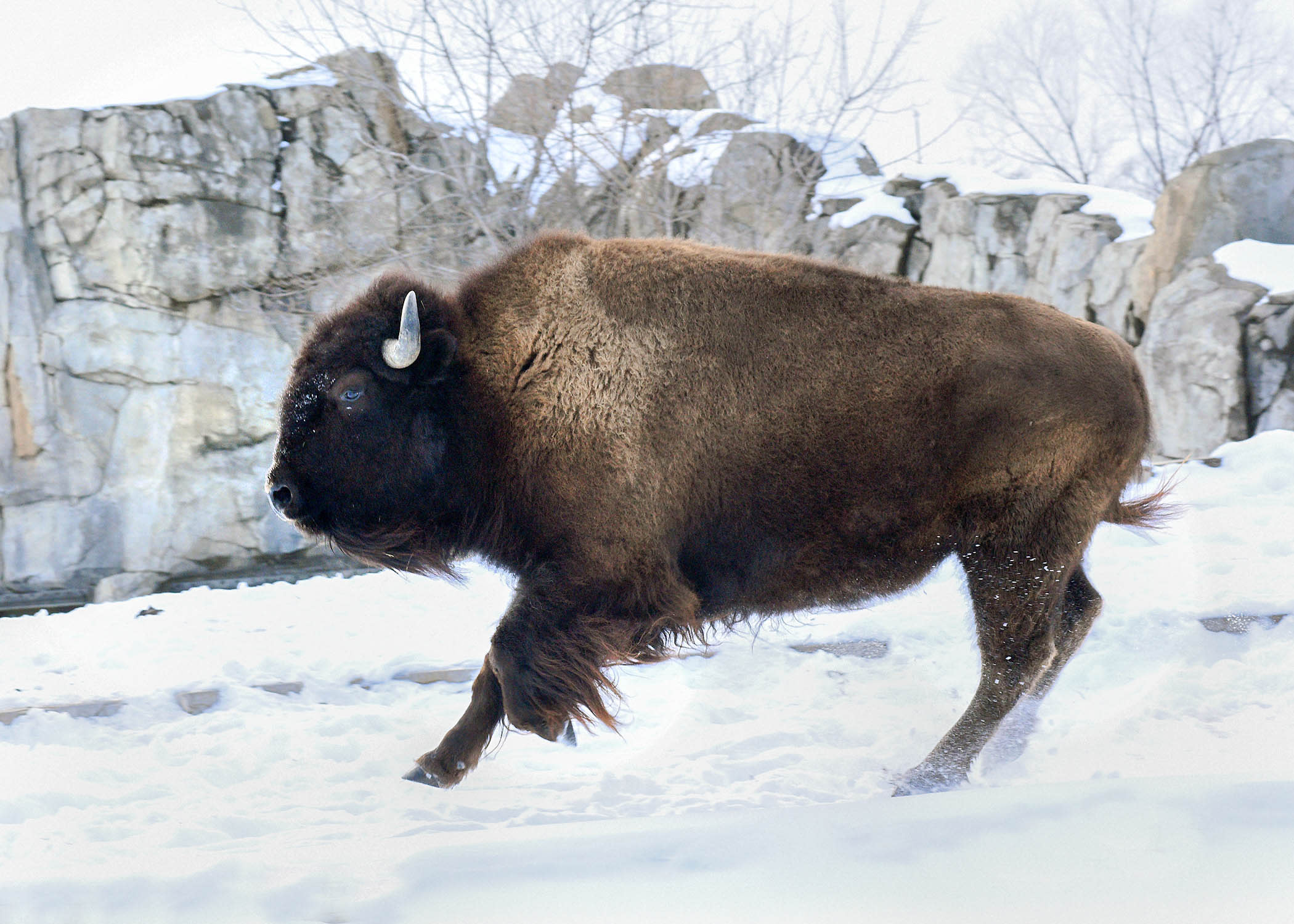
They are most active in the late afternoon and early morning. Aggression can occur without warning; they attack, or charge, with their heavy head and horns. Due to the size of these animals, they need and spend a lot of energy. Bison enjoy wallowing, or vigorously rolling and rubbing their back on the ground. They are capable of running at speeds of up to 35 mph.
Bison vocalizations include bellows, grunts, and snorts. The most common sound is a grunt, which is used to communicate within the herd or between a mother and her calf.
Diet
American bison are grazers and constantly move to find food. Grasses and sedges are staples of their diet. During the winter season, bison dig through deep snow by sweeping their muzzle from side to side to reach buried vegetation.
Threats
American bison are listed as "near threatened" on the IUCN Red List. American bison were once near extinction after being hunted extensively for meat, hide, and sport. At one point, their entire population was down to less than 1,000 individuals. There are now an estimated one million bison on private ranches and farms within the United States.
How We're Helping
Brookfield Zoo Chicago cares for four bison (two male, two female). The species has been a symbol of the Zoo since its opening in 1934 and has resided here since 1940! The Zoo helps promote and build understanding of the needed conservation measures to keep both wild and zoo bison populations sustainable and healthy.
Brookfield Zoo Chicago participates in the AZA SAFE North American Bison Program to help identify survival threats, support recovery, and offer you opportunities to learn more about at-risk species.