Overview
Forest-dwelling Cats
Amur leopards are the northernmost subspecies of leopard, native to Primorye, the southeastern region of Russia, and the Korean Peninsula. These critically endangered big cats reside in temperate forests with cold winters and hot summers. Males can reach 70 to 105 pounds, but can reach as much as 165 pounds. Females reach 50 to 95 pounds. The body length ranges from 42 to 54 inches for a male (not including tail) and 29-43 inches for a female, while tail length is typically 32-35 inches long.
Characteristics
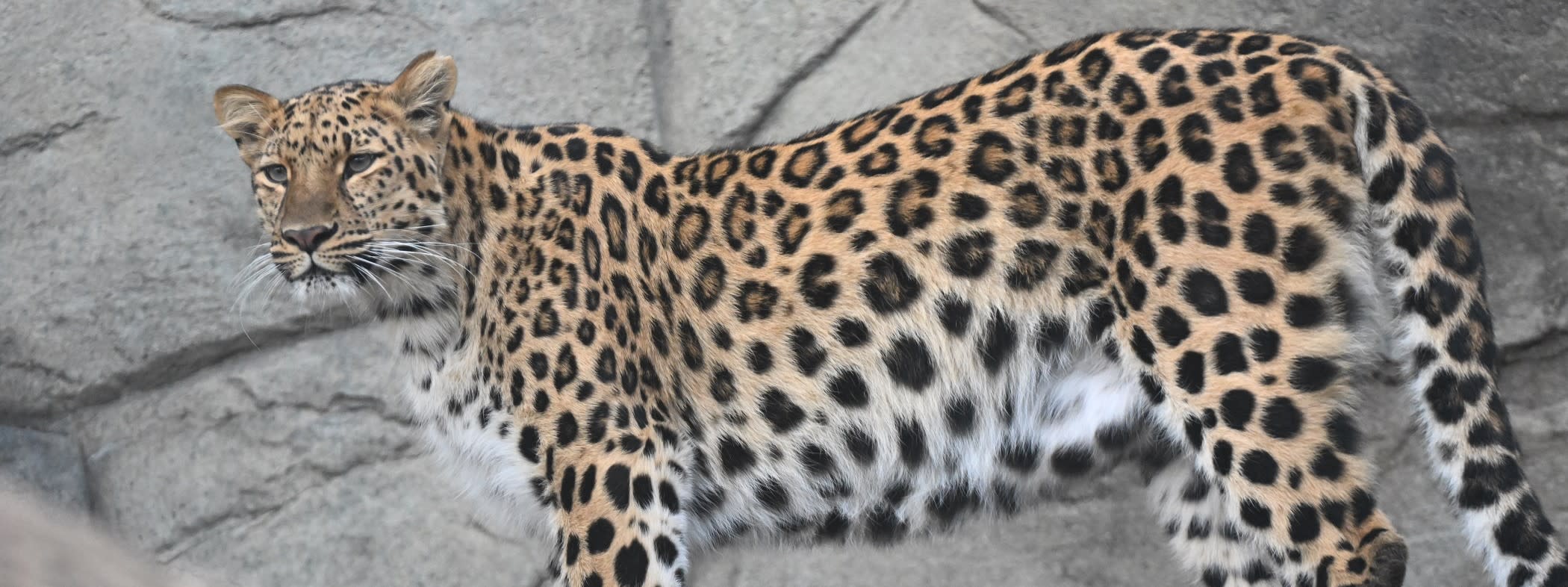
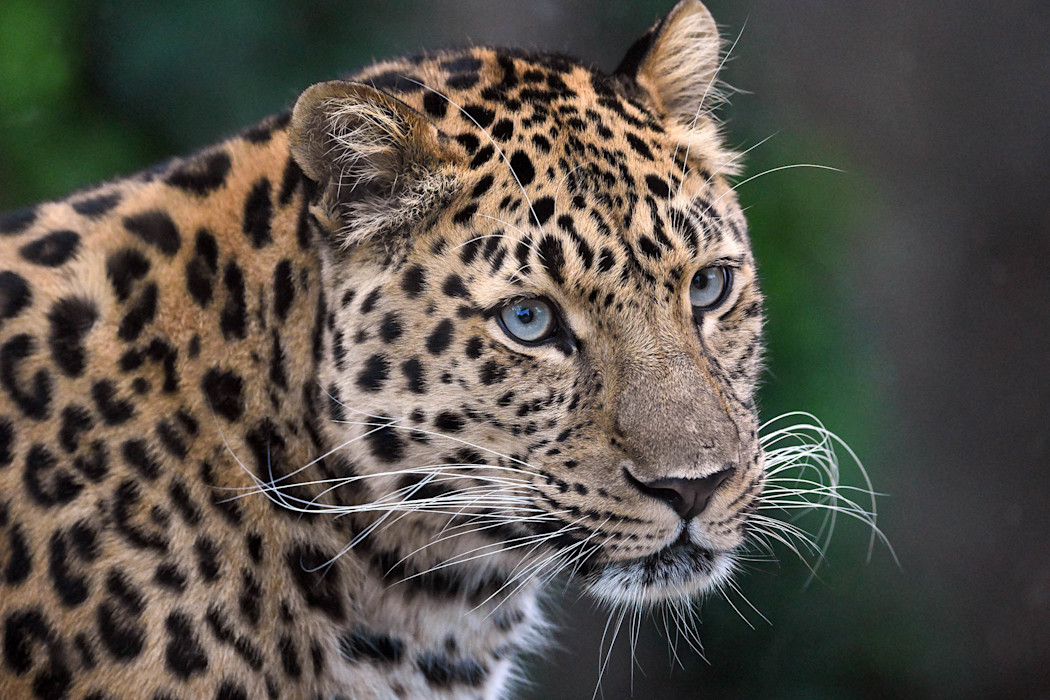
Amur Leopards have long, thick fur that is light in the winter and reddish-yellow in the summer. They have large dark rosettes on their shoulders, legs, backs, sides, and haunches. Smaller black spots cover their head, throat, and chest, while their belly is pale with big black patches.
Their legs are somewhat longer than other leopard subspecies. Thick fur is distinctive of this species as well. These are adaptations to cold, snowy winters.
Amur leopards have keen hearing and vision and a well-developed sense of smell. Since they are nocturnal (active at night), their eyes have adapted to reflect light in a way that produces a better image in low light. This enables them to see approximately six times better than a human can in the same light. Big cats such as Amur leopards also have very developed binocular vision (with both eyes working together at the same time), which gives them great depth perception.
Behavior
Amur leopards are mostly active at night and rest in trees, thick plants, or rocks during the day. They live alone. Males’ territories may overlap with a few females but are kept separate from other males. Females’ territories cover about 15–40 square miles, and males’ about 100–150. They mark their areas with urine, droppings, and scratch marks. They make sounds like coughs, grunts, hisses, growls, and snarls.
Amur leopards have powerful muscles in their limbs, and while they may walk slowly and silently on their toes and they can run as fast as 37 mph for short bursts. They are strong swimmers and climbers. They are also incredible leapers: they are able to leap 20 feet across and 10 feet high.
Diet
Amur leopards carefully stalk their prey, trying to get as close as possible before leaping. They frequently store food in trees for later use. Their diet consists of roe deer, sika deer, wild boar, musk deer, elk, and small mammals and birds.
Threats
Amur leopards are very rare and face several severe threats to their population. Their entire estimated range is only 965 square miles. Threats to Amur leopards include poaching, retribution hunting, loss of habitat from fire, logging, and human settlement, loss of prey, and loss of genetic diversity. The most recent census results estimate fewer than 200 Amur leopards left in the wild.
How We're Helping
The Amur leopard is part of the Species Survival Plan at Brookfield Zoo Chicago. Learn more this cooperative population management and conservation program here.
Meet the Leopards
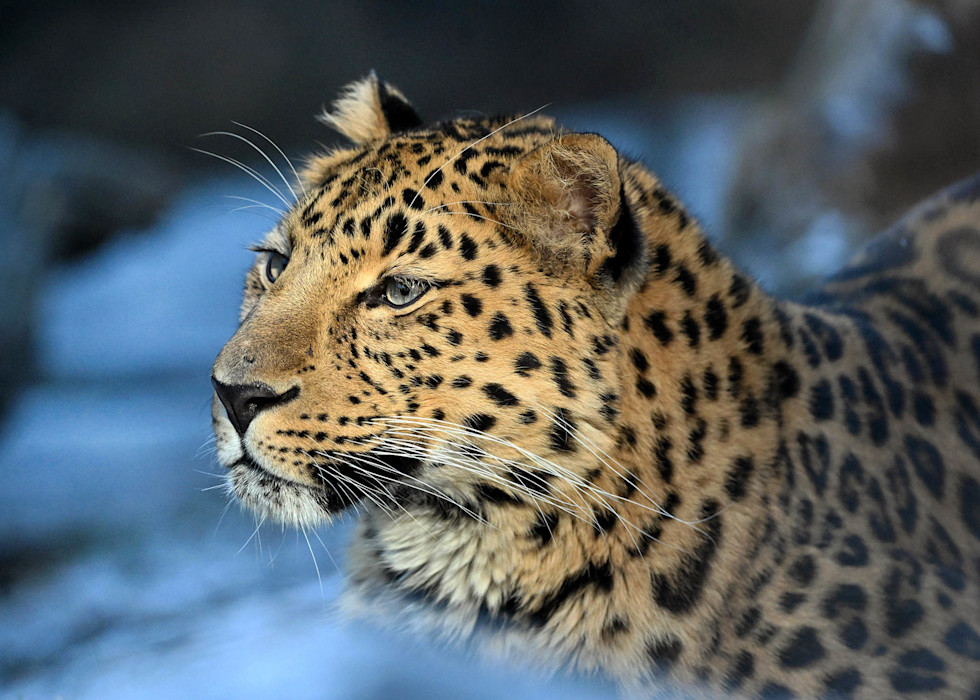
Mina
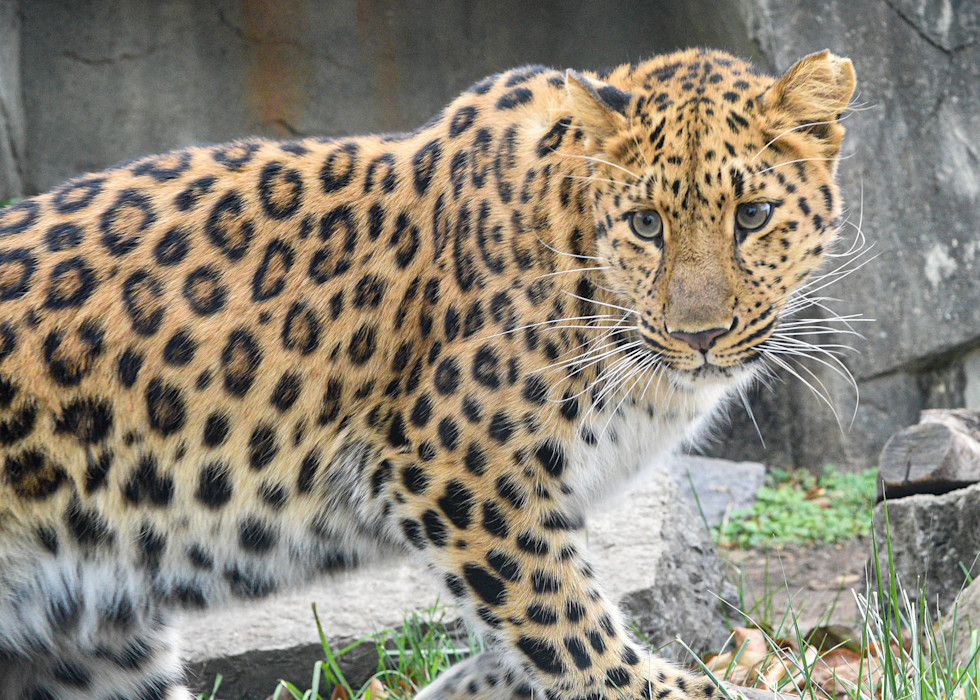
Sasha
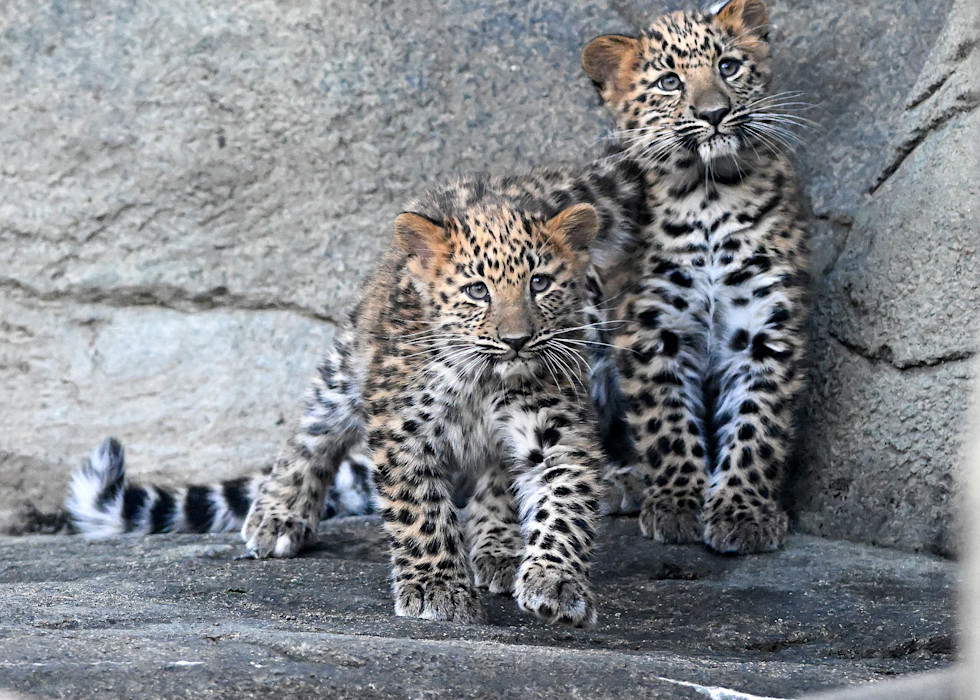
Lacy and Sady