Overview
Stalking in the Snow
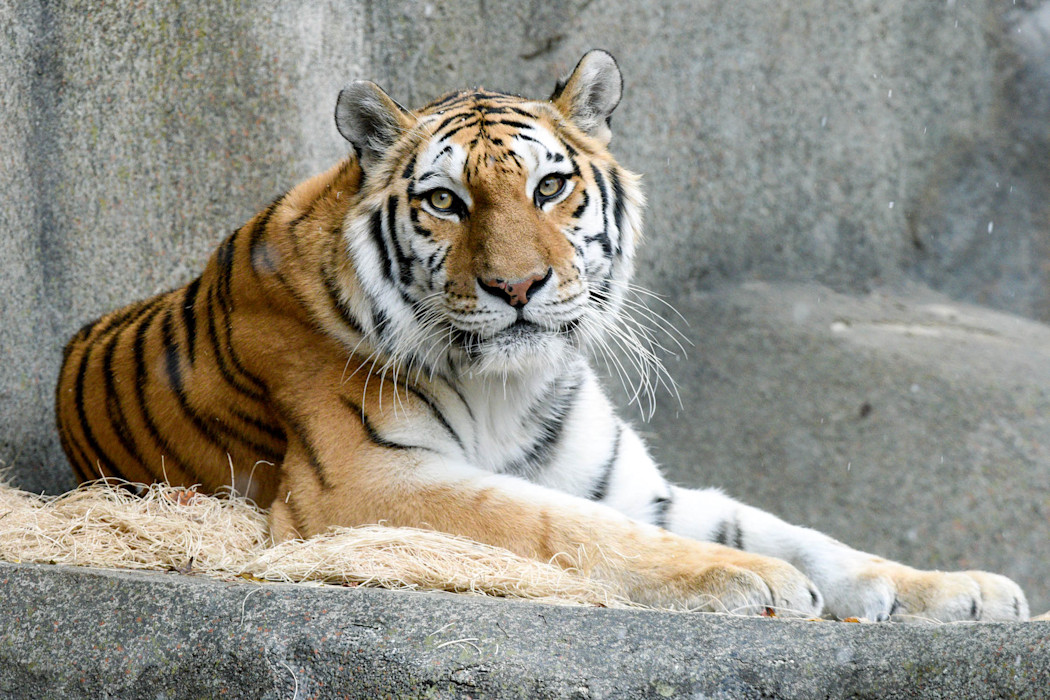
Amur tigers, also known as Siberian tigers, are native to the snowy forests of eastern Russia and parts of northeastern China. These predators have thick, pale orange coats with black stripes. They primarily hunt deer, wild boar, and other large mammals.
Amur tigers are mainly solitary. They maintain large territories and communicate through scent markings and vocalizations. They are listed as "endangered" on the IUCN Red List.
Characteristics
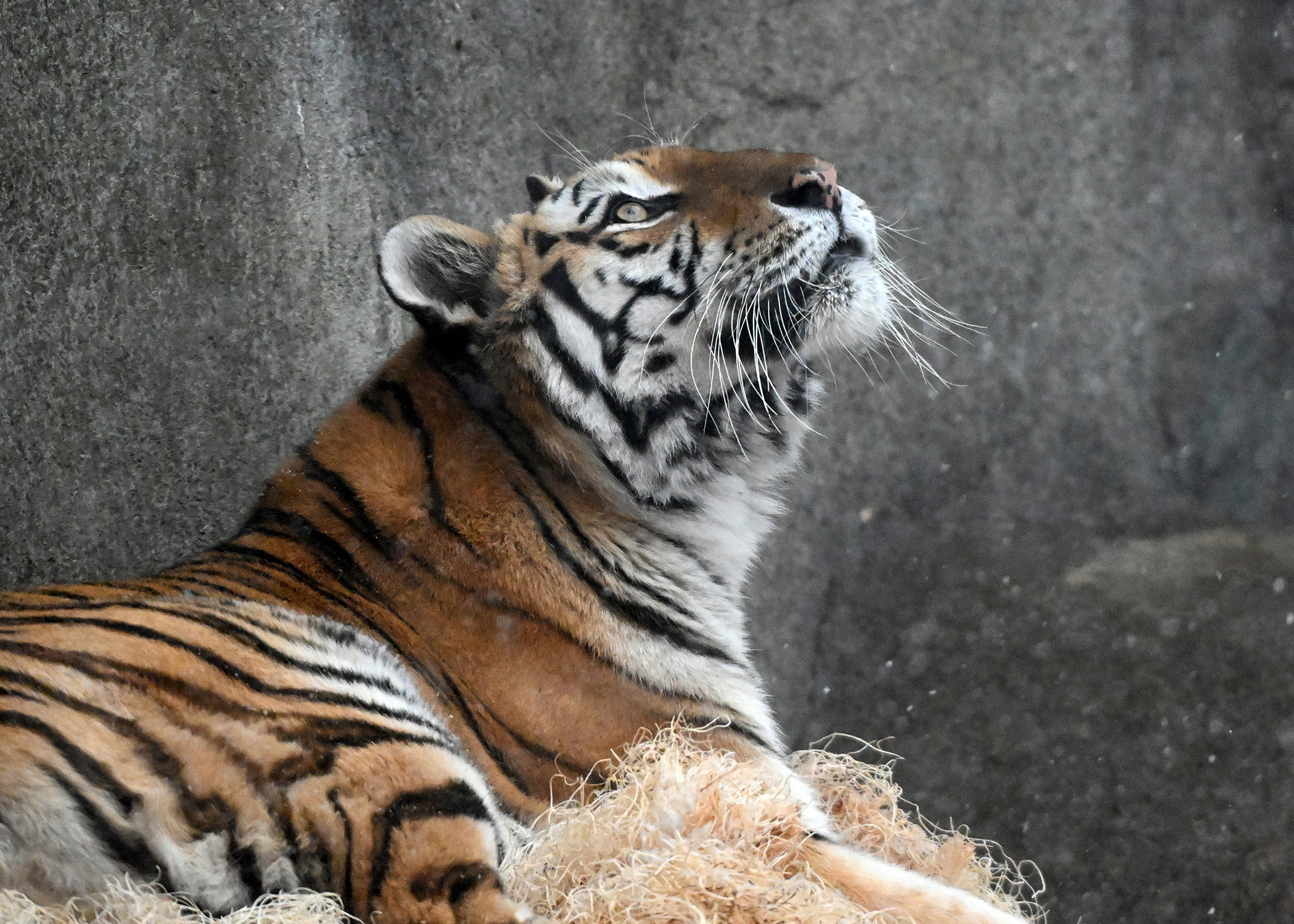
Amur tigers are covered with narrow, vertical black, gray, or brown stripes. They are the only large cats that have a striped coat. The long, thick fur on their necks and backs is yellowish in the winter and reddish in the summer. A white coloration extends from their belly onto their sides, and their tails are also white and black.
Amur tigers have excellent vision, hearing, sense of smell, and balance. They are active at night and their eyes reflect back light in a way that produces a better image in low light. Their ears are large and cup-shaped, which enables them to catch and focus sounds. They also use their long, stiff whiskers as feelers to help them sense branches and other objects as they move around in the dark.
Behavior
Amur tigers are generally active at night. The size of an Amur tiger's home range depends on habitat conditions and prey availability. Typically, a female Amur tiger has a home range of up to 150 square miles, while males can patrol areas as large as 1,000 square miles. These large home ranges are due to the natural low availability of prey species in the area. Male tigers ranges can overlap those of several females.
Amur tigers are generally solitary but not unsocial. Their vocalizations include roars, grunts, and chuffs. Roars seem to be used to attract mates and possibly to announce kills to other tigers, while a chuff is used as an all-purpose greeting. Amur tigers walk on their toes, and can swim and climb trees well, though they don't do either very frequently.
Diet
Red deer, wild boar, and Sitka deer are the largest portion of their diet. Although not a large portion of their diet, tigers are also known to eat birds, seals, and even bears.
Amur tigers hunt alone by carefully stalking their prey and killing it by strangulation or a fatal bite to the back of the neck. However, they successfully kill prey less than 30% of the time, meaning they often go several days without eating.
The kill is often dragged off so that an Amur tiger can remain near it and feed at its leisure. It covers the remains with grasses or debris in-between feeding sessions.
They eat about 88 pounds of meat per session if the kill is big enough. Tigers are also known to eat eagles, seals, and bears.
Threats
Amur tigers are listed as "endangered" on the IUCN Red List.
This subspecies of tiger is very rare, with fewer than 500 individuals estimated to exist in the wild today. In the past, they have been hunted for sport, in retaliation for preying on livestock, and out of fear, although Amur tigers have rarely ever eaten humans. Even greater threats to the tigers' future are: habitat destruction, elimination of their natural prey, and the spread of agriculture.
How We're Helping
The Amur tiger is part of the Species Survival Plan at Brookfield Zoo Chicago. Learn more this cooperative population management and conservation program here.