Overview
The Scarlet Star of the Cloud Forest
The Andean cock-of-the-rock is a brightly colored bird found in the cloud forests of the Andes. Males are famous for their vivid orange-red feathers and large round crests, while females are duller in color to blend in while nesting. These birds are known for lekking, where males gather in groups to compete and display for females.
Characteristics
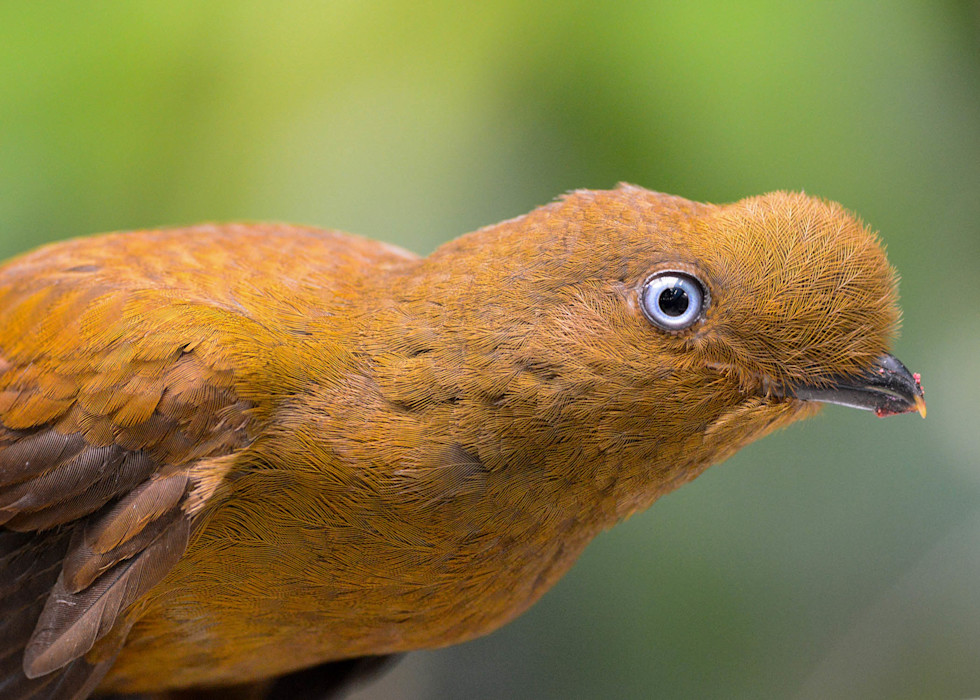
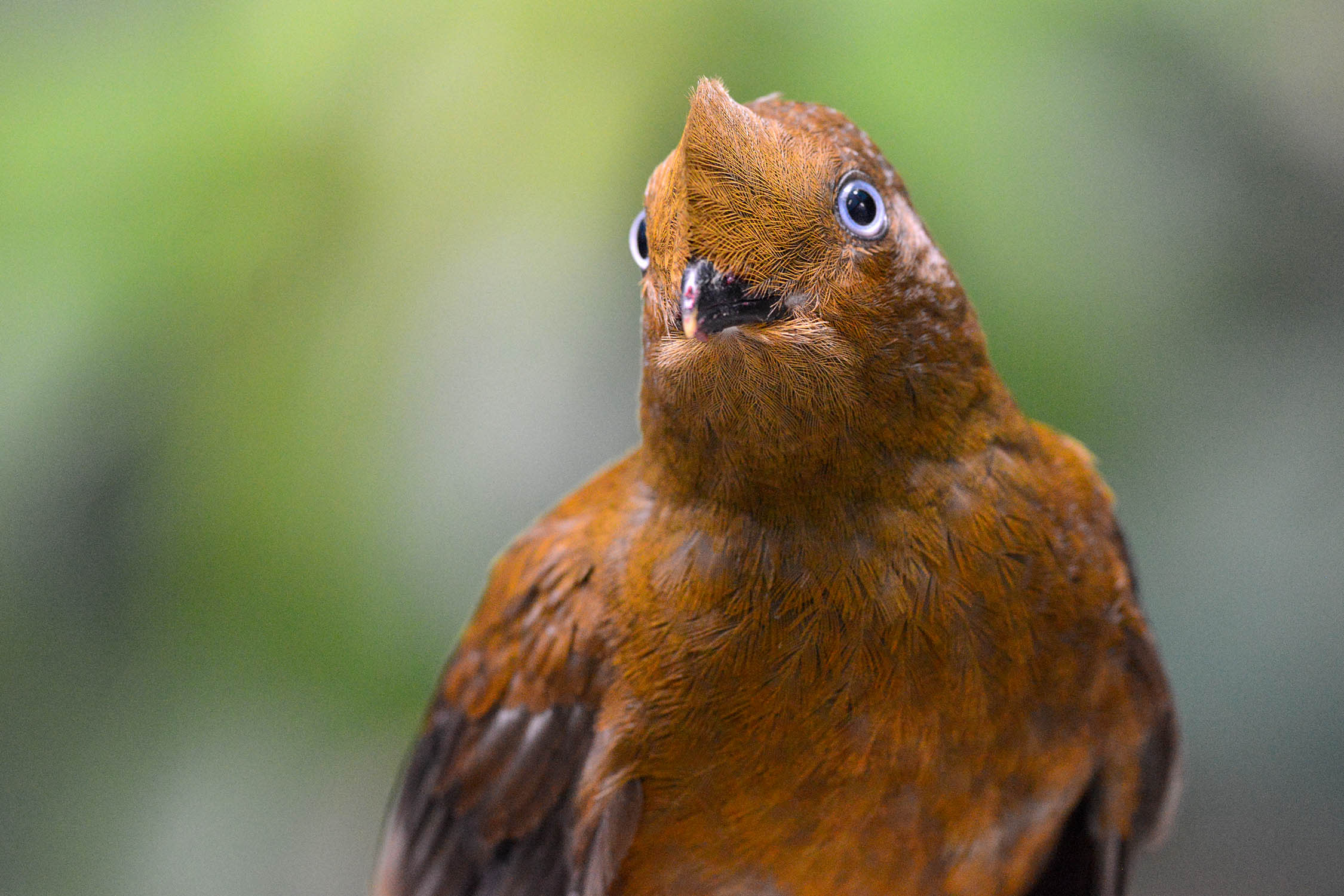
The Andean cock-of-the-rock is a large songbird known for its bright feathers. Its most noticeable feature is a round, fan-like crest over the beak, which is bigger and brighter in males. Male birds have bright red or orange feathers on their head, neck, and chest, with the rest of their body mostly black. Female birds have dull brownish-orange or chestnut feathers, which help them blend in while nesting.
Behavior
The Andean cock-of-the-rock is a lekking bird, meaning males gather in groups to show off and compete for females, but don’t help with raising chicks. Outside the breeding season, they are usually alone while looking for food in the cloud forest canopy. During breeding, males set up small display spots at a communal lek, often in rocky gorges or forest ravines. They defend these spots and mainly compete with each other, not directly with females.
Diet
The Andean cock-of-the-rock mainly eats fruit but also eats small animals, making it an omnivore. It prefers high-protein fruits when available and eats insects, small frogs, lizards, and sometimes small birds.
Threats
Andean Cock-of-the-Rock is listed as “least concern” on the IUCN Red List.
Conservation of the Andean Cock-of-the-Rock focuses on protecting its cloud forest habitat and minimizing human threats. This includes creating national parks and reserves across the Andes, such as Manu National Park in Peru, to safeguard key areas.
How We're Helping
The Brookfield Zoo Chicago Wildlife Conservation Fund supports our animal care and science programs here at the Zoo, and also allows us to invest in and partner with programs dedicated to safeguarding endangered species and their habitats. Learn more about our commitment to conservation.