Overview
The distinctive, tree-dwelling monkeys of east and central Africa
Considered to be the most arboreal of monkeys in Africa, the Angolan colobus is known for its distinctive, black-and-white coloring and social nature. Its body length ranges from approximately 19 to 26 inches, with its tail length exceeding the body at 27 to 32 inches. These primates, native to East and Central Africa, dwell in lowland and montane forests, feeding on leaves, fruits and seeds.
Characteristics
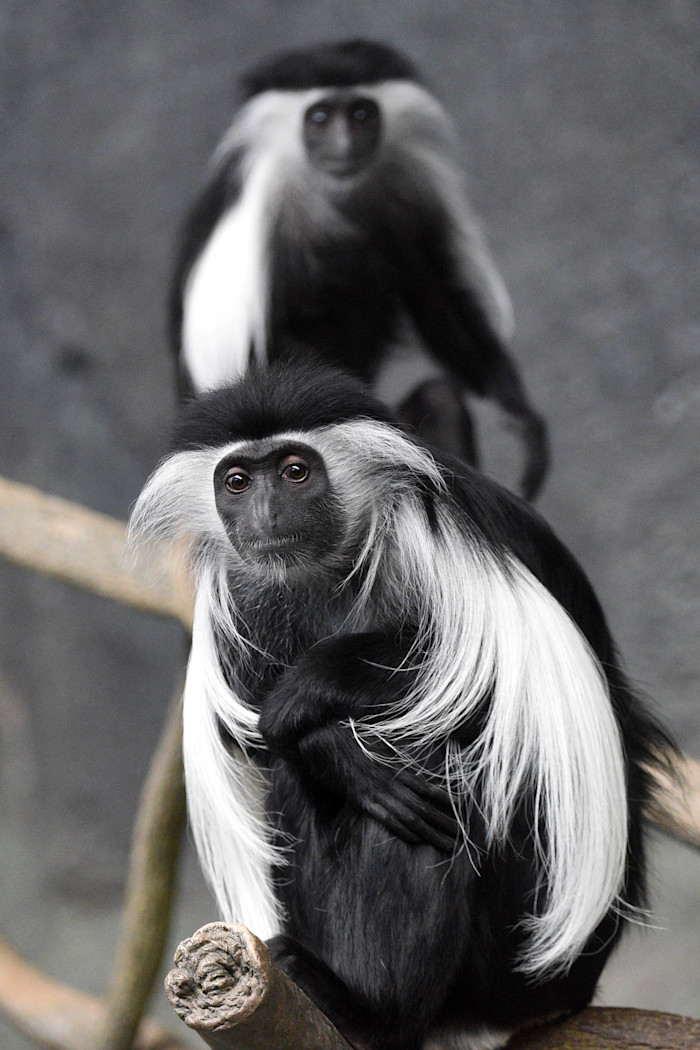
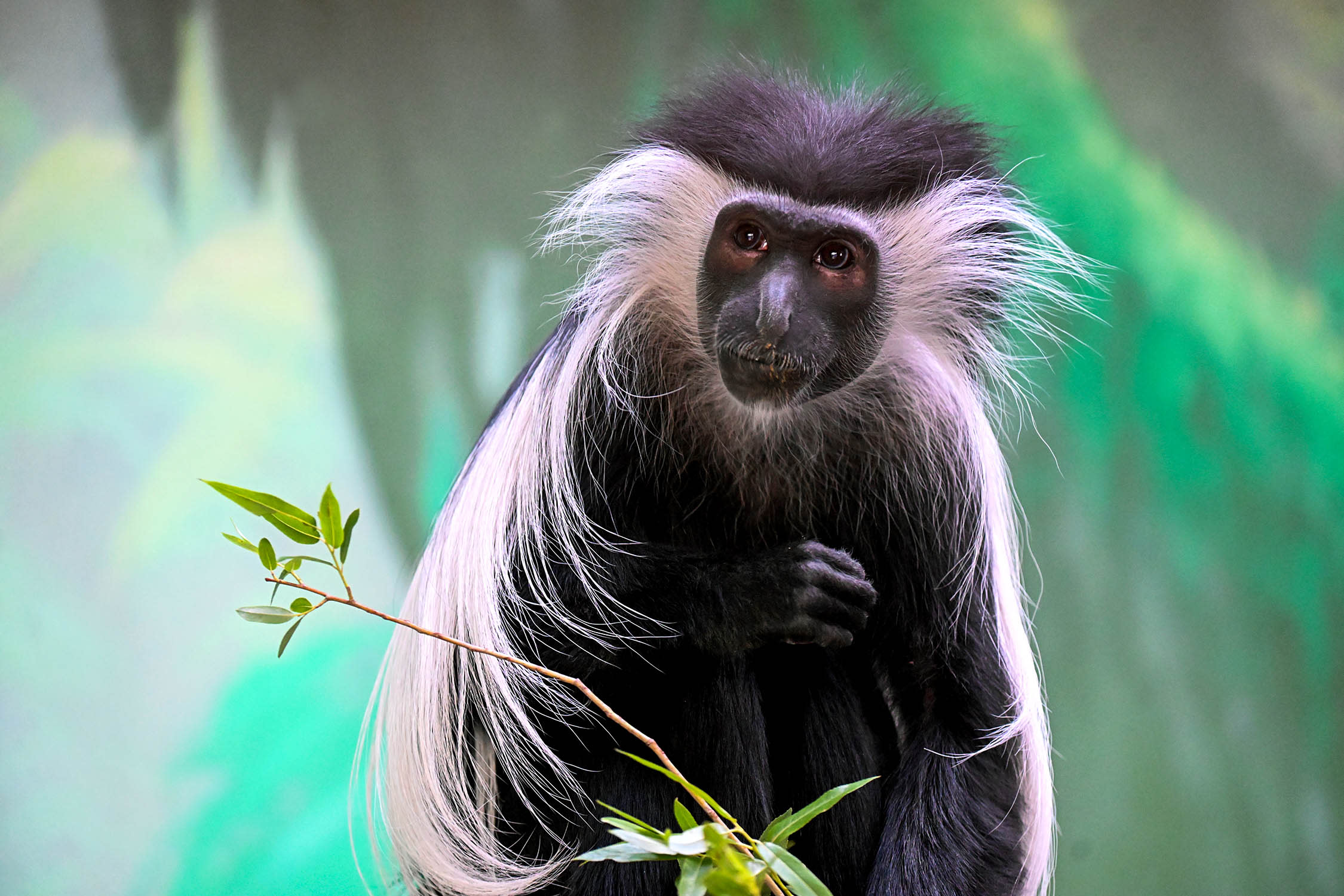
They are mostly black with white hair along their brow and the sides of their face, long white “epaulettes” on their shoulders, and a white tail tip. Colobus monkeys have little or no thumbs, an adaptation that helps them swing more easily through the trees. Their babies are born white, turn gray, and then become black by six months old.
Behavior
Angolan colobuses mostly live and feed high in the trees, but sometimes come down to the ground to eat. Since the leaves they eat aren’t packed with nutrients, they spend a lot of time feeding, up to a third of their body weight, or about four to six pounds, of leaves each day.
Diet
Angolan colobuses eat leaves, seeds, stems, bark, flowers, and shoots. They usually eat in the morning and evening.
Threats
Angolan colobuses are threatened in parts of their range by habitat destruction for timber and agricultural use.
How We're Helping
The Angolan colobus is part of the Species Survival Plan. Learn more about this cooperative population management and conservation program here.
Brookfield Zoo Chicago is part of the Association of Zoos & Aquariums Saving Animals From Extinction (SAFE) Colobus Monkey Program. Through this partnership, Brookfield Zoo Chicago is committed to five years of financial contribution, data sharing, and participation in strategic planning for colobus monkeys.