Overview
Little Hunters of the Desert
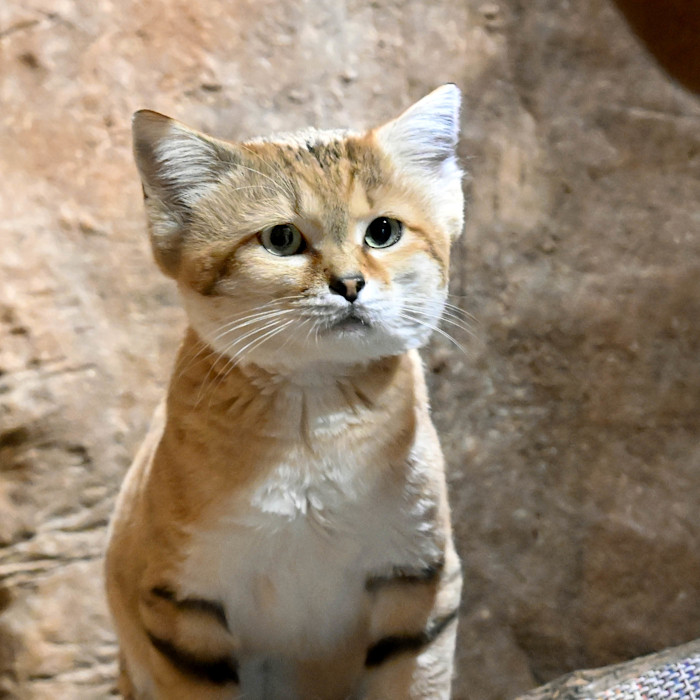
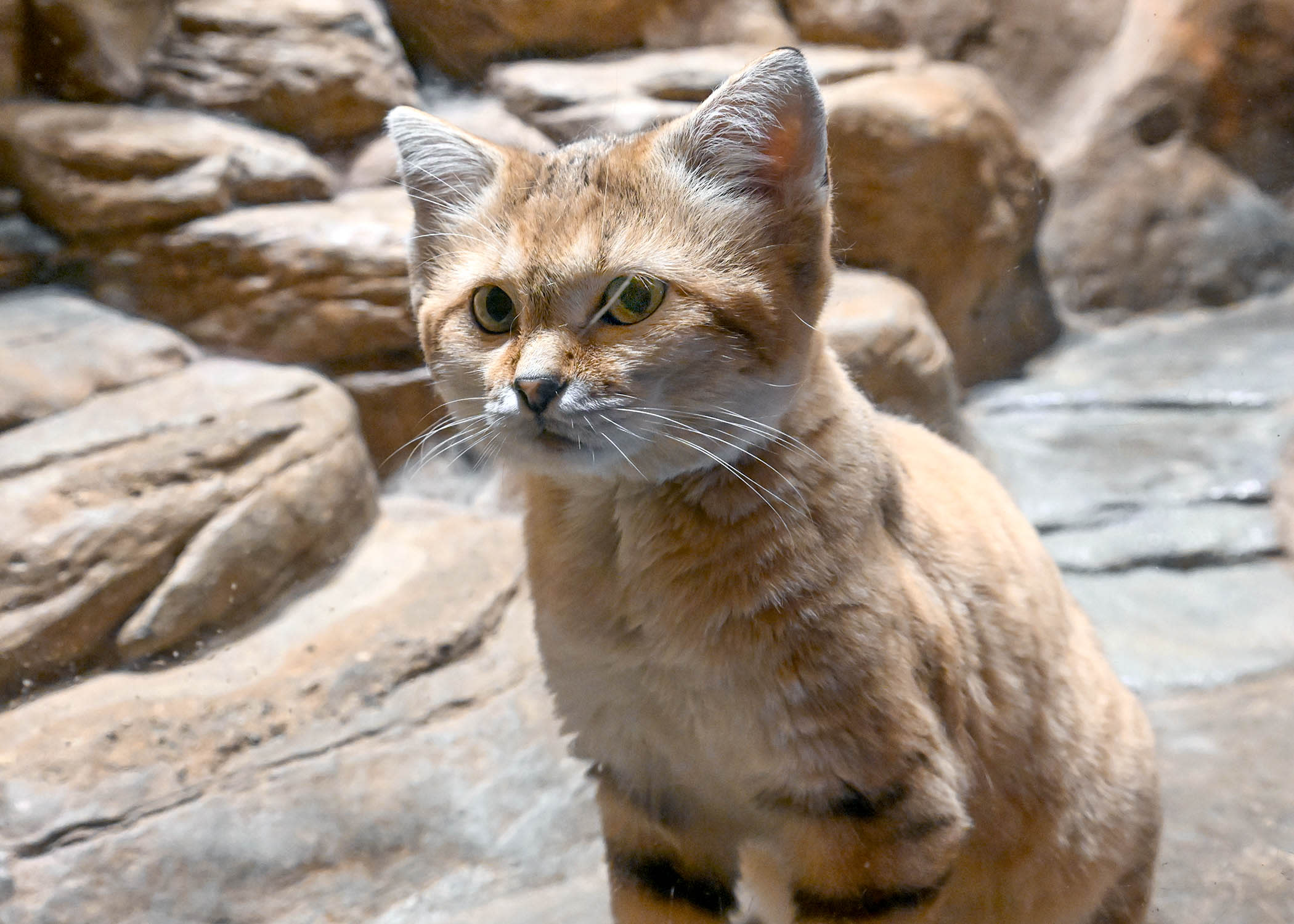
Arabian sand cats are the smallest wild cats. They live in the Sahara Desert and the desert regions of the Arabian Peninsula. They have sandy-colored fur that helps them blend into their surroundings. They are excellent diggers, using shallow burrows to stay cool during the hot days, and are mostly active at night. Sand cats are carnivores, eating small mammals, birds, insects, reptiles, and snakes.
Characteristics
Sand cats are one of the smallest wild cats. Their fur is sandy-colored, from light tan to gray-brown, with darker backs and very pale bellies. Some have stripes on their legs. They have red streaks on their cheeks that start at the corners of their eyes. Sand cats have wide heads, big eyes, low-set ears, and short legs. Males are a bit bigger than females.
Behavior
Sand cats aren’t good at climbing or jumping, but they are great diggers. They dig shallow holes to stay cool in the hot desert. Sometimes they lie on their backs outside their burrows to cool off. They share burrows with other sand cats, but only one cat uses a burrow at a time. Sand cats are mostly active at night or dawn and dusk, avoiding the hottest parts of the day by hiding in their burrows. They are very hard to spot because they close their eyes at night and blend in with the desert.
Diet
Sand cats are meat-eaters. They eat gerbils, voles, hares, spiders, reptiles, birds, insects, and even venomous snakes. They eat whatever prey they can find in their dry desert homes. Their food also gives them the water they need to survive. Sand cats hunt by staying low to the ground and listening carefully. If they hear prey digging, they quickly dig it up to catch it. Sometimes they bury their food and come back to eat it later.
Threats
Arabian sand cats are listed as “least concern” on the IUCN Red List. However, human expansion for housing and livestock are threats facings these small cats.
How We're Helping
The Arabian sand cat is part of the Species Survival Plan at Brookfield Zoo Chicago. Learn more about this cooperative population management and conservation program here.