Overview
The Smallest Otter Species in the World
Weighing in at 2.2 pounds to 11 pounds, the Asian small-clawed otter is the planet’s smallest otter species. Its body length can range from 26 to 37 inches, and it has a tail length of 10 to 14 inches. Native to shallow waterways, coastal mangroves and rice paddies in Indonesia, southern China, southern India, and the Philippines, the Asian small-clawed otter thrives on a diet of crustaceans, mollusks, amphibians, and small fish.
Characteristics
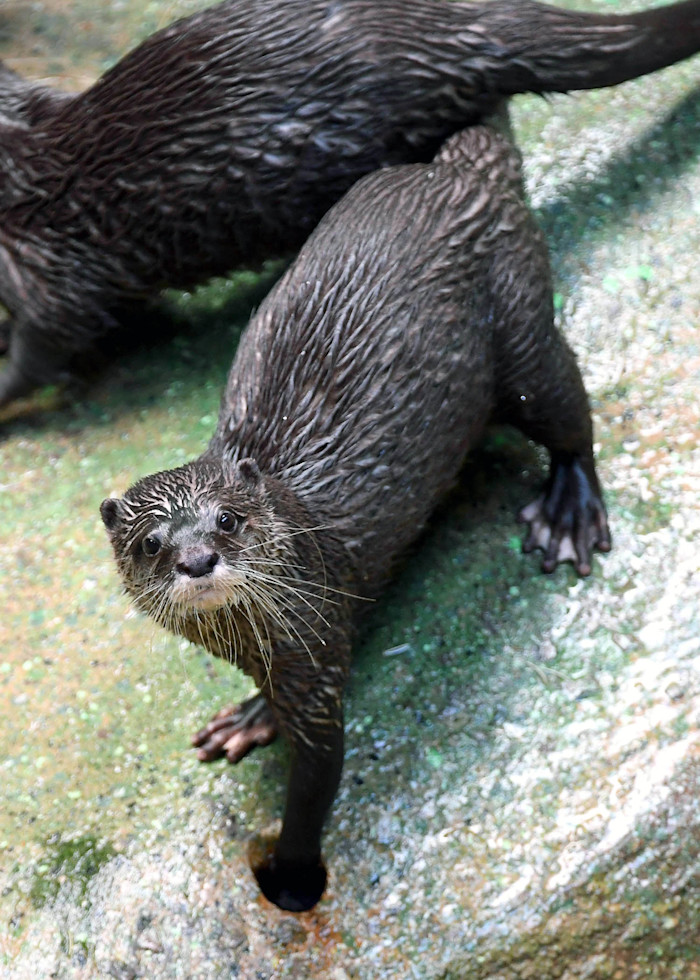
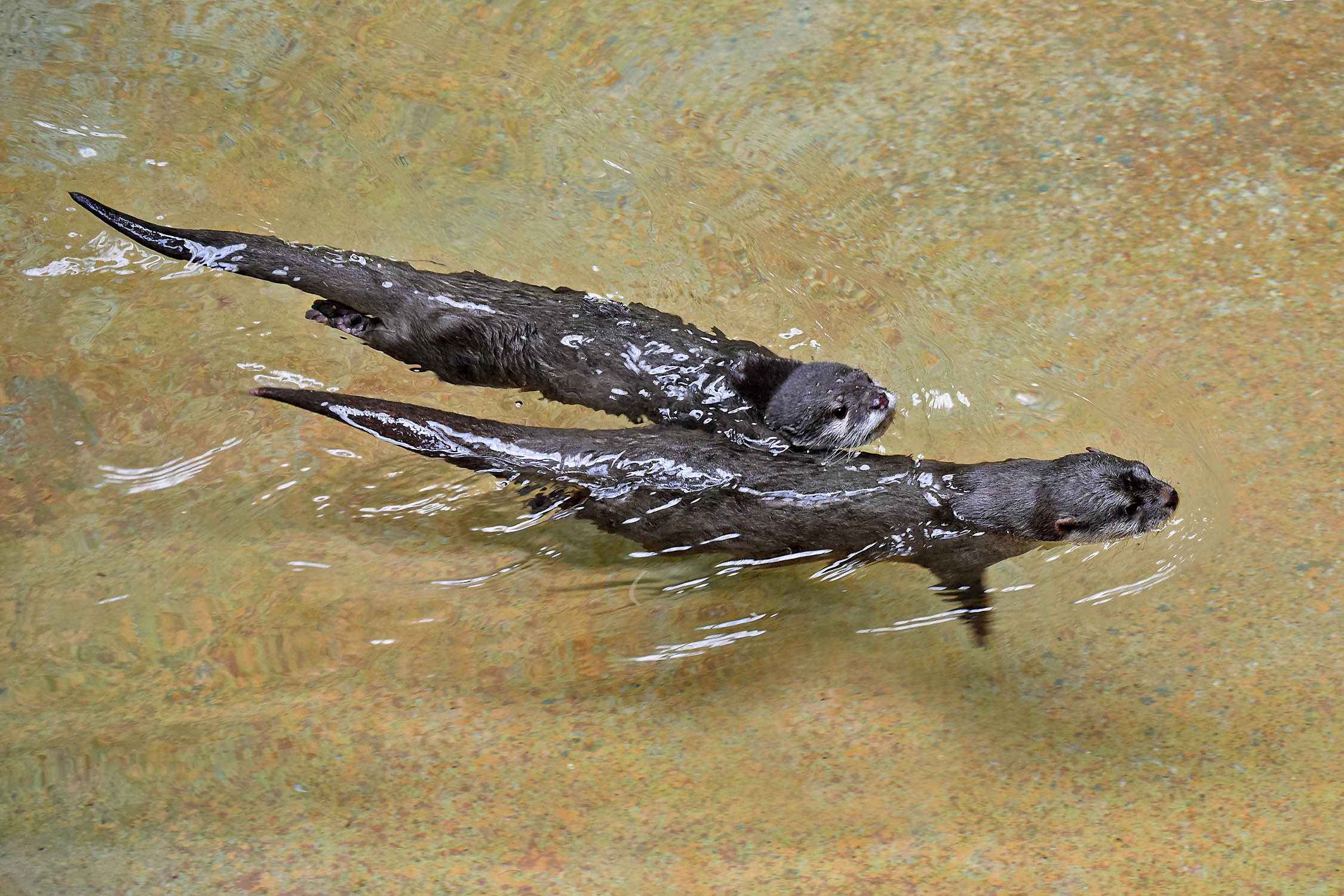
Asian small-clawed otters are the smallest of all the otter species. They have dark brown fur above with light fur below and have pale markings on the face, throat, and chest. Their feet are narrow and webbed with short, blunt claws. They have sensitive whiskers that pick up vibrations in the water. Dexterous hands and sensitive fingertips are important for Asian small-clawed otters to forage in a shallow underwater habitat. However, the most important sense for hunting is their vision.
Behavior
Asian small-clawed otters are diurnal (active during the day) in undisturbed areas and mainly nocturnal (active at night) near human activities. They live in family groups of about 12 individuals. Play serves to reinforce social bonds and also helps young otters to perfect their hunting and fighting techniques. Scent marking is a common otter behavior. Marking shows territorial boundaries and communicates information concerning identity, sex, sexual state, receptivity, and time elapsed between scenting. Asian small-clawed otters have 12 or more calls.
Diet
Asian small-clawed otters hunt several times a day. They have a very high metabolism, and meals pass through their digestive system in a few hours, giving them boundless energy. Their agile paws allow them to catch and hold crabs, mussels, frogs, snails, and other animals that live near the water's edge.
Threats
Asian Small-slawed otters are listed as "vulnerable" by the IUCN (International Union for Conservation of Nature and Natural Resources). Major threats come from the destruction of their habitats due to deforestation, settlement, agriculture, swamp draining, and destruction of costal mangroves for aquaculture.
How We're Helping
The Asian small-clawed otter is part of the Species Survival Plan. Learn more about this cooperative population management and conservation program here.