Overview
Meet the Feathery-gilled Amphibian
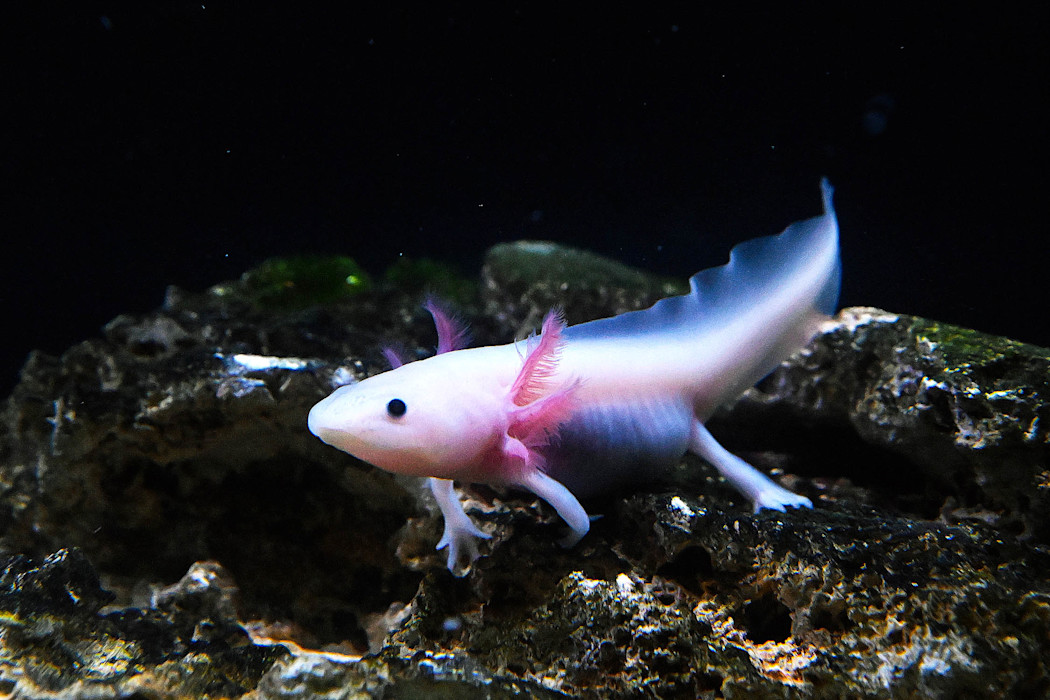
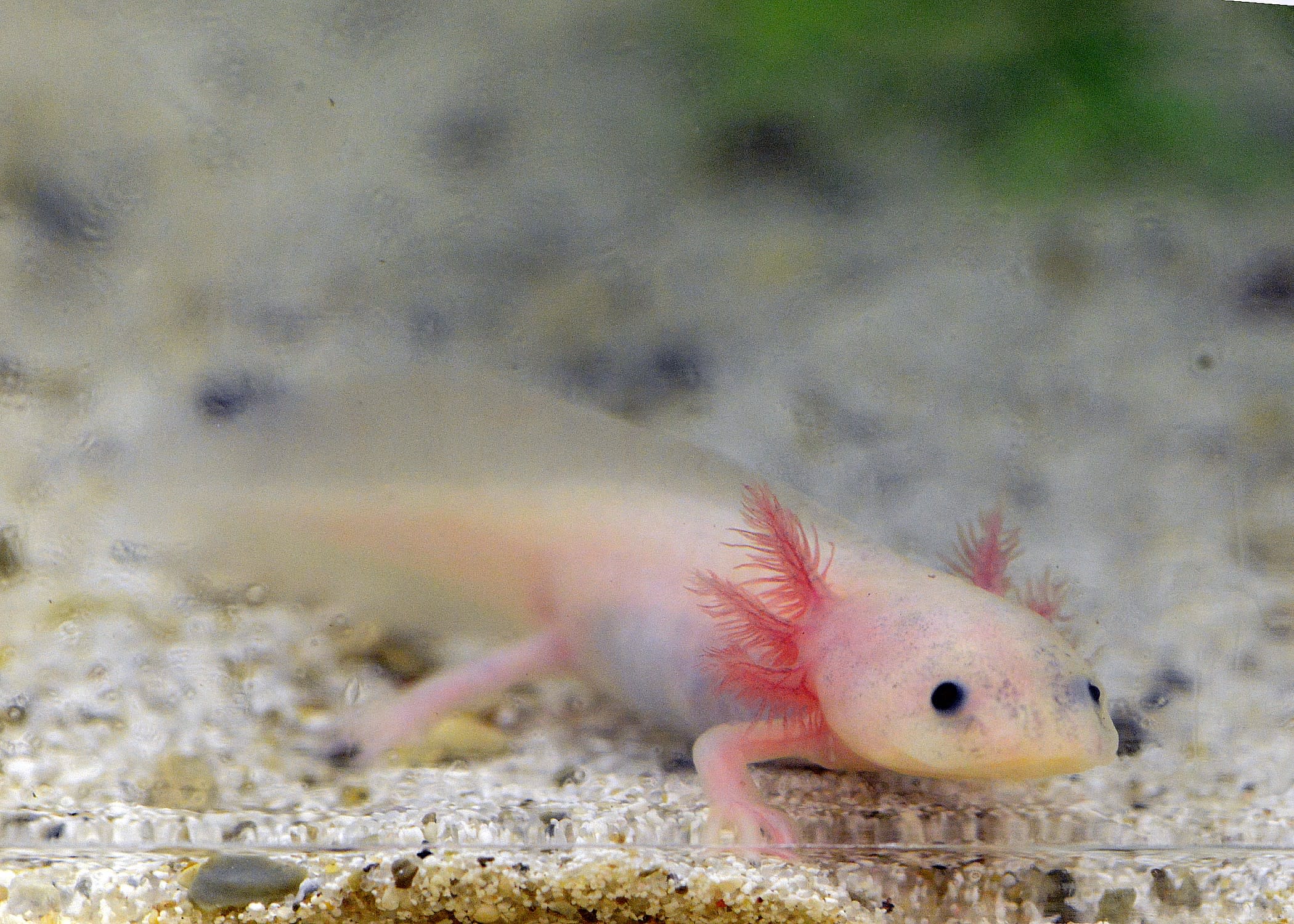
Axolotls are unique aquatic salamanders known for being "paedomorphic," meaning they keep their juvenile traits, like feathery external gills and finned tails for swimming, even as adults. They typically reach about eight to nine inches long, but can grow over a foot in length. Axolotls are native to Lake Chalco and Xochimilco near Mexico City, Mexico.
Characteristics
Axolotls have a large body with a wide trunk, a large head with wide-set eyes, and feathery external gill branches. They have a tadpole- or eel-like tail. Though traditionally brown or black with spots in their natural habitat, axolotls in professional care come in various colors, including albino and leucistic.
Behavior
Axolotls are mostly active at night and usually live alone, but they can be active at any time of day. They move slowly and spend much of the day hiding in plants and mud for protection. Axolotls breathe through their gills underwater, but they sometimes swim to the surface to take a quick breath of air. They usually walk along the bottom, but they can also swim by moving their body and tail in a smooth, eel-like way. They are built for moving easily through plants, not for swimming fast.
Diet
The axolotl’s diet consists of small fish, mollusks, amphibians, reptiles, insects, worms, and zooplankton.
Threats
Axolotls are considered critically endangered by the IUCN Red List. Key threats to this species include habitat loss, pollution, and climate change.
What We're Doing to Help
Brookfield Zoo Chicago took in 20 rescued axolotls that were illegally imported at O’Hare International Airport and seized by U.S. Fish and Wildlife Service (USFWS) officers. These salamanders were imported from Indonesia and needed professional care to survive. Brookfield Zoo Chicago provides a safe environment for these rescued members of this critically endangered species to thrive.