Overview
Icons of Wetlands Conservation
Blanding’s turtles are semi-aquatic freshwater turtles native to the Great Lakes region and parts of the northeastern United States and southern Canada. They are easily recognized by their bright yellow throat and chin. They are endangered due to habitat loss.
Characteristics
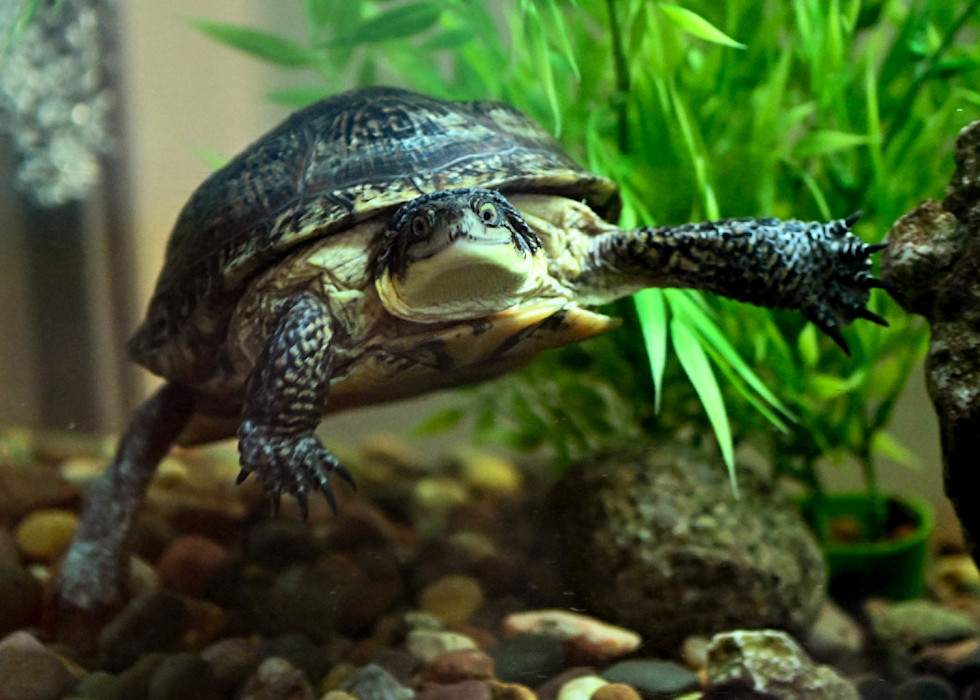
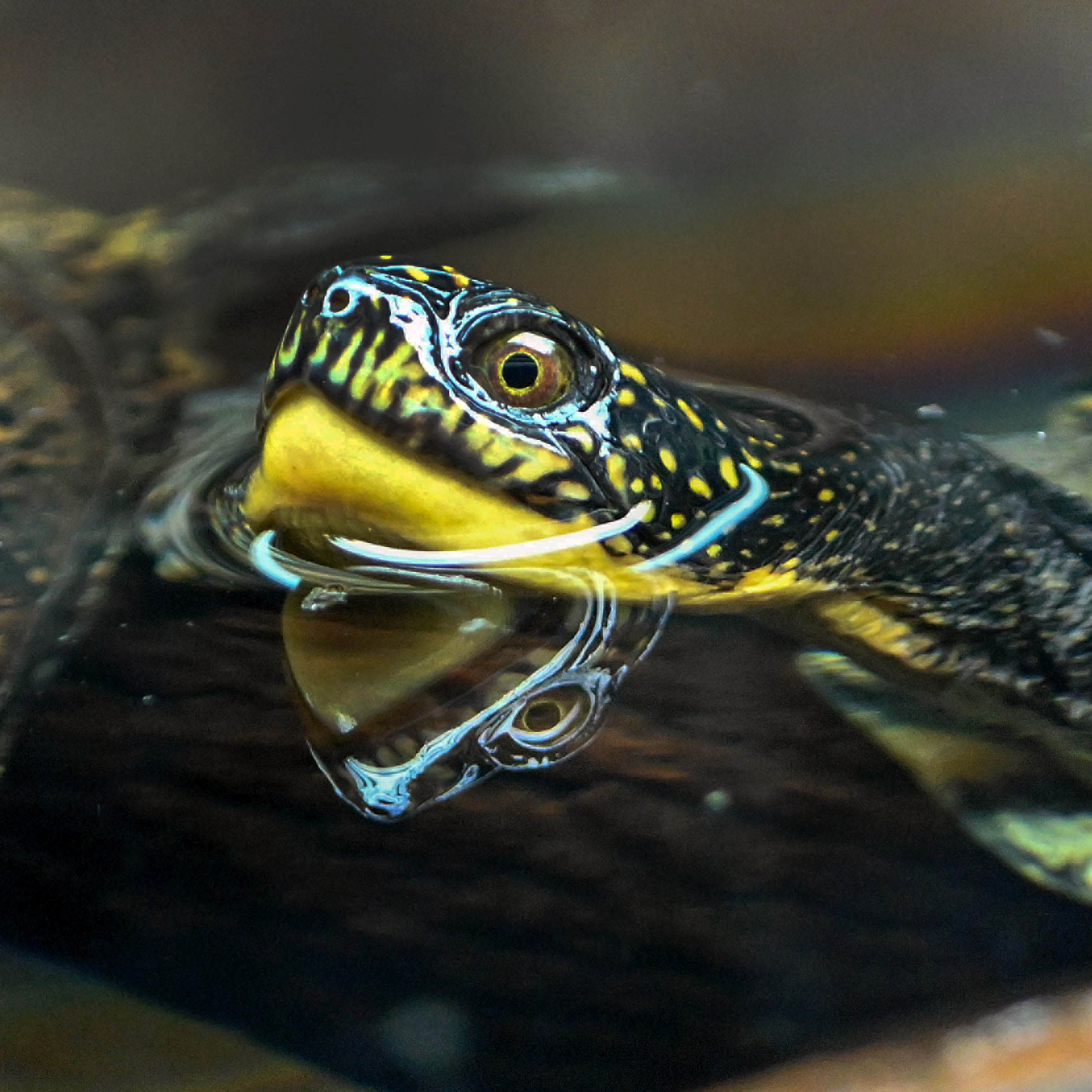
A Blanding's turtle has a domed, black upper shell. It can be identified by its bright yellow chin and throat and bright yellowish flecks on its shell. The shape of their mouth gives them a “smiling” appearance.
Behavior
Blanding’s turtles are semi-aquatic and are found in wetlands and grasslands. In the winter, Blanding’s turtles cover themselves with mud and silt at the bottom of rivers and lakes and enter a period of inactivity similar to hibernation. When threatened or scared, they’ll retreat into their shells.
Diet
Blanding’s turtles typically eat fish, crustaceans, leaves, and shrubs. They forage in shallow water, but will also leave the water to search for food.
Threats
Blanding’s turtles are listed as “endangered” on the IUCN Red List. The main threat to the species is habitat destruction.
How We're Helping
Brookfield Zoo Chicago partners with the DuPage Forest Preserve Blanding’s Turtle Restoration project to provide better homes for and boost the population of Blanding’s turtles.
Blanding's Turtles are part of the Species Survival Plan at Brookfield Zoo Chicago. Learn more this cooperative population management and conservation program here.
Brookfield Zoo Chicago participates in the AZA SAFE American Turtle Program to help identify survival threats, support recovery, and offer you opportunities to learn more about at-risk species.