Overview
Primates of the Asian Rainforest
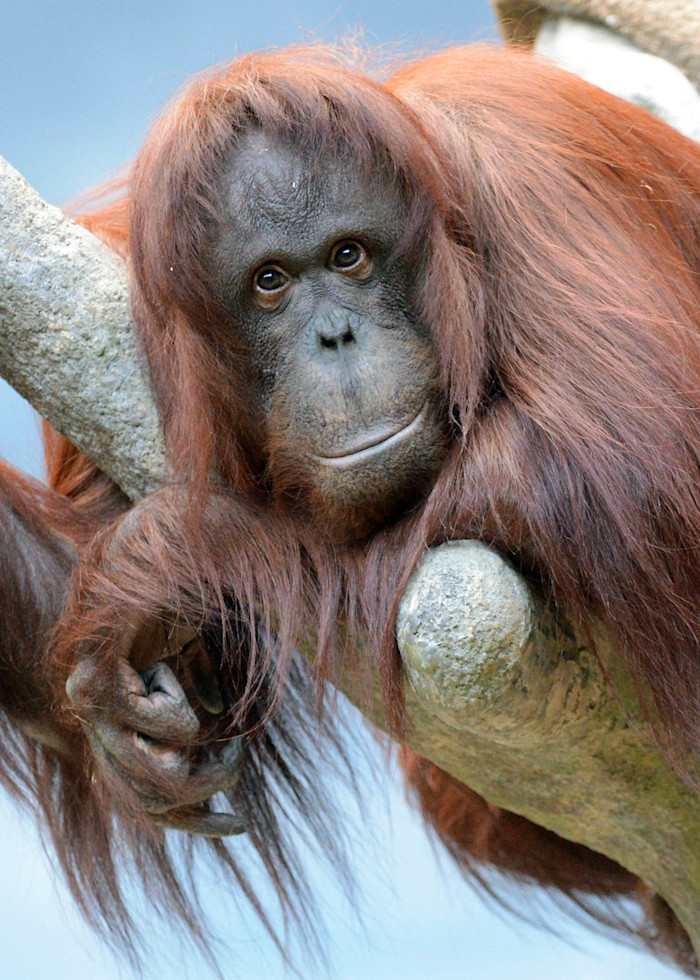
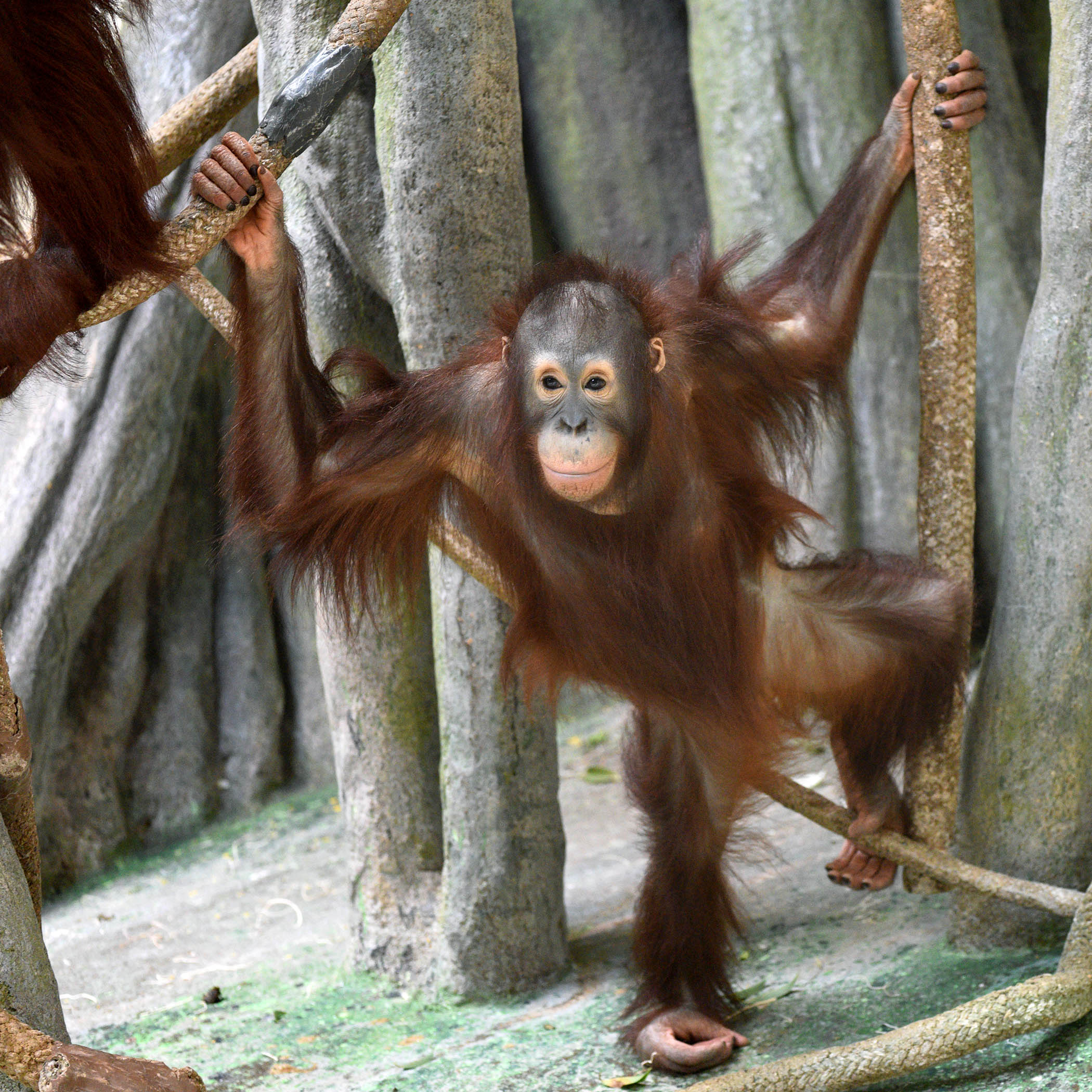
The Bornean orangutan is native exclusively to tropical rainforests of the island of Borneo, located in southeast Asia. Known for the orange to reddish-hued hair that covers their entire body, this distinctive primate spends much of their time in the trees and can even use their deft hands to make and use tools. Bornean orangutan females reach up to 140 pounds and just over four feet in height, while males can reach 260 pounds and nearly six feet tall.
Characteristics
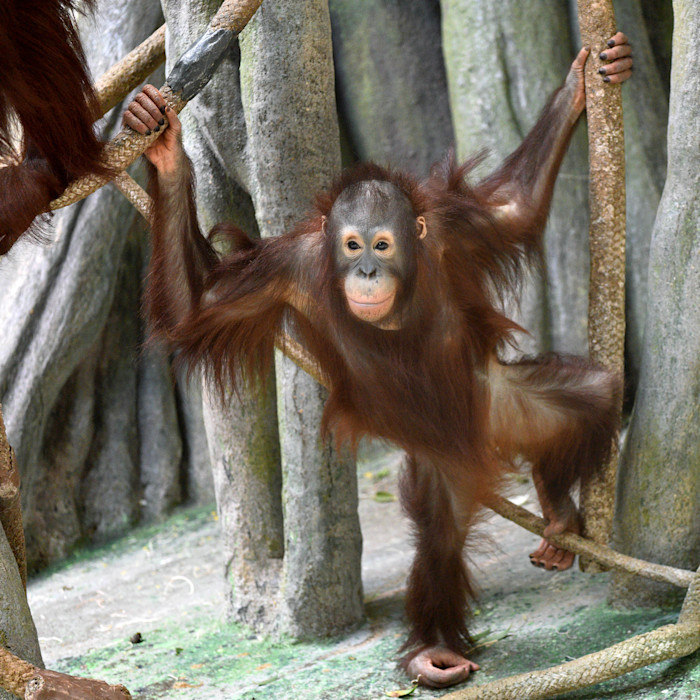
Bornean orangutans range in color from bright orange to deep maroon or dark chocolate. Their bodies are well adapted for life in the trees. They have extremely long arms that reach their ankles when standing upright, long fingers, and dexterous hands. Their broad feet resemble their hands, with long, grasping toes for climbing.
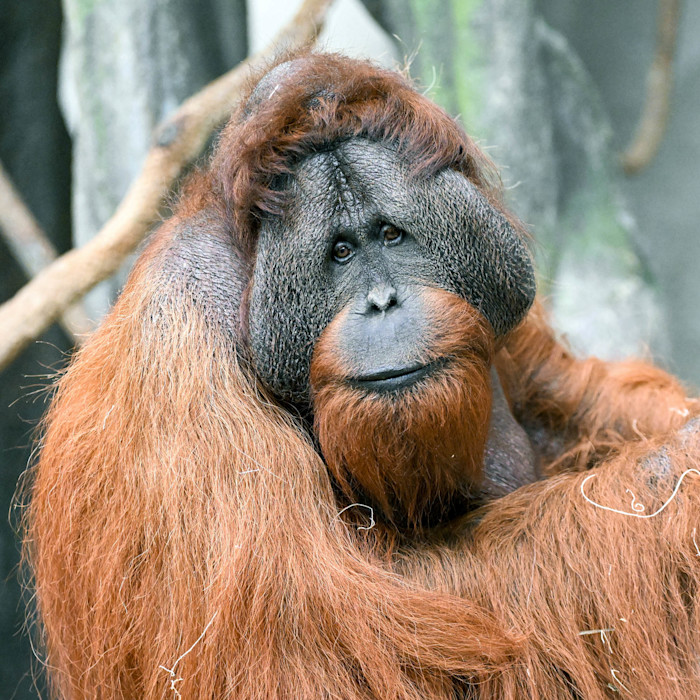
They are the only primates with two distinct types of mature males. Flanged males have cheek pads, also known as flanges, as well as long hair, a large throat sac, and the ability to produce long calls to mark their territory. They are intolerant of other mature males. Unflanged males lack these features and are closer in size to females, though both types can father offspring.
Vision is their most important sense. Their forward-facing eyes provide binocular vision and good depth perception, while color vision helps them spot ripe fruit. Their sense of smell aids in detecting pheromones and assessing food quality.
Behavior
Bornean orangutan males are mostly solitary, while females stay with their young. They come together more often during the wet season, when food is abundant. Males mate with several females and establish a home range that overlaps with the ranges of as many females as possible.
Orangutans are active during the day, especially in the morning and late afternoon. At night, they build large nests high in the trees, usually making a new one each evening. When moving through trees, orangutans use their weight to bend branches or trunks from one to another. On the ground, they walk on all fours with their fists clenched, unlike other great apes that use their knuckles.
Diet
Bornean orangutans are omnivores, feeding on durians, rambutans, jackfruit, lychees, mangosteens, mangoes, fig, leaves, insects, soil, tree bark, woody lianas, and small vertebrates. Orangutans often get water to drink by cupping their hands and scooping it from inside tree holes. Some orangutans have even been observed using tools like sticks and sharp rocks to forage for food.
Threats
Bornean Orangutans are listed as "critically endangered" by the IUCN (International Union for Conservation of Nature and Natural Resources). Major threats to orangutans include deforestation leading to habitat loss and fragmentation, especially from palm oil plantations. It is estimated that less than 100,000 orangutans are left globally.
How We're Helping
Brookfield Zoo Chicago participates in the Association of Zoos & Aquariums SAFE (Saving Animals from Extinction) Orangutan Program, as well as in the Species Survival Plan, a cooperative population management and conservation program.
Through its Chicago Board of Trade Endangered Species Fund, Brookfield Zoo Chicago has supported nearly 40 different conservation projects, totaling nearly $1.2 million in funds to protect primates across the globe, including Bornean orangutans.
In 2025, Zoo veterinarians traveled internationally to provide lectures and workshops on great ape medicine and welfare at orangutan rehabilitation and conservation centers throughout Asia and Africa.
The Bornean orangutans is part of the Species Survival Plan at Brookfield Zoo Chicago. Learn more this cooperative population management and conservation program here.
Meet the Troop
Heidi
Brunei
Kecil
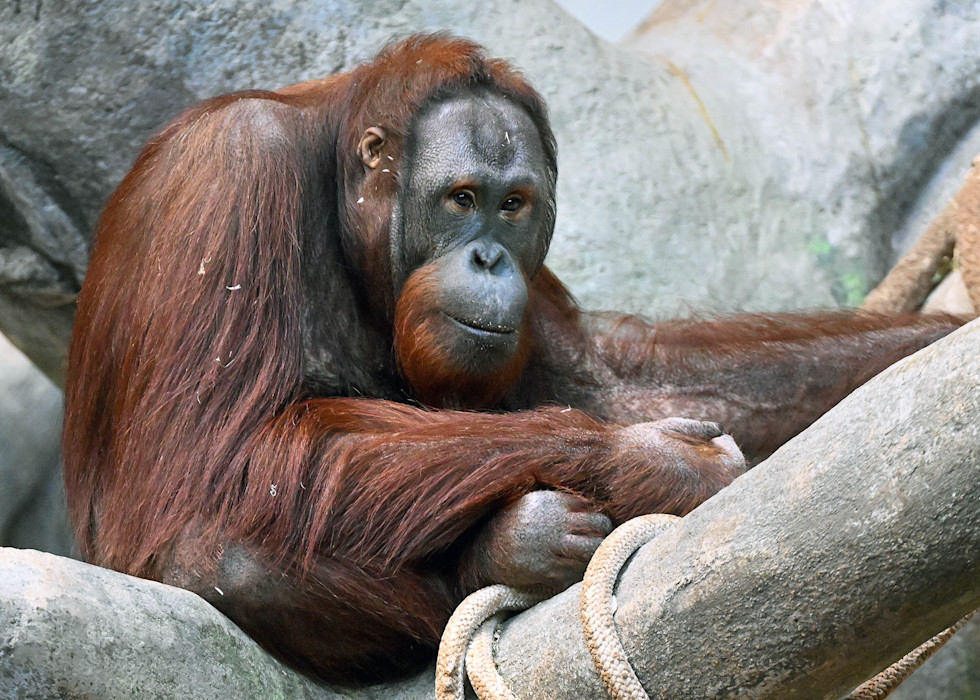
Kekasih
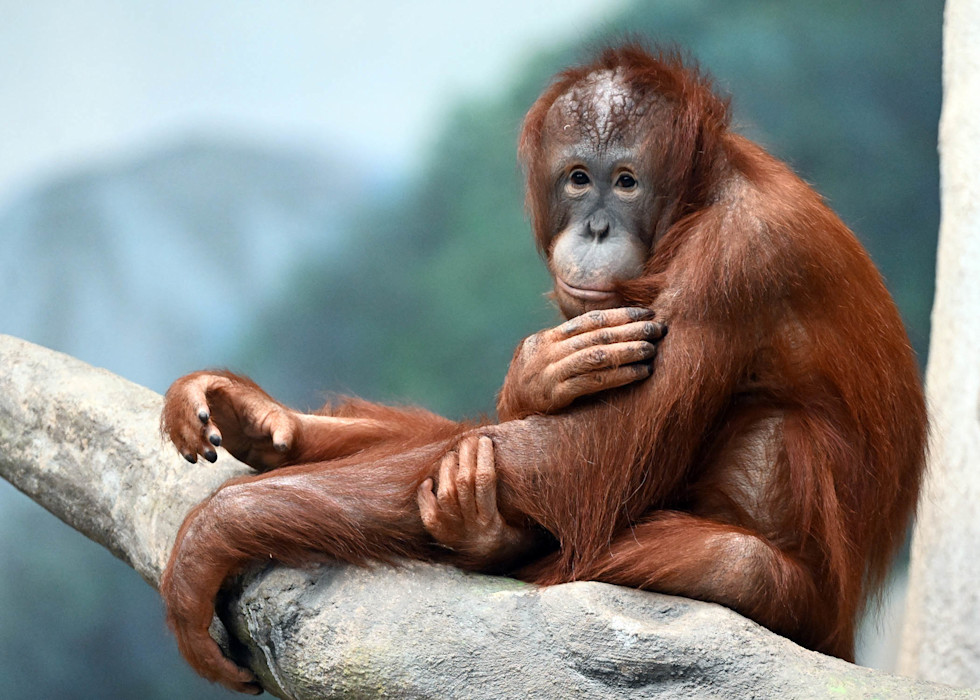
Sophia