Overview
Camouflaged in the Trees
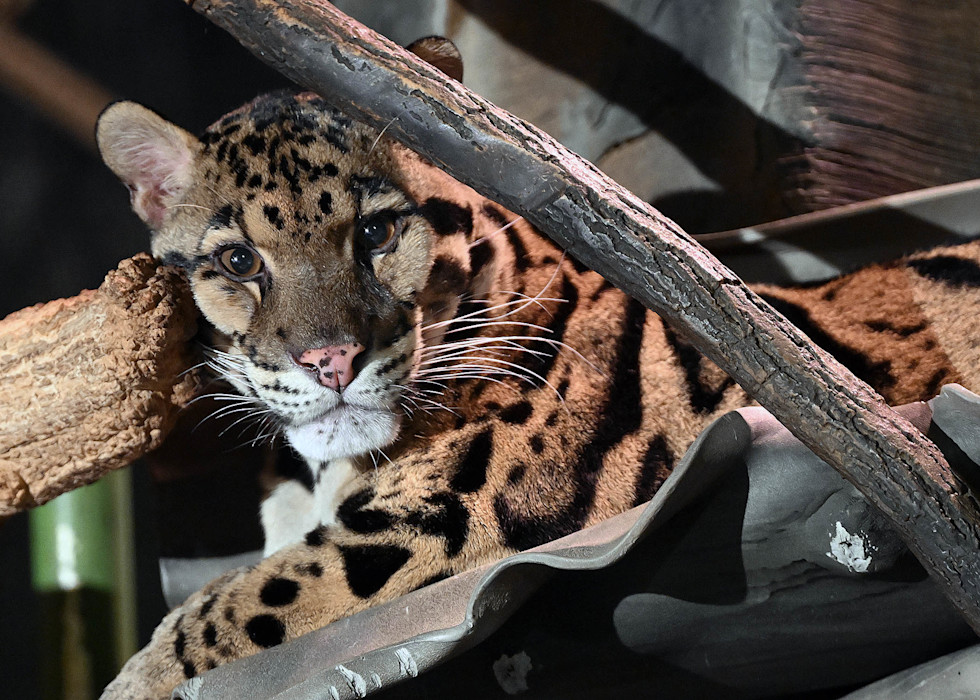
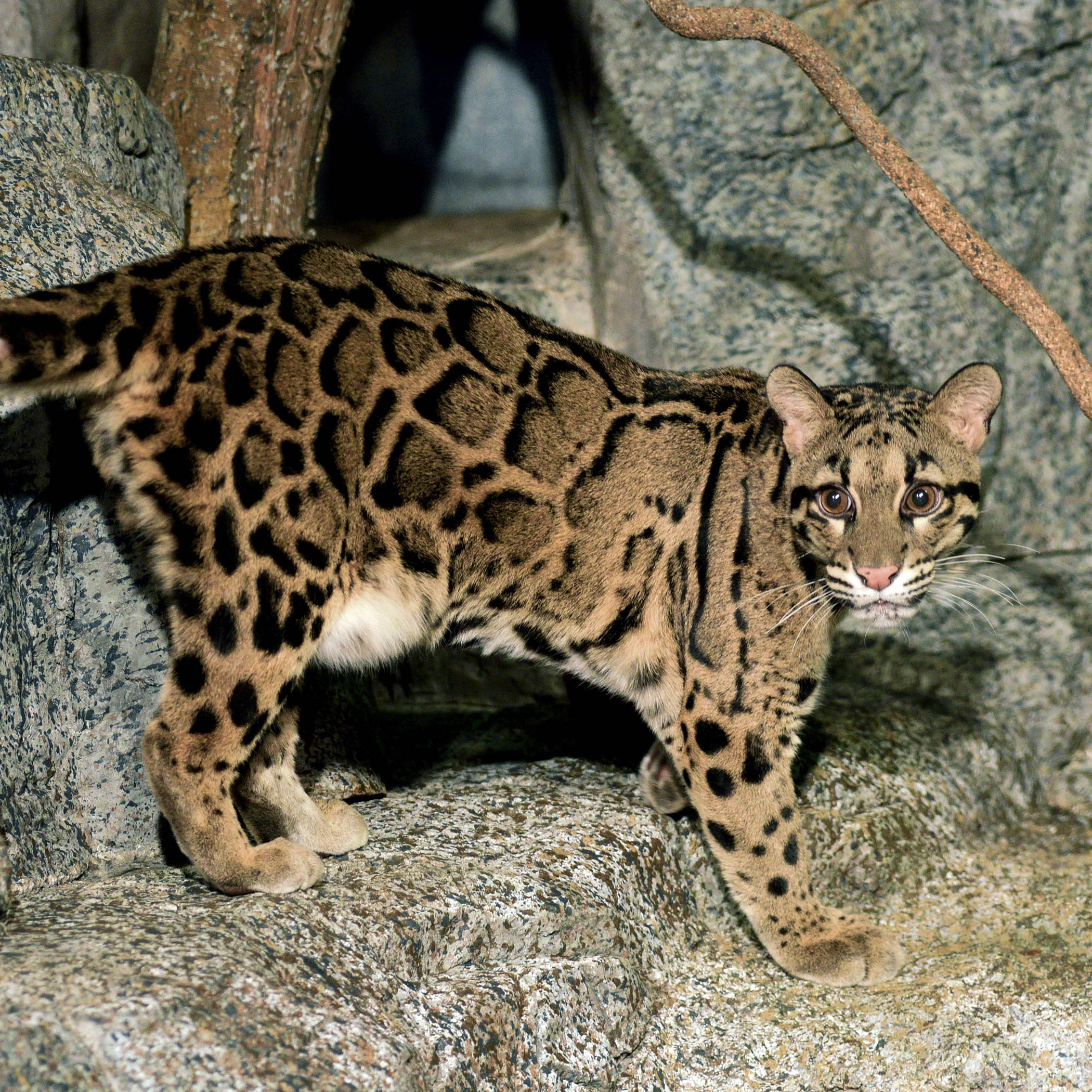
Clouded leopards live in the Himalayan foothills throughout southeast Asia. They are named for the cloud-like patterns on their fur, which provide excellent camouflage. They are skilled climbers and can run down trees headfirst and can climb upside-down. Carnivorous, they tend to eat mammals like monkeys, small deer, and wild boars. They are listed as "vulnerable" on the IUCN Red List. There are fewer than 10,000 mature individuals remaining in the wild.
Characteristics
Clouded leopards are yellow-reddish-brown to yellow gray in color. Their fur has dark brown bands that form square or circular shapes. They are named for these cloud-like patterns, which provide excellent camouflage. Their fur is short and coarse, their tails are very long, and their legs are relatively short. In relation to their body size, their upper canine teeth are longer than those of any other cat species. Also, they have a huge jaw gape (about 100 degrees) compared to 65 degrees for lions.
Clouded leopards have keen hearing and vision and a well-developed sense of smell. Since they hunt during the night, their eyes are adapted to have better vision in low light. This enables them to see approximately six times better than a human can in the same light.
Behavior
Normally solitary animals, clouded leopards socialize for breeding. They are primarily nocturnal but may also be active in the early morning. Clouded leopards purr, much like smaller cats. They also have a distinctive cuff, a soft and loud meow, and they growl and hiss. They are skilled climbers and can run down trees headfirst and can climb upside-down.
Diet
Clouded leopards catch small prey by swatting with their broad, spoon-shaped paws. They can catch larger prey by dropping down on it from the trees. They are carnivores that mainly eat mammals like monkeys, small deer and wild boars. They may also hunt birds and rodents.
Threats
Clouded leopards are listed as "vulnerable" on the IUCN Red List.
Clouded leopards are endangered due mainly to habitat destruction, especially loss of primary tropical rain forest, but also because their fur brings a high price on the fur market. They are also vulnerable to the medicinal market and the pet trade in live animals. It is suspected that there are fewer than 10,000 mature individuals remaining in the wild.
How We're Helping
The clouded leopard is part of the Species Survival Plan at Brookfield Zoo Chicago. Learn more about this cooperative population management and conservation program here.