Overview
Shallow Water Sharks
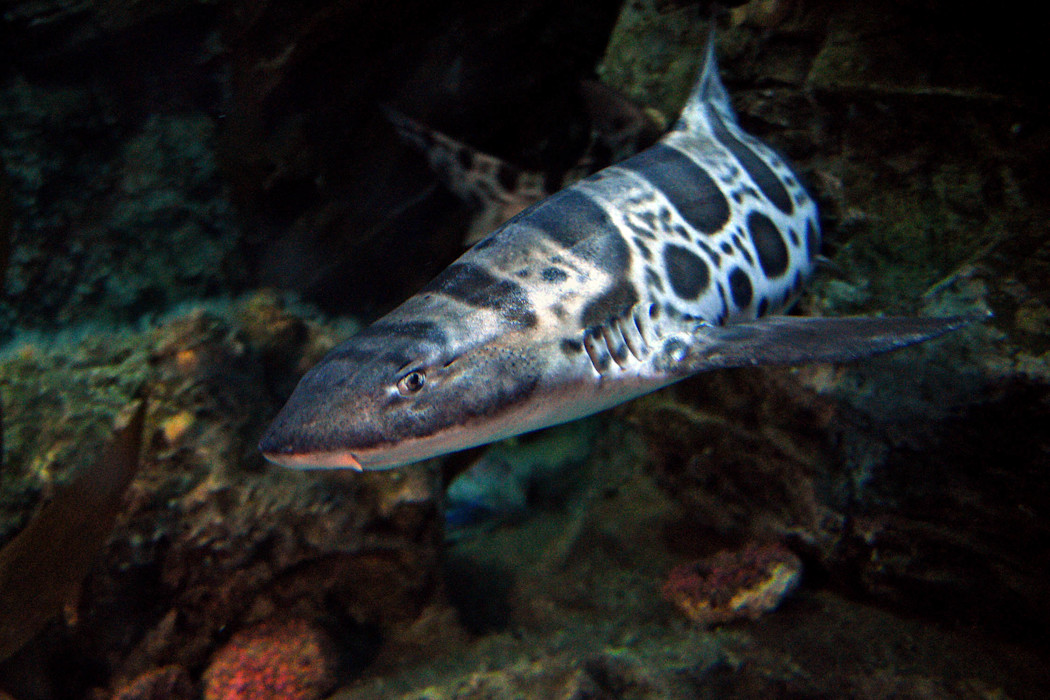
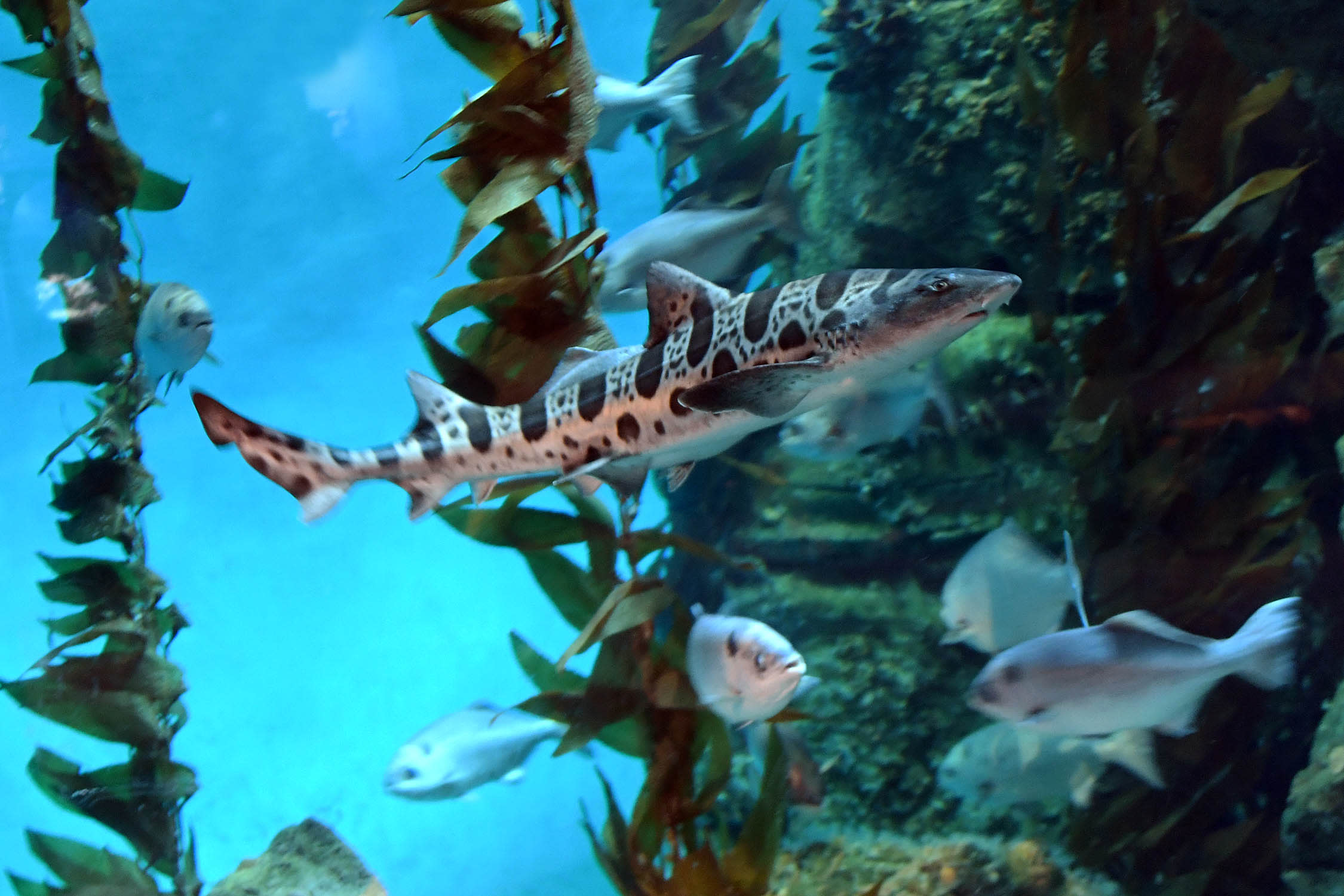
Leopard sharks are small sharks that live in shallow coastal waters, bays, and estuaries along the Pacific coast of North America. They are easy to recognize by their silvery gray bodies covered with dark saddle-shaped markings and spots. These sharks usually swim in large groups and are most active at night, when they hunt for fish, crabs, clams, and worms along the sandy or muddy seafloor. Leopard sharks tend to stay in the same area throughout their lives and rarely travel long distances.
Characteristics
Leopard sharks have thick bodies and rounded noses. Their backs are silver to reddish-gray, with black saddle-shaped markings and large black spots. Adults usually have more spots than young sharks. Their eyes are large and oval, with a clear third eyelid that protects the eye while still letting them see. Both jaws have two rows of teeth. Their teeth form flat surfaces with overlapping ridges.
A leopard sharks has a lateral line along each side of its body that senses vibrations in the water. This helps them detect predators or prey. They have a strong sense of smell and can also detect electrical signals from prey. Their inner ears, inside their skulls, help them balance.
Behavior
Leopard sharks are predators that are mostly active at night. They swim in large groups, usually in shallow water around 13 feet deep, but they can go as deep as 299 feet. They are most often found near the coast, in bays, and in estuaries, swimming over sandy or muddy bottoms. Leopard sharks usually stay in the same area throughout their lives and do not swim long distances.
Diet
Leopard sharks mainly eat small animals that live on the sea floor or in shallow water near the shore. This includes: crabs, clams, shrimp, bony fish, and fish eggs.
They capture prey by expanding their mouths to create suction. As they expand their mouth, their lip cartilage moves forward to form the mouth into a tube. The shark will then move its jaws forward to grasp the prey.
Threats
Leopard sharks are listed as of "least concern" on the IUCN Red List. The leopard shark is not considered to be at risk.
How We're Helping
Brookfield Zoo Chicago participates in the AZA SAFE leopard shark program to help identify survival threats, support recovery, and offer you opportunities to learn more about at-risk species.