Overview
Back from Extinction
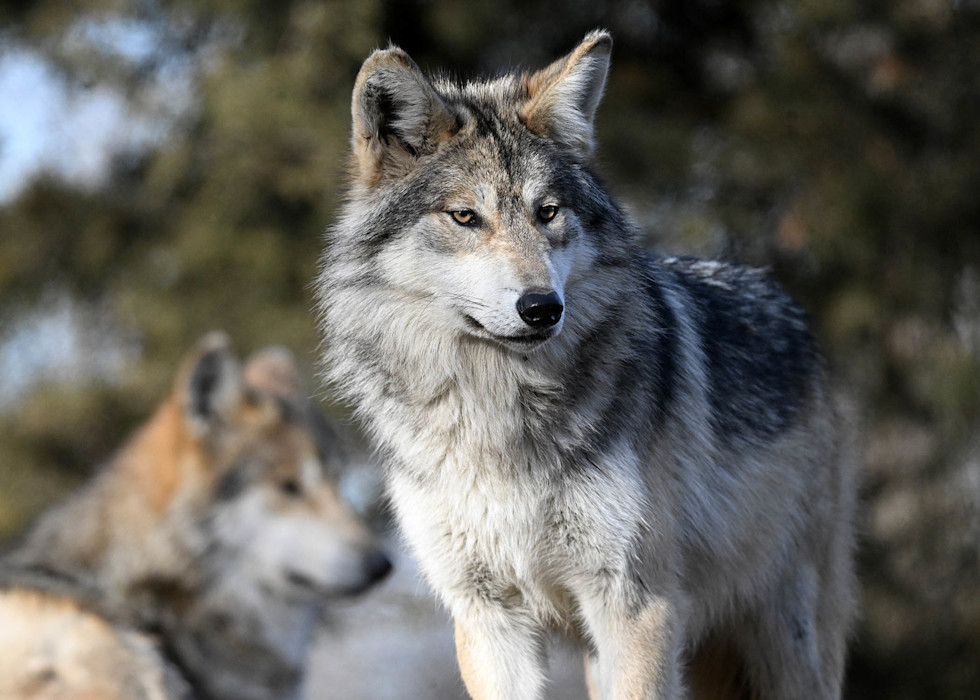
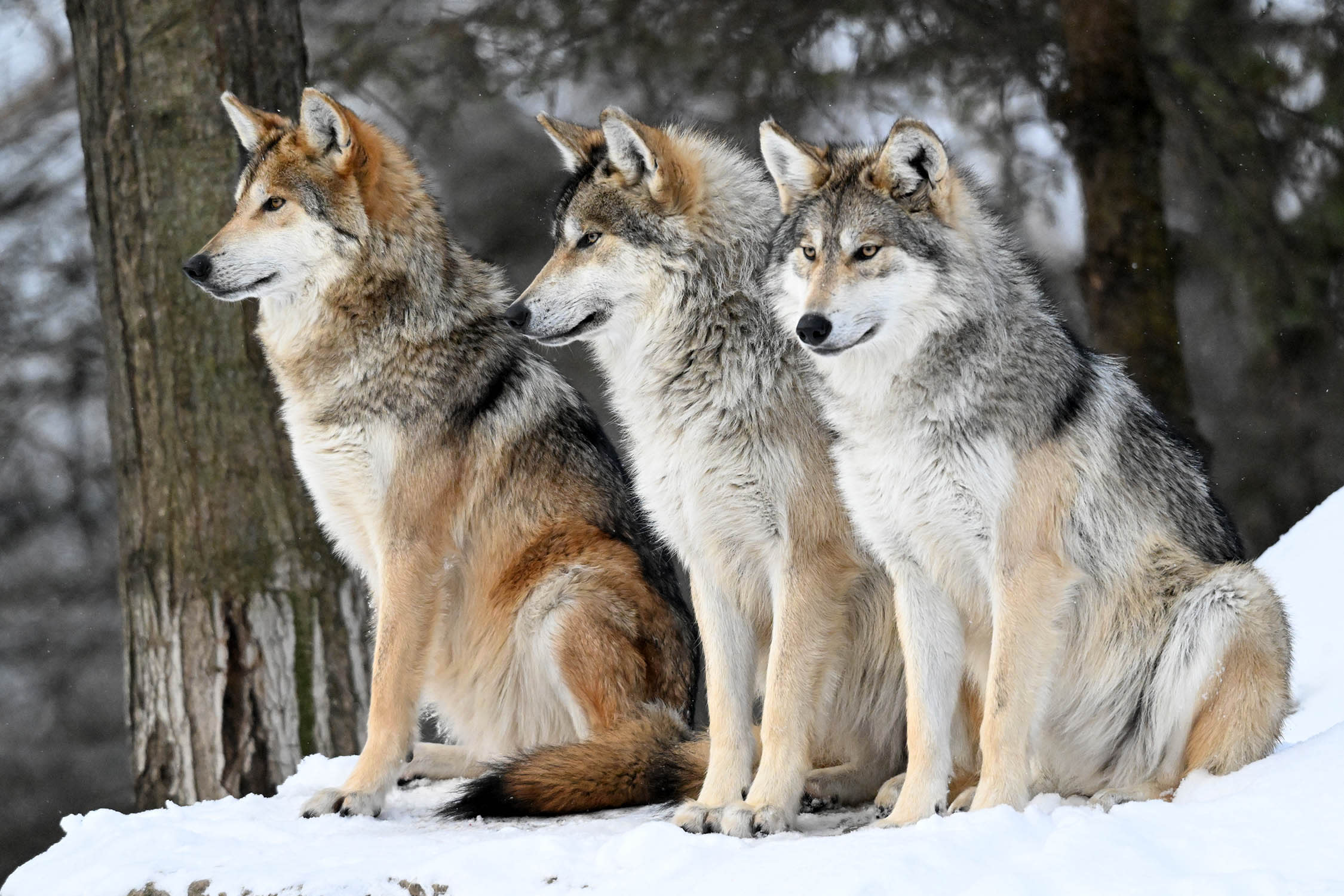
Mexican gray wolves, also known as “lobos,” are the smallest and rarest subspecies of gray wolf in North America. They have thick, multi-colored fur that can be dark brown, cinnamon, tawny, cream, or grizzled. These wolves live and hunt in family packs led by an alpha male and female, who guide movements and maintain order.
They rely on their sharp sight, hearing, and smell to track prey like deer and elk, often hunting cooperatively in packs. Though fast runners, their hunts are not always successful, so they eat quickly and make the most of every kill.
Once nearly extinct, they are now part of a Species Survival Plan to repopulate the species.
Characteristics
Mexican gray wolves vary in color depending on where they live. Their fur can be dark brown, cinnamon, tawny, cream, grizzled, or brindle. The backs of their ears and sides are usually brown, while their faces and undersides are white to cream. Their thick fur has two layers: a soft undercoat that keeps them warm and a longer guard coat that protects the undercoat from getting wet. They shed heavily in early spring.
They have upright, rounded ears and a strong head with a short muzzle and large nose. Their long legs and sturdy feet help them travel long distances, dig burrows, and bury food. They have 42 sharp teeth and strong jaws for gripping prey, cutting tendons, and crushing bones.
Mexican gray wolves have excellent hearing, sight, and smell. Their eyes are sensitive to movement, helping them hunt at night. Their powerful sense of smell allows them to track prey up to 4 miles away and communicate with other wolves.
Behavior
Mexican wolves make a variety of vocalizations including howls, yips, squeals, growls, and barks. The Mexican gray wolf's howl is its best known vocalization. They howl upon waking, when bringing the pack together, before and after a kill, and for enjoyment. Facial expressions and body postures are a large part of their communication. These behaviors include: showing dominance and submission, courtship, play, and greeting ceremonies. Mexican wolves are active during the day and night.
They have complex social behaviors. A pack usually consists of the breeding pair's litter, and the new pups. Most non-breeding pack members leave their natal pack when they are one to two years old to join or form new packs. The alpha male and female lead the pack by setting boundaries, keeping order among members, and guiding the pack’s movements. The pack size averages from two to 10 animals but can range up to 20 animals. The home territory is usually 50 to 1,000 square miles.
Diet
Mexican wolves use sight, sound, and smell to hunt, working together in packs. The lead wolves start the chase, moving downwind so their prey can’t smell them. They sneak as close as possible before attacking, usually biting the prey’s rump or nose. They can run 25–40 mph.
Hunting is difficult, and their success rate is low. Because of this, they eat quickly and leave little behind for scavengers. Their bodies are built to handle both feast and famine. In spring, they may eat an entire fawn or calf, including bones for calcium and marrow for protein. In fall, they hunt beavers to build fat for winter. Their main prey are elk and deer, but in winter they may also hunt smaller animals like rabbits.
Threats
The gray wolf is listed as "least concern" on the IUCN Red List. However, IUCN does not distinguish among the five gray wolf subspecies. The U.S. Fish and Wildlife Service continues to consider the subspecies balleyi to be endangered.
Their biggest threat is conflict with livestock operations and other human activities.
How We're Helping
Mexican wolves were considered extinct in the wild until their reintroduction into Arizona and New Mexico in 1998. Killing a Mexican gray wolf is a violation of the federal Endangered Species Act.
Mexican gray wolves are part of the Species Survival Plan at Brookfield Zoo Chicago. Learn more this cooperative population management and conservation program here.