Overview
Elusive Cats of Asia
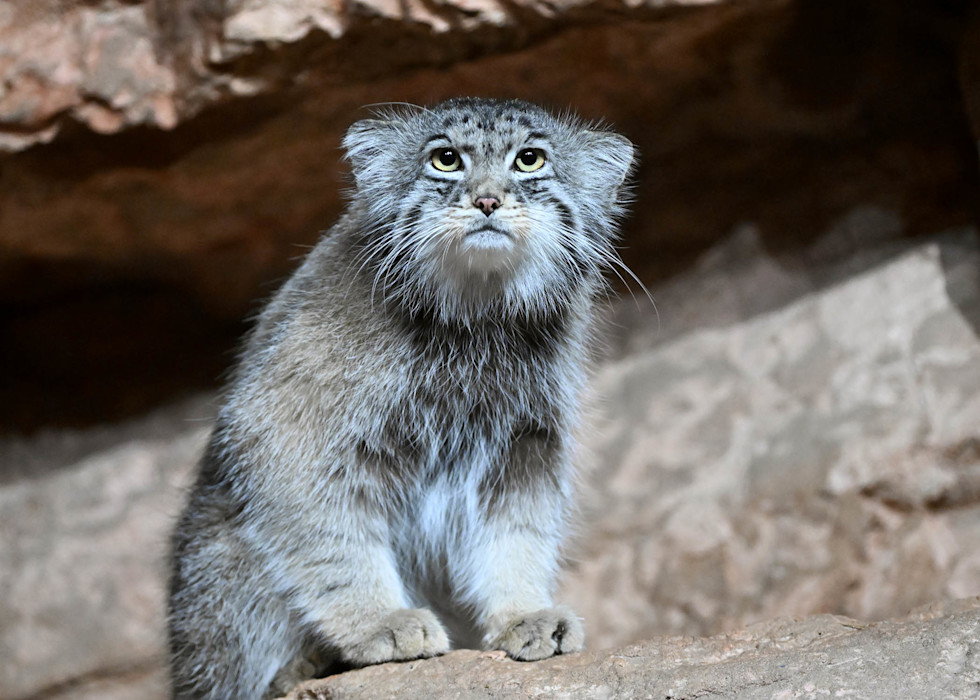
Pallas's cats are small, stocky wild cats with thick fur, round pupils, and low-set ears. They live in the rocky, grassland, and hilly habitats across Central Asia, including Mongolia, Tibet, and parts of Russia. They are solitary, mostly active at dawn and dusk. They spend the day hiding in dens or crevices to avoid predators and harsh weather. Pallas's cats are meat-eaters, mainly hunting pikas and other small mammals.
Characteristics
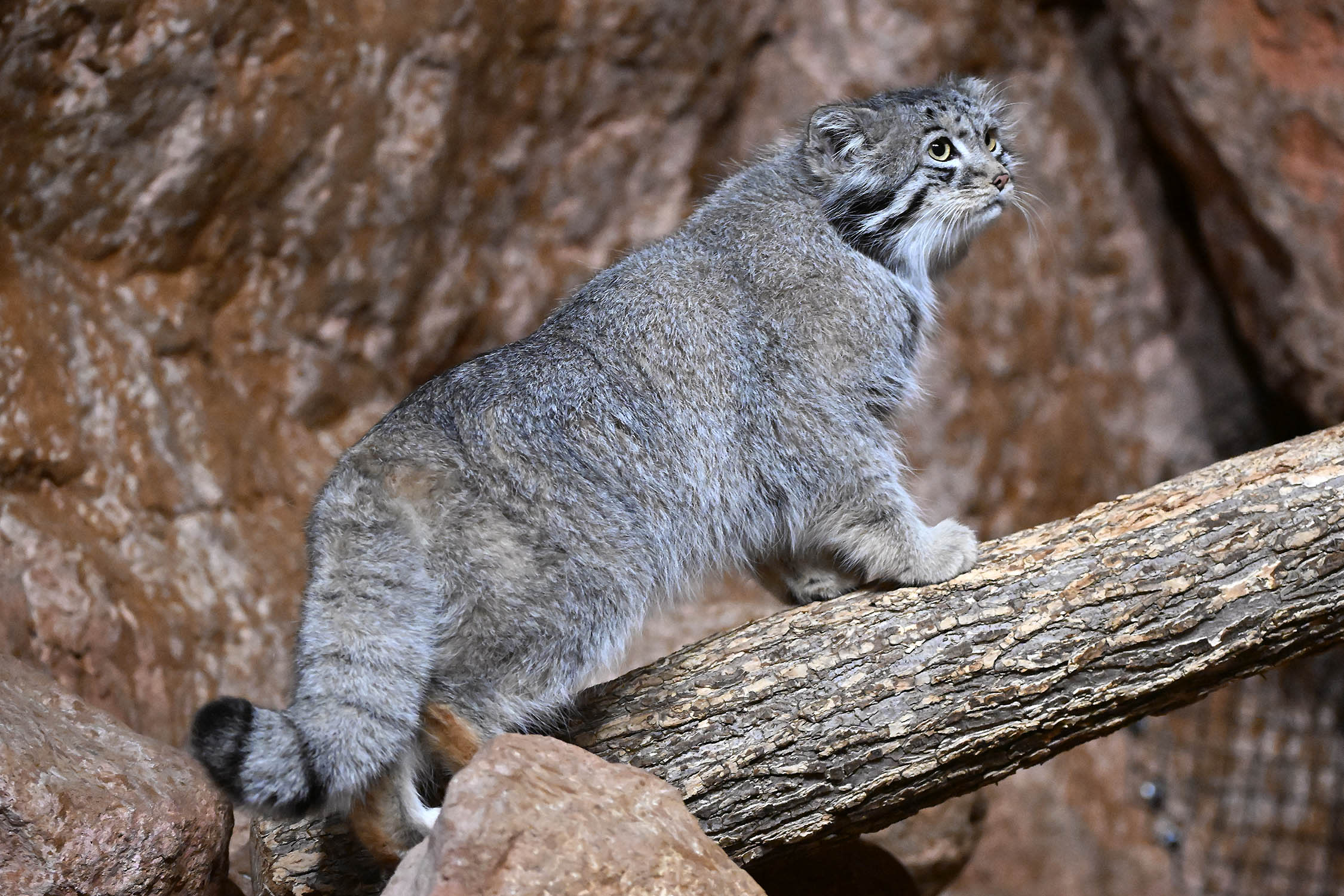
The Pallas's cat has a short, stocky body and a thick, long coat. Its fur can be light gray or pale reddish-buff with white tips. Its tail has black rings and a black tip. The face is wide and flat, with two thin black stripes from the eyes, and small, rounded ears set low on the sides of its head.
Behavior
Pallas's cats are very solitary and live alone, each keeping a large territory. Males usually have bigger territories that can overlap with several females, while females have smaller, more private areas. They rarely meet other adults except to mate.
They are mostly active at dawn and dusk, like their main prey. During the day, they hide in dens to stay safe from predators and harsh weather.
Diet
The Pallas's cat only eats meat, mainly feeding on pikas, small rabbit-like animals. They also eat other small mammals like voles, gerbils, marmots, and hamsters. Sometimes they'll eat birds, insects, or small reptiles.
They hunt mostly at dawn and dusk, using ambush tactics. Their flat face, low-set ears, and camouflaged fur help them stay hidden. They sneak through vegetation or hide behind rocks, waiting near burrows. When prey comes out, they pounce quickly and may even reach into burrows to catch it.
Threats
The Pallas’s cat is listed as "least concern" on the IUCN Red List.
They are still affected by habitat loss and broken-up habitats caused by farming and livestock grazing. Other dangers include eating poisoned prey, which can make them sick, and illegal hunting for their fur and use in traditional medicine.
How We're Helping
The Pallas's cat leopard is part of the Species Survival Plan at Brookfield Zoo Chicago. Learn more about this cooperative population management and conservation program here.