Overview
Predators of the Arctic
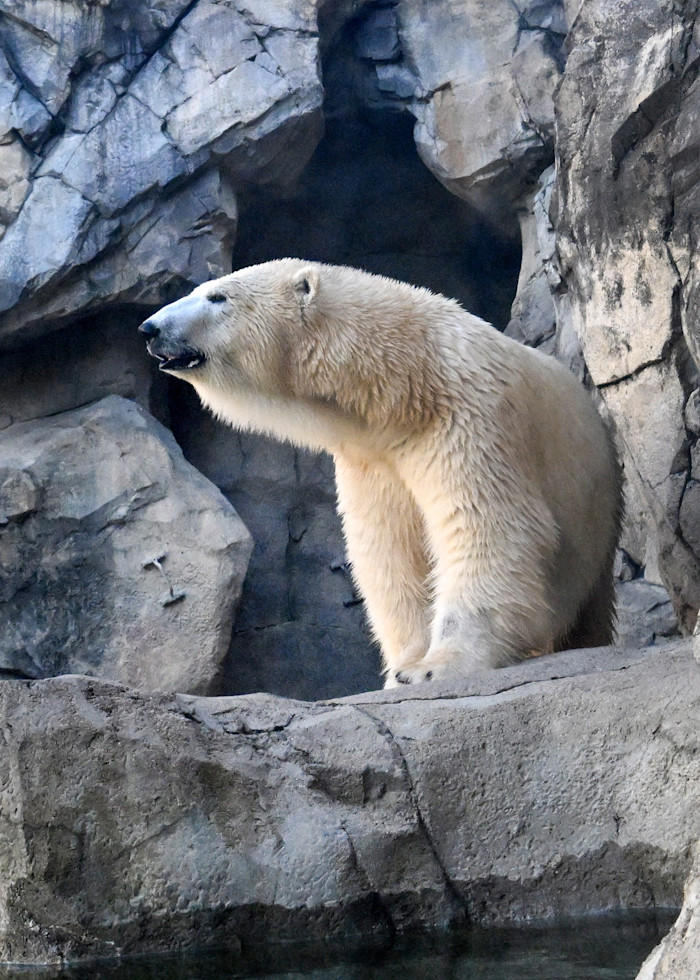
Polar bears are carnivorous bears that live in the Arctic regions of the U.S., Canada, Russia, Greenland, and Svalbard. They are well adapted to cold environments with thick fur, a layer of blubber for insulation, and large paws for swimming and walking on ice. Polar bears primarily hunt seals, using ice as a platform to catch them. They are excellent swimmers and can travel long distances across icy waters. They are listed as "vulnerable" on the IUCN Red List.
Characteristics
Polar bears are covered in a thick, dense coat of hair. Each hair is a hollow tube that lacks pigment. When the sunlight bounces off the hair shaft, it appears white in color. Wild bears may look yellowish in the summer due to the oxidation of seal oil on their coat.
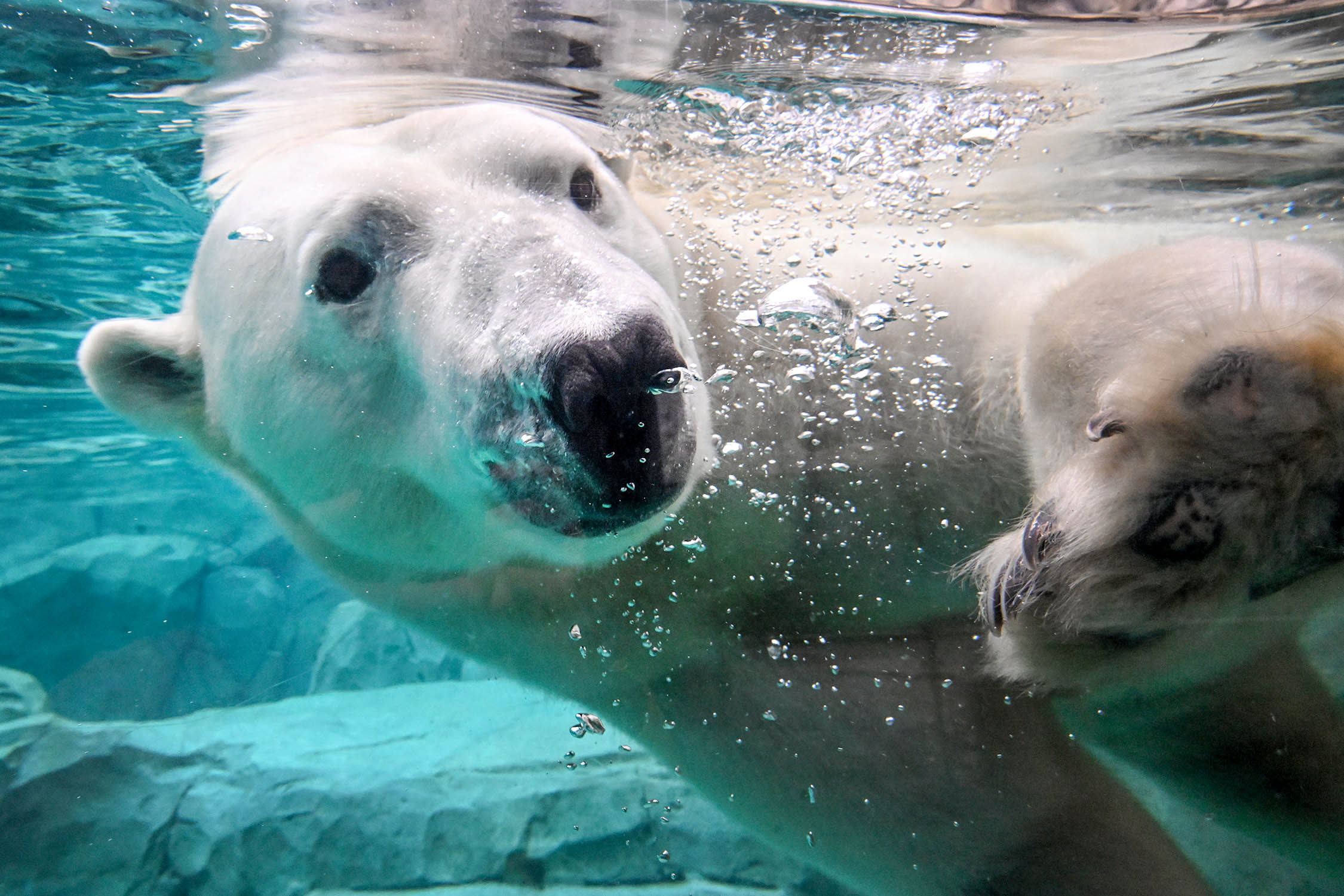
Their fur does not repel water, so they can become hypothermic if they are submerged in water too long. Fur covers the soles of the paws, except for the foot pads. This provides traction and warmth against the ice. Their black skin under their fur absorbs the warming ultraviolet rays of the sun. They have 4 to 5 inches of blubber that insulates their body.
Polar bears have small, round heads and long necks. To help with swimming, their feet are flat, large, and oarlike. They have a membrane between their toes that is up to half the length of the toes.
Their excellent sense of smell is by far their most important sense. They can smell a seal more than a mile away.
Behavior
Polar bears are solitary, except during the breeding season and when females are with their cubs. Large groups are known to gather at major food sources during certain times of the year. They migrate due to seasonal changes in ice packs. Polar bears don't have territories but they do have home ranges. The size can vary greatly depending on the availability of prey.
Polar bears can run 25 mph for short distances, swim for miles at a time across open water, and stay underwater for about two minutes. They can launch themselves out of the water and land on all four feet on the ice. Their short, curved, sharp claws grip the ice, enabling them to cling to ice floes or to climb towering pressure ridges. Males and nonpregnant females remain active all winter. Pregnant females go into dens.
Diet
Polar bears are carnivores. They mainly eat seals, seabirds, fish, carcasses of marine mammals, and sometimes vegetation. Their favorite prey is seals, which is most abundant in spring. As such, polar bears obtain about two-thirds of their total energy during the spring.
Polar bears' most common hunting method is the "still hunt." A bear waits silently and motionless beside a seal's breathing hole. When the seal surfaces to breathe, the bear grabs the seal's head and pulls it through the ice.
A bear may need to kill a seal every four to six days to maintain its body weight. To get as many calories as possible, it eats the skin and blubber first. The stomach of a large bear can hold up to 150 pounds of food.
Threats
Polar bears are listed as "vulnerable" on the IUCN Red List. Polar bears' habitat is threatened by exploration for gas and oil; they are also threatened by sport and native hunting. One of the biggest threats to the species is the loss of sea ice due to climate change.
How We're Helping
The Brookfield Zoo Chicago Wildlife Conservation Fund supports our animal care and science programs here at the Zoo, and also allows us to invest in and partner with programs dedicated to safeguarding endangered species and their habitats. Learn more about our commitment to conservation.
Meet the Bears
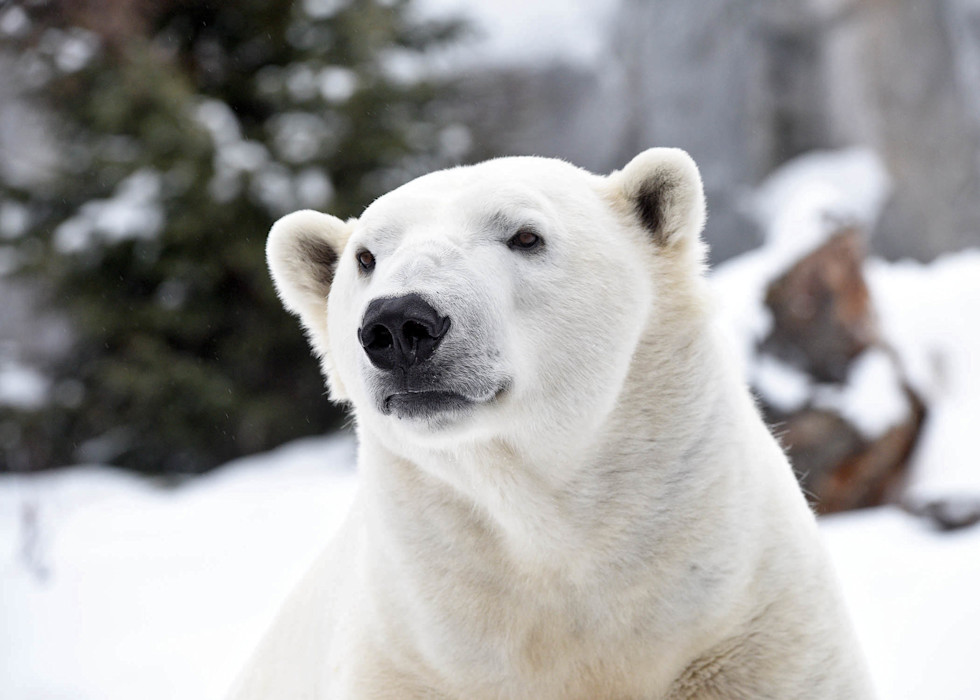
Hudson
Hope
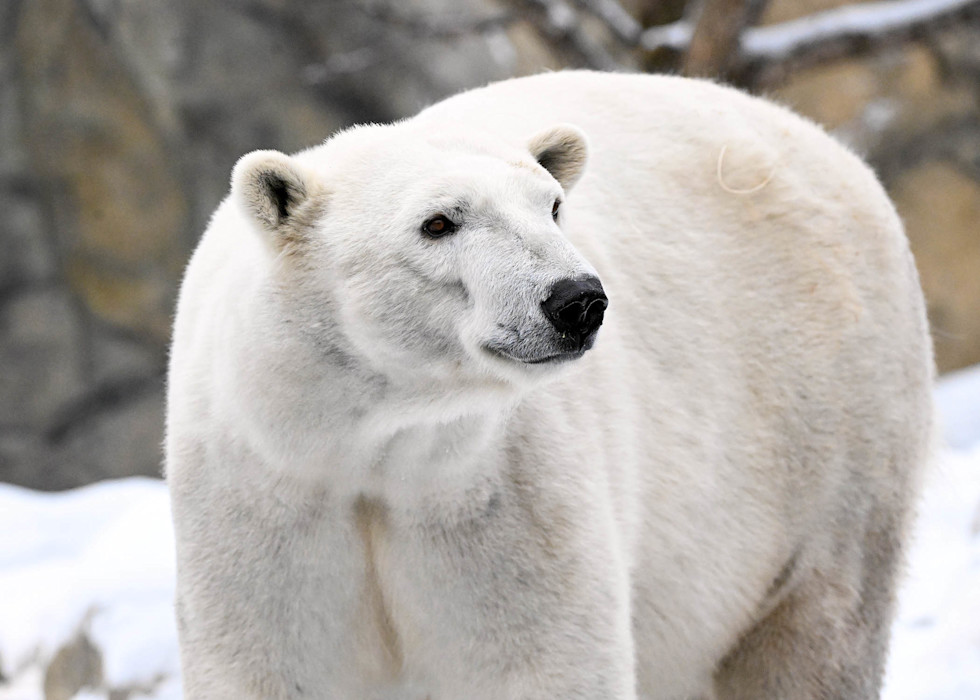
Amelia Gray