Overview
A Madagascar Troop
Ring-tailed lemurs are primates native to Madagascar. They have long, black-and-white ringed tails, which they use for balance and communication. These lemurs live in social groups called troops, usually led by females. Ring-tailed lemurs eat a variety of foods, including fruit, leaves, nuts and herbs. They are listed as "near threatened" on the IUCN Red List due to habitat loss and hunting.
Characteristics
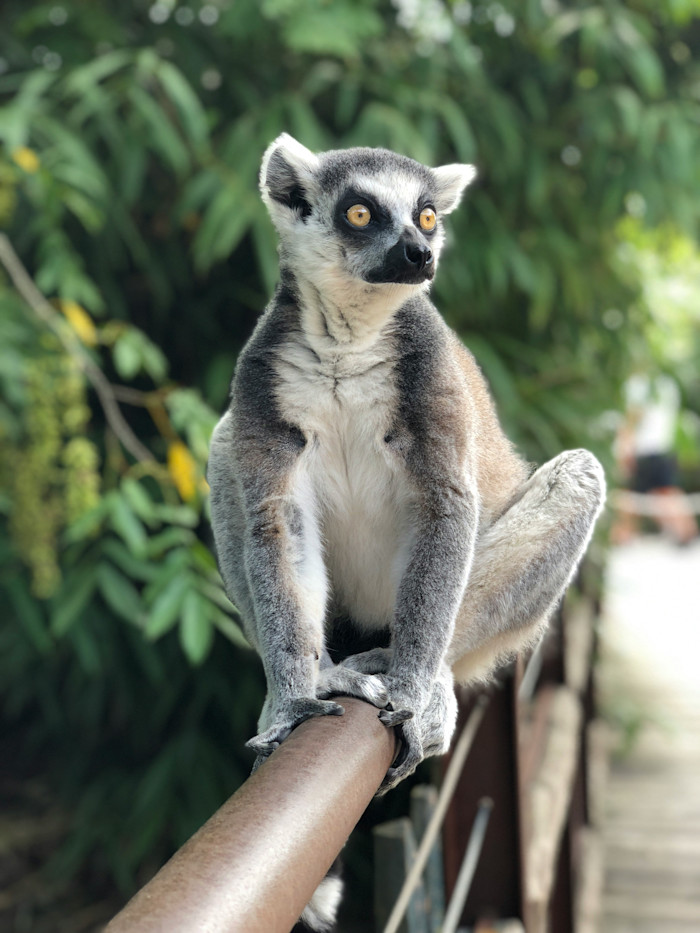
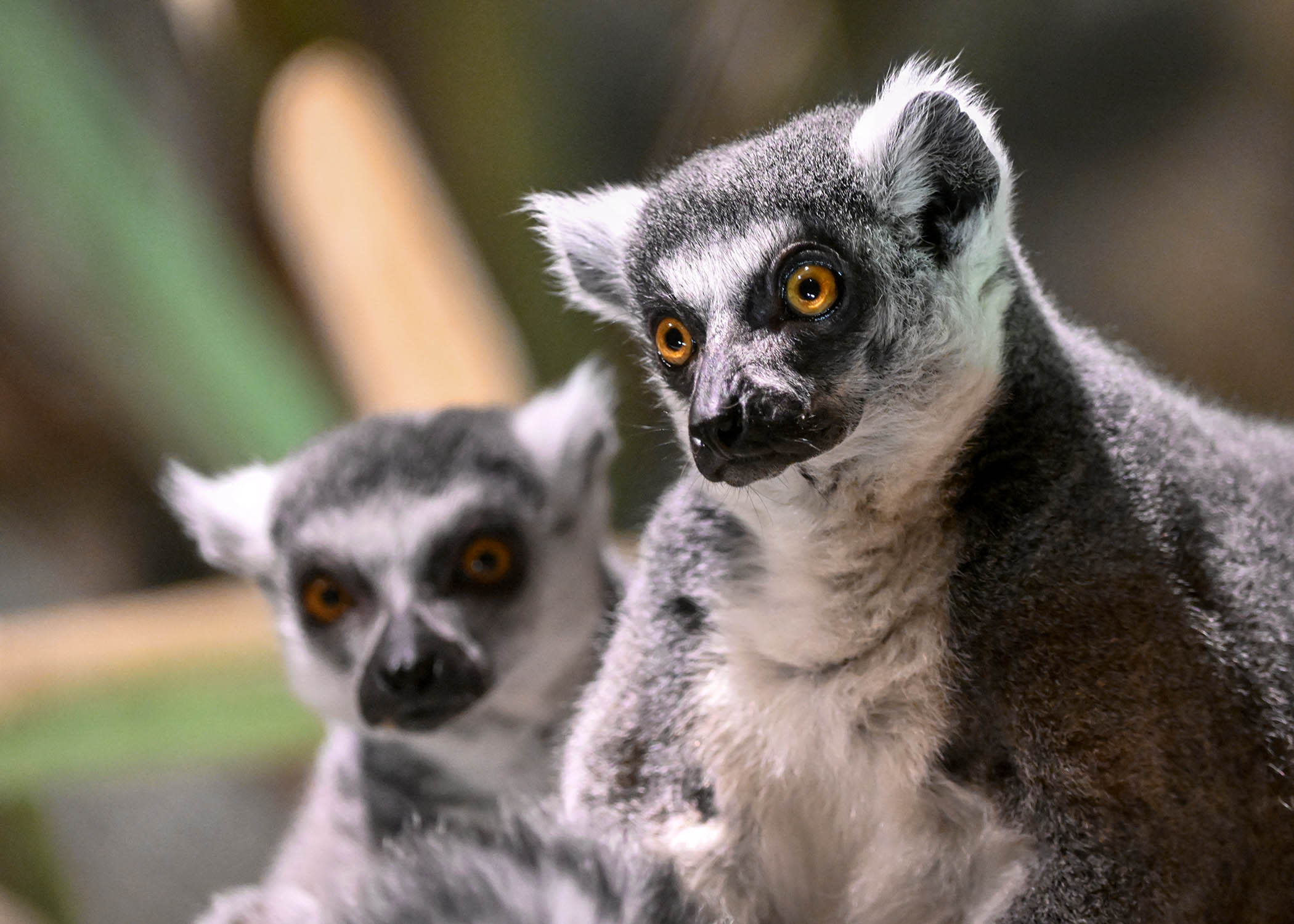
Ring-tailed lemurs are about the size of a house cat. Their fur can be gray to rosy brown. They have white undersides and faces with dark triangular eye patches and a black nose. Their long tail has 13 black and white rings, which gives them their name.
They rely mostly on hearing and smell in daily life. Their vision is decent but not very colorful, so they depend more on scent. They use scent marking to share information with their group.
Behavior
Ring-tailed lemurs are active during the day. They are mainly tree-dwelling but tend to be more ground-dwelling than other lemurs. On sunny mornings, they often sit in treetops sunning. Ring-tailed lemurs are found in social groups of three to 25 individuals. They defend resources but are not strictly territorial. Troops range over a considerable area each day in search of food. Their home ranges vary in size from 15 to 57 acres. When ring-tailed troops travel, they keep their tails raised in the air to keep group members together.
Females are usually dominant over males, which gives them preferential access to food and the choice of mates.
Diet
Ring-tailed lemurs have scent glands on their wrists and chests that they use to mark their foraging routes. They forage mostly for fruit but also eat leaves, nuts, and herbs.
Threats
Ring-tailed lemurs are listed as "endangered" on the IUCN Red List. Their forests are rapidly disappearing. They are also hunted for food in certain areas of their range
How We're Helping
The ring-tailed lemur is part of the Species Survival Plan at Brookfield Zoo Chicago. Learn more about this cooperative population management and conservation program here.