Overview
"Ghosts of the Mountains"
Snow leopards are solitary cats that live high in the mountains of Central and South Asia. Their thick, gray fur and long tails keep them warm in freezing temperatures while helping them blend into rocky terrain. They have powerful legs for leaping across cliffs and wide paws that act like natural snowshoes.
They mainly eat sheep and ibex. Snow leopards are shy and rarely seen, earning them the nickname “ghosts of the mountains.” They are threatened by habitat loss, poaching, and declining prey, and are listed as "vulnerable" on the IUCN Red List.
Characteristics
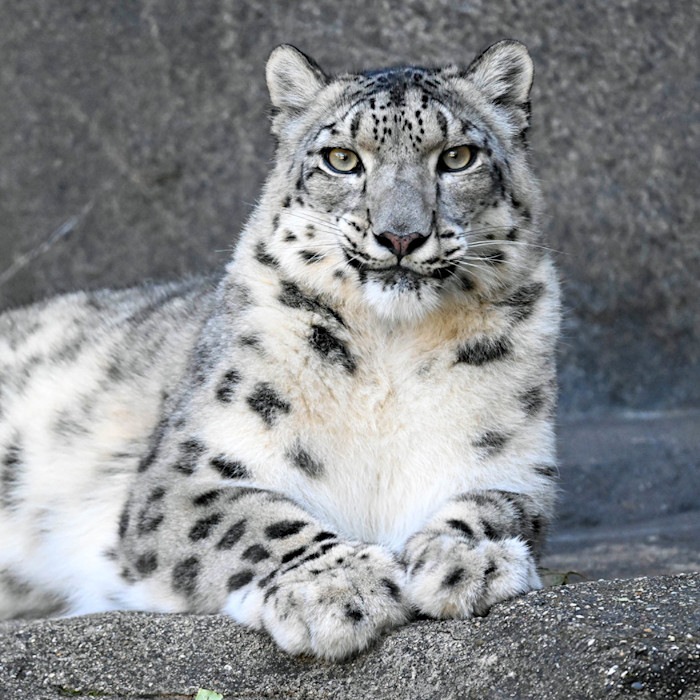
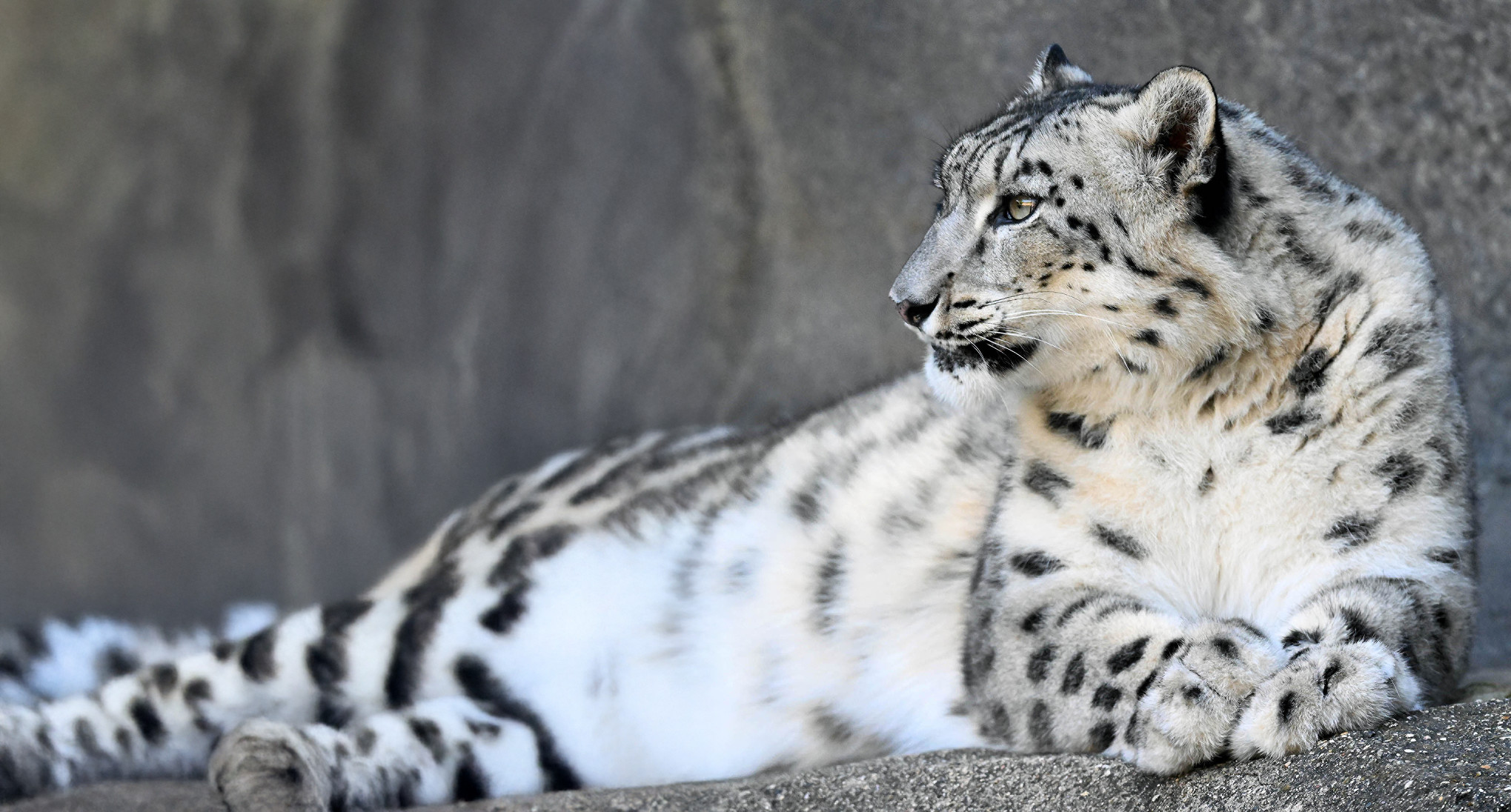
Snow leopards have long, thick fur that’s soft gray or cream with a white belly. Their head, neck, and legs are covered in dark spots. Their body has larger brown blotches outlined in black. Their ears and back are streaked with black, and their coat becomes lighter in winter. They have long tails, small heads, and furry paws that act like snowshoes to help them walk on snow.
They have excellent vision, hearing, and balance. As nocturnal animals, their eyes reflect light to help them see better in the dark. They have strong binocular vision, which gives them great depth perception.
Behavior
Snow leopards are most active in the early morning and late afternoon. In central Asia, they are more active at night because they are hunted. They live alone and need large home ranges — males usually cover bigger areas than females and may overlap with several females. Their ranges can be as small as 4 square miles where prey is plentiful or as large as 54 square miles where prey is scarce. Although solitary, they sometimes share space peacefully with other snow leopards.
They rest in rocky caves or crevices and communicate through sounds and scent markings, such as scrapes and scent marks on rocks. These signals help snow leopards recognize one another and avoid conflict. They walk on their toes and are very agile, able to leap as far as 50 feet horizontally by pushing off rocks. They can also jump 20 feet vertically.
Diet
Snow leopards are carnivores that mainly eat mountain goats, sheep, musk deer, ibex, and sometimes domestic livestock. They stalk or ambush prey, usually attacking from a distance of about 15 feet.
Threats
Snow leopards are listed as "vulnerable" on the IUCN Red List. Their population continues to decrease due to habitat loss, human-wildlife conflict, and impacts of climate change. They are extremely rare in many parts of their range.
How We're Helping
The snow leopard is part of the Species Survival Plan at Brookfield Zoo Chicago. Learn more this cooperative population management and conservation program here.