Overview
A Tree-dwelling Anteater
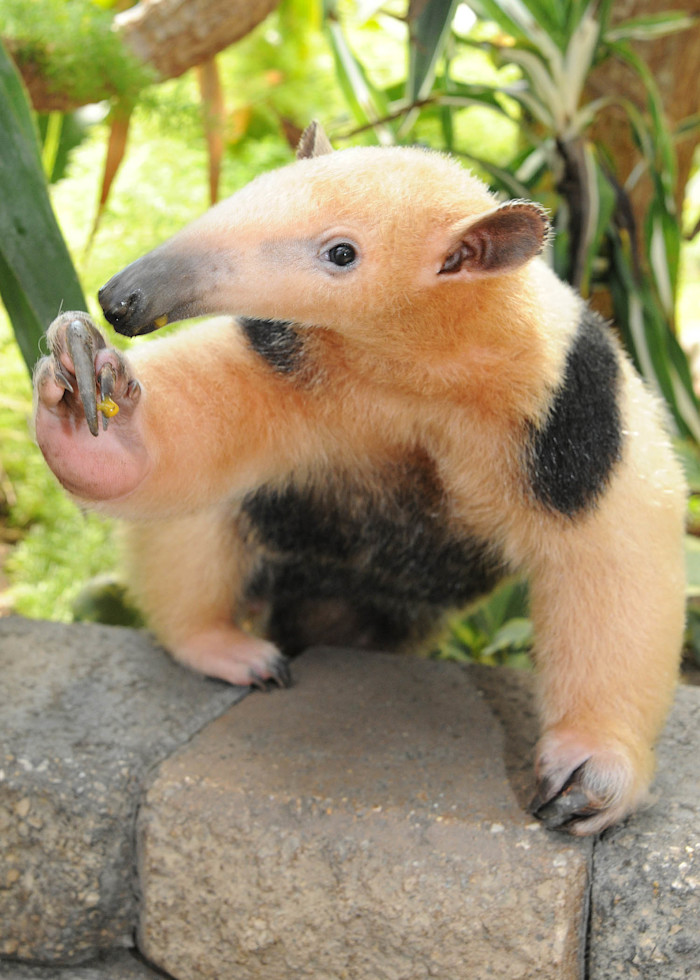
The southern tamandua is a medium-sized anteater native to much of South America. It is recognizable by its long snout, powerful claws, and distinctive black markings called a “vest.” It is a skilled climber and feeds mainly on ants and termites using a long, sticky tongue.
Characteristics
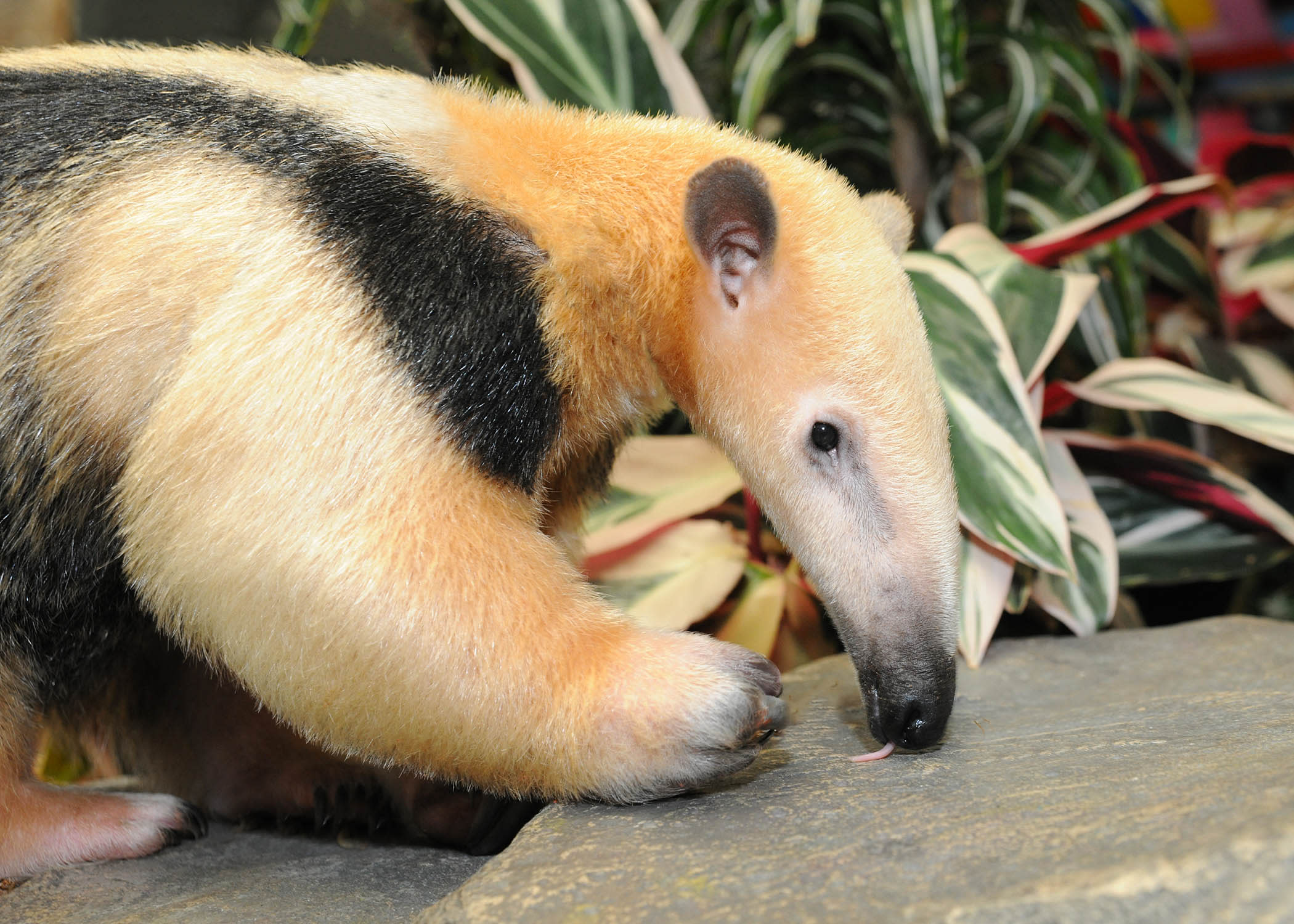
Southern tamanduas' fur is typically blonde, tan, or brown. They are usually strongly vested, meaning they have black markings running from their shoulders to their rump. Because their front claws are so sharp, they walk on the outside edges of their hands to avoid injuring themselves. They have a prehensile tail, which means it can grip objects. Their snout is long and curves downward with a mouth opening that is only about as wide as a pencil, which is just big enough for their tongue to stick out.
Behavior
The tamandua is generally a solitary animal, except when mating or when a mother is raising her pup. Tamanduas are most active during the evenings and early dawn. Tamanduas are excellent climbers and spend a significant amount of time in trees. They often sleep and seek shelter in tree hollows and are commonly found near streams and rivers.
Because it has relatively poor vision, hearing is a crucial sense for the tamandua. If threatened, the tamandua may let out a hissing sound and can release a very unpleasant, powerful scent from its anal gland, similar to a skunk.
Diet
Southern tamanduas' primary food sources are ants and termites. However, they can also eat grubs, small beetles, honey, and even small amounts of fruit. They occasionally eat bees. They hunt for these insects both on the ground and high up in the trees.
Once it locates a termite mound or an ant nest, it uses its curved front claws to rip open the tough outer layers of the colony. This creates an opening just large enough for its mouth. Because they have no teeth, they cannot chew their food. Instead, they rely on a muscular gizzard in their stomach to grind up the insects after they have been swallowed.
The southern tamandua’s tongue stretches up to sixteen inches long. Their tongue is rounded like a worm and covered in a thick, sticky saliva that traps insects like flypaper. It is also covered in backwards facing barbs that help it collect insects. A tamandua flicks its tongue in and out of the nest up to one hundred and fifty times per minute.
Threats
The southern tamandua is listed as “least concern” on the IUCN Red List. Despite a stable status, the southern tamandua faces significant threats like habitat loss and hunting.
How We're Helping
The southern tamandua is part of the Species Survival Plan at Brookfield Zoo Chicago. Learn more this cooperative population management and conservation program here.