Overview
Long Jumpers of Australia
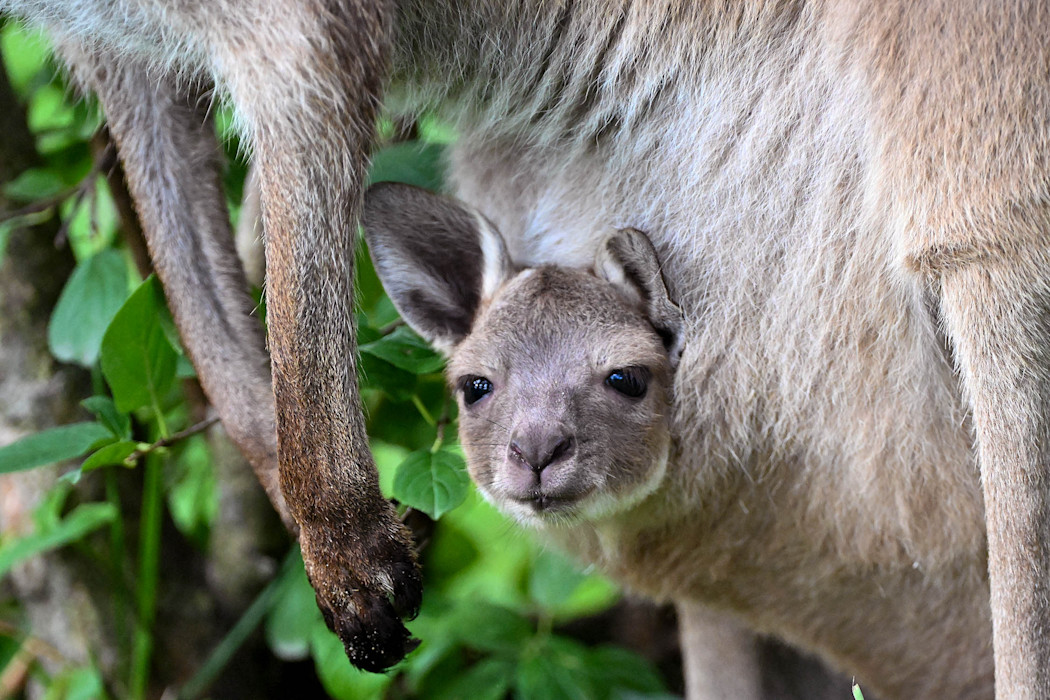
Western gray kangaroos are large marsupials native to southern Australia. They have thick, grayish-brown fur and powerful hind legs built for jumping. These kangaroos are mostly active in the late afternoon and evening, feeding on grasses, leaves, and shrubs. They live in groups called mobs, which provide safety from predators. Though common in many areas, they face habitat loss and vehicle collisions as threats.
Characteristics
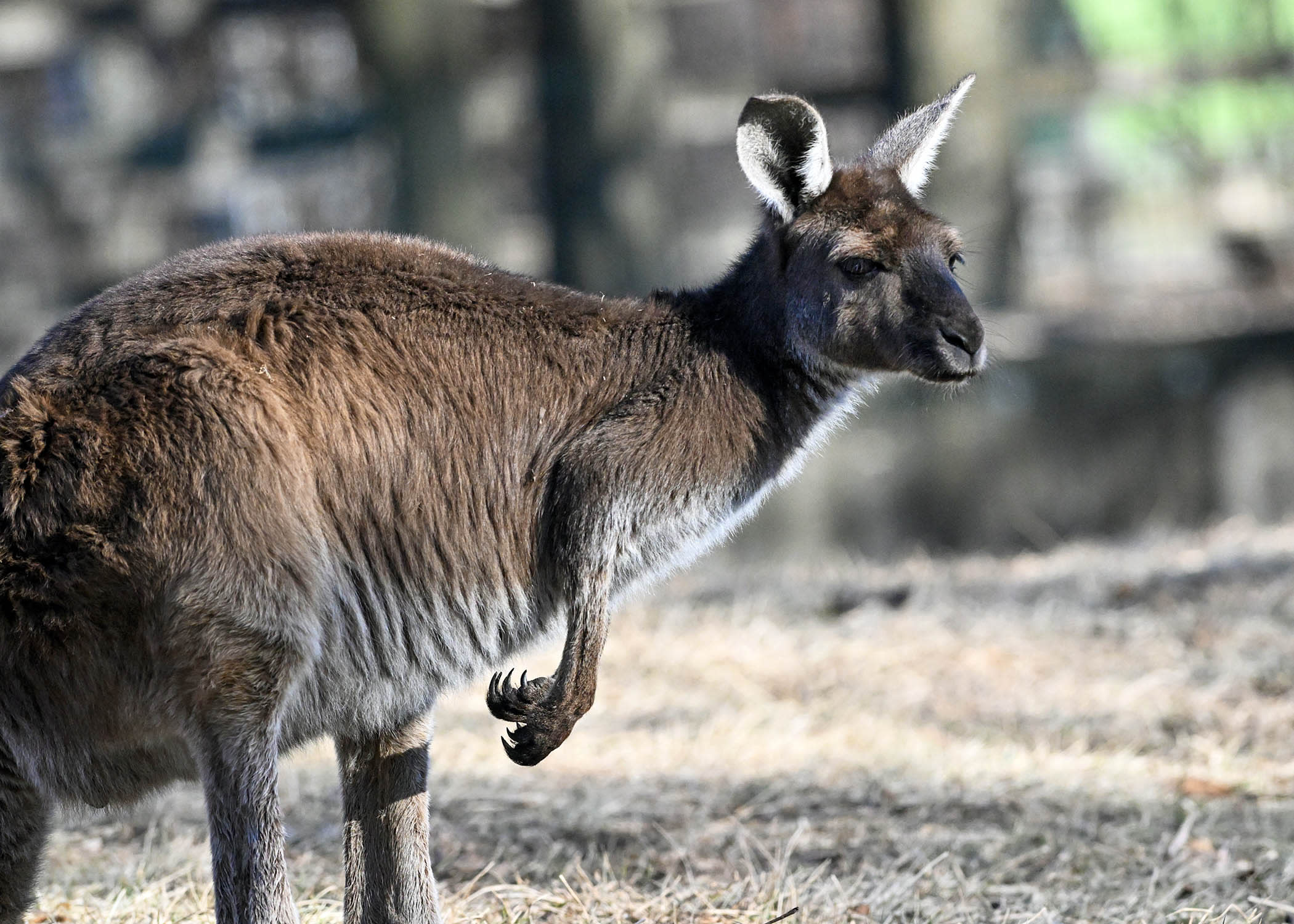
Gray kangaroos are light gray-brown to chocolate in color. They are bipedal (they move with two legs), with powerful hind legs and tail. They have four toes on their hind feet. The two inside toes are jointed and form a grooming tool. The extra-long middle toe has a sharp nail that is used as a weapon. Females have pouches. Their muzzle is covered in fine hair.
Western grey kangaroos have excellent senses of smell, sight and hearing. They can swivel their ears around to focus in a specific direction. Their eyes are situated on the sides of their head. This gives them a large field of vision, which helps in avoiding predation.
Behavior
They are crepuscular (active at dusk and dawn) or nocturnal (active at night). They feed from late afternoon to early morning and rest during the day. They form groups, called "mobs," of up to 50 individuals. No territorial defense is displayed, and they would rather flee than fight. They are fast enough to escape most predators, and they make a deep growl when threatened.
They move by hopping about four to six feet. They can jump to heights of 10 feet and lengths of 26 feet and can reach speeds of 30 mph. While moving slowly to graze, kangaroos balance on their front feet and tails. They cope with their hot environment by licking their arms, panting, hiding in the shade, and sleeping during the hottest parts of the day.
Diet
These kangaroos graze on grasses, tree bark, and leaves. They have specialized teeth for cropping grass and complex forestomaches for the breakdown of plant fiber through fermentation. They can tolerate high levels of plant toxins.
Threats
Western gray kangaroos are listed as "least concern" on the IUCN Red List. They are common. They do face threats due to habitat loss as land is converted for agriculture. They are also commonly struck by vehicles.
How We're Helping
The western gray kangaroo is part of the Species Survival Plan at Brookfield Zoo Chicago. Learn more this cooperative population management and conservation program here.