Overview
The Forest’s Armored Insect Hunter
The white-bellied pangolin is a small-to-medium mammal covered in protective scales, with pale skin on its belly, face, and the inside of its legs. It lives both in trees and on the ground throughout equatorial Africa. It feeds mainly on ants and termites, using strong claws to break into nests and a long sticky tongue—up to 27 inches—to collect insects safely. They are endangered due to hunting and habitat loss.
Characteristics
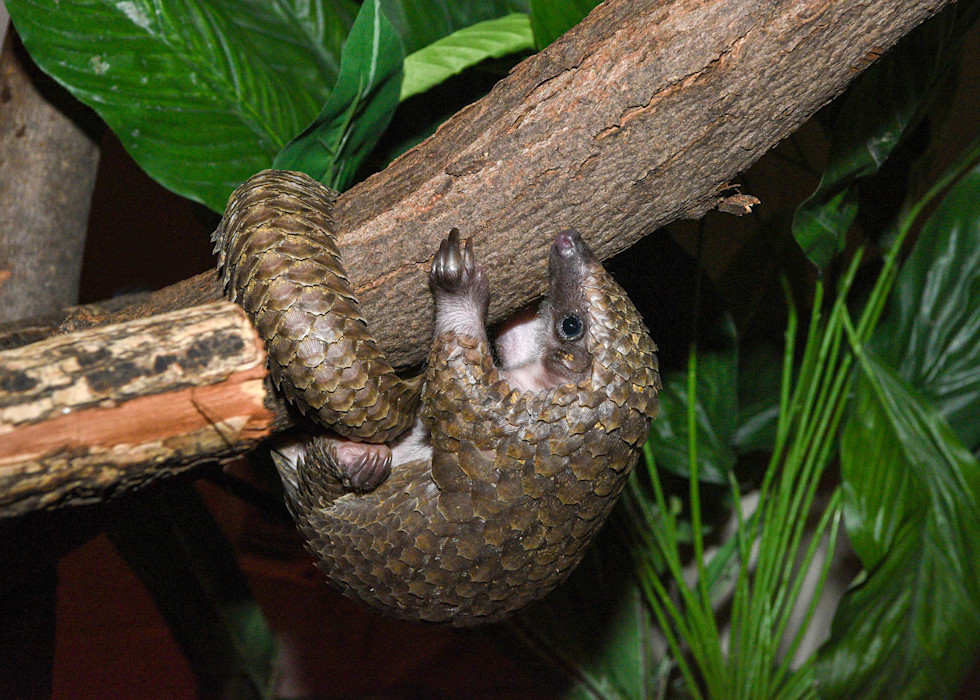
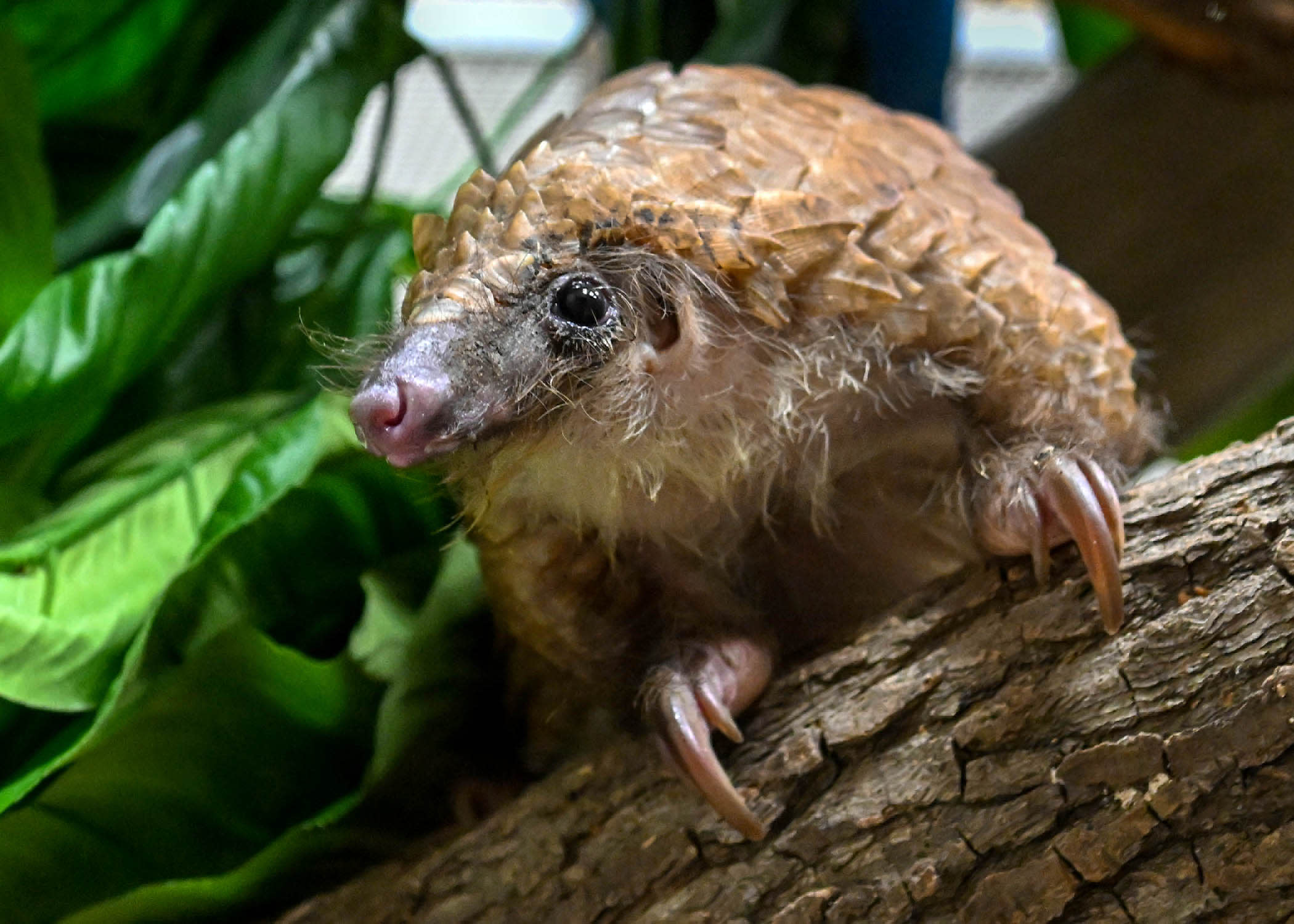
The white-bellied pangolin is a small-to-medium mammal covered in overlapping scales that are dark brown to yellowish-brown, which protect it from predators. Its face, belly, and the inside of its legs are bare, showing pale whitish-gray skin.
It has a small, cone-shaped head with a pointed snout, big eyes, and no visible ears. Its short legs have five toes with long, curved claws. The pangolin has strong front legs and a long, prehensile tail that helps it climb and grip branches.
Behavior
White-bellied pangolins live both on the ground and in trees. They search for food at night, and rest during the day in hollow trees or burrows. On the ground, they walk on all four legs or on their hind legs, using their tail for balance. If a predator comes, they roll into a tight ball, using their scales as armor.
Pangolins are mostly solitary, only interacting to mate or when a mother cares for her young. They communicate mainly through scent, marking their territory and reproductive status with urine and feces.
Diet
The white-bellied pangolin mainly eats ants and termites, eating about 5 to 7 ounces each day. It uses strong claws to break open nests and burrows. Its long, sticky tongue can stretch up to 27 inches. The tongue is attached in a unique way to the pangolin’s last rib and pelvis, which lets it stretch so far to catch its prey.
Threats
The white-bellied pangolin is listed as “endangered” on the IUCN Red List.
It is endangered because of illegal hunting and habitat loss.
How We're Helping
Brookfield Zoo Chicago is a founding member of the North American Pangolin Consortium, a group of institutions working to build a healthy population of pangolins in captivity. This work helps scientists learn about pangolin behavior, biology, and reproduction.
The Zoo has developed a special diet and a successful breeding program, and shares this knowledge with conservationists in Africa. It also supports field projects and participates in efforts like Operation Pangolin, which monitors pangolins and fights illegal trafficking.