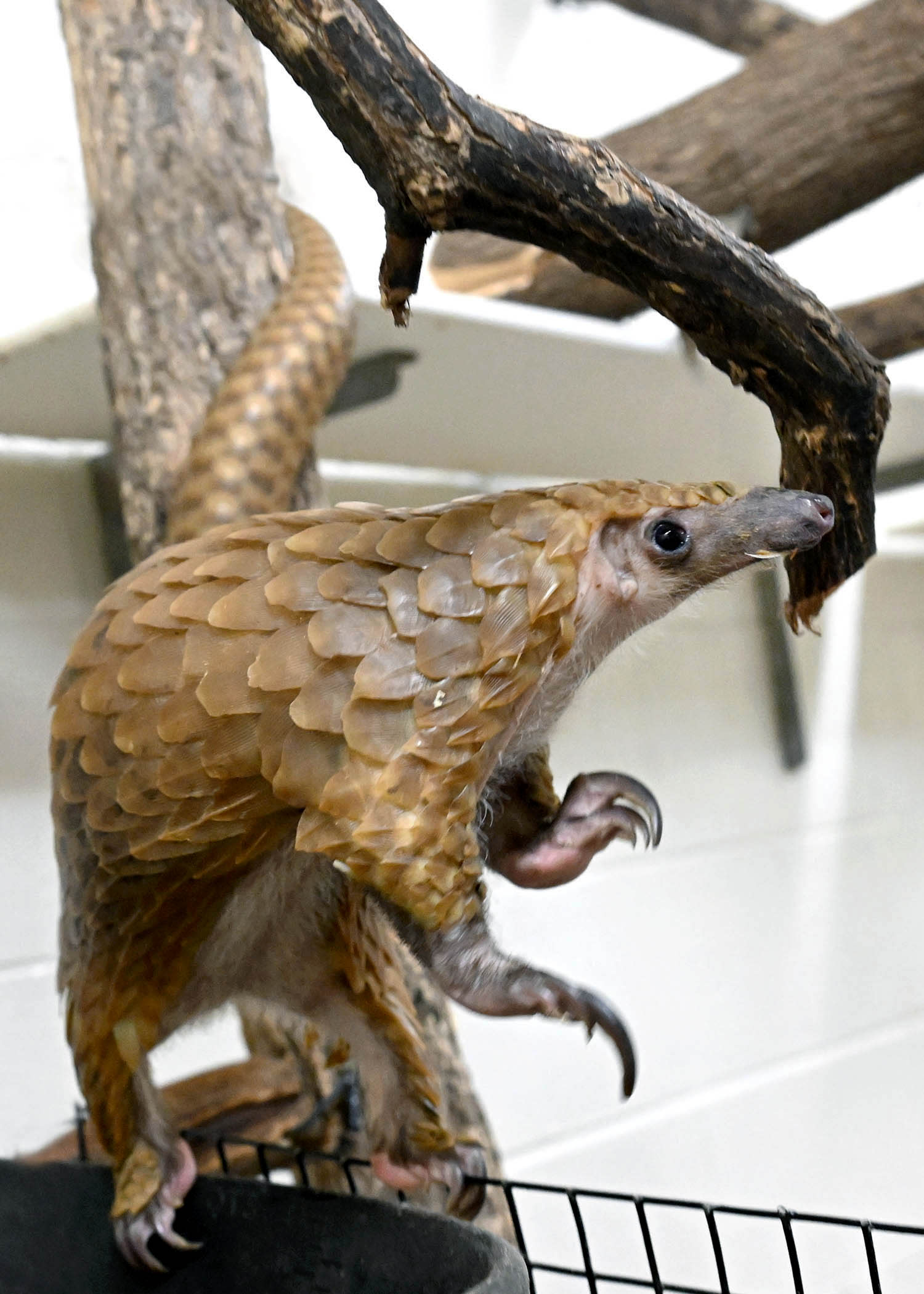
Pangolins are endangered primarily due to illegal wildlife trafficking. For centuries, pangolins have been hunted for both their meat and their scales.
The demand for pangolins as a food source goes back hundreds of years in both Asia and Africa. In Asia, pangolin meat has long been considered a delicacy, and their scales — like rhino horn — have been sought for supposed medicinal properties.
In reality, pangolin scales do not cure illnesses. Yet traditional beliefs have fueled such high demand that all four Asian pangolin species are now critically endangered. As Asian populations have declined, poaching of African pangolins has surged.
Beyond traditional medicine, pangolin scales are also used in jewelry and decorative art, where they are sometimes viewed as status symbols. Pangolin meat is additionally hunted as bushmeat for local consumption and export.
Over the past decade alone, more than two million pangolins have been taken from the wild, making them one of the most heavily exploited mammals on Earth and putting them at serious risk of extinction across much of their range.