Protecting Wild Dolphins Through Research and Rescue

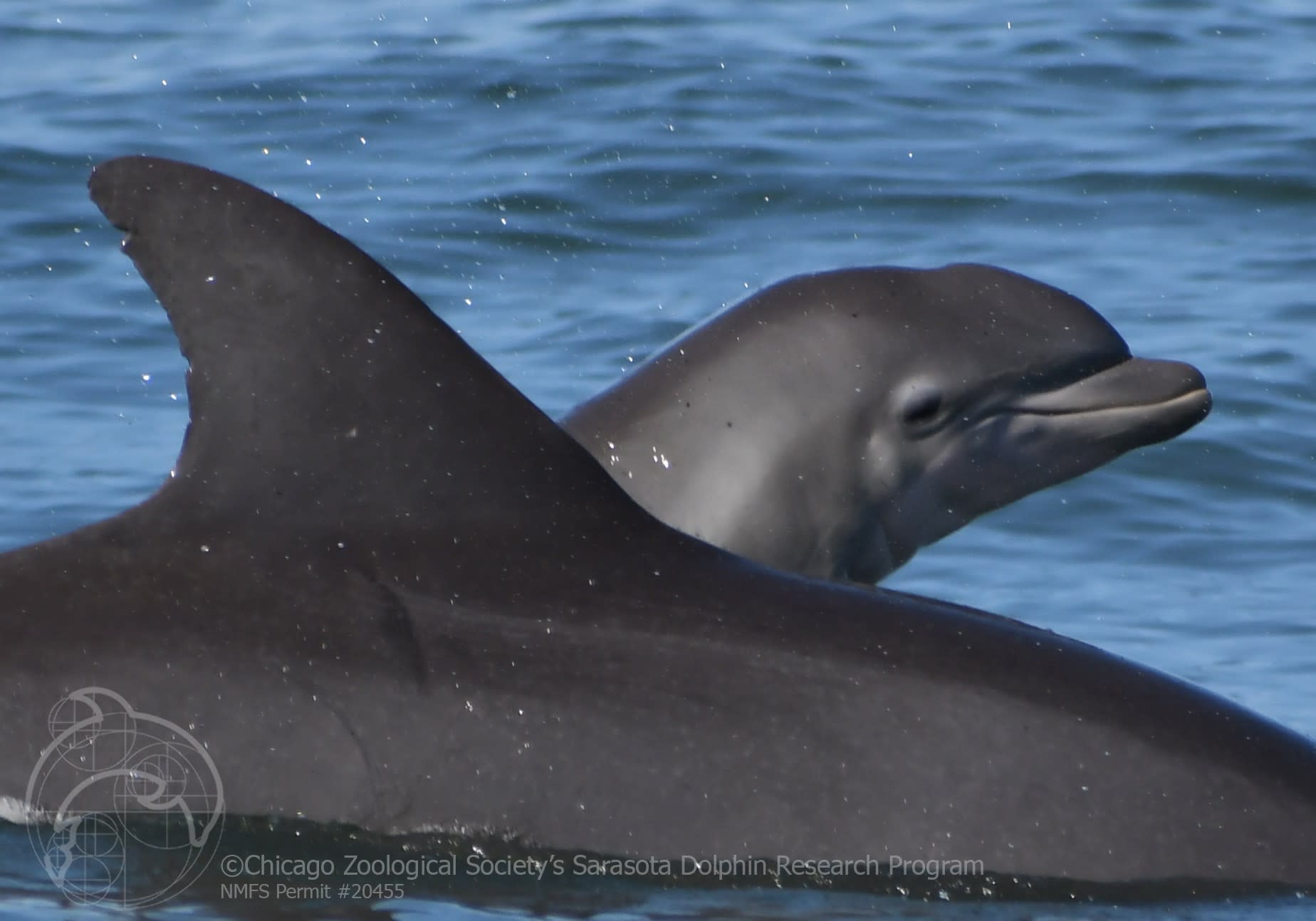
A bottlenose dolphin calf pokes its head up out of the water, its body hidden behind its mother.

The World's Longest-Running Dolphin Conservation Research Program

Founded in 1970, the Sarasota Dolphin Research Program (SDRP), based in Sarasota, Florida, is the longest-running dolphin conservation research program in the world. It sets the gold standard for wild dolphin research worldwide.

For more than 55 years, SDRP scientists have studied six generations of bottlenose dolphins living in Sarasota Bay. This long-term research has helped scientists learn important information about dolphin biology, health, behavior, and how human activities affect dolphins.

SDRP is led by co-founder Dr. Randall Wells, Vice President of Marine Mammal Conservation, and Dr. Katie McHugh, Deputy Program Director. The program has a Florida-based team of 13 Brookfield Zoo Chicago staff members. SDRP helps scientists better understand coastal bottlenose dolphins and provides valuable research and training opportunities for scientists from around the world. The program also helps guide dolphin conservation efforts and supports wildlife agencies in protecting marine mammals worldwide.
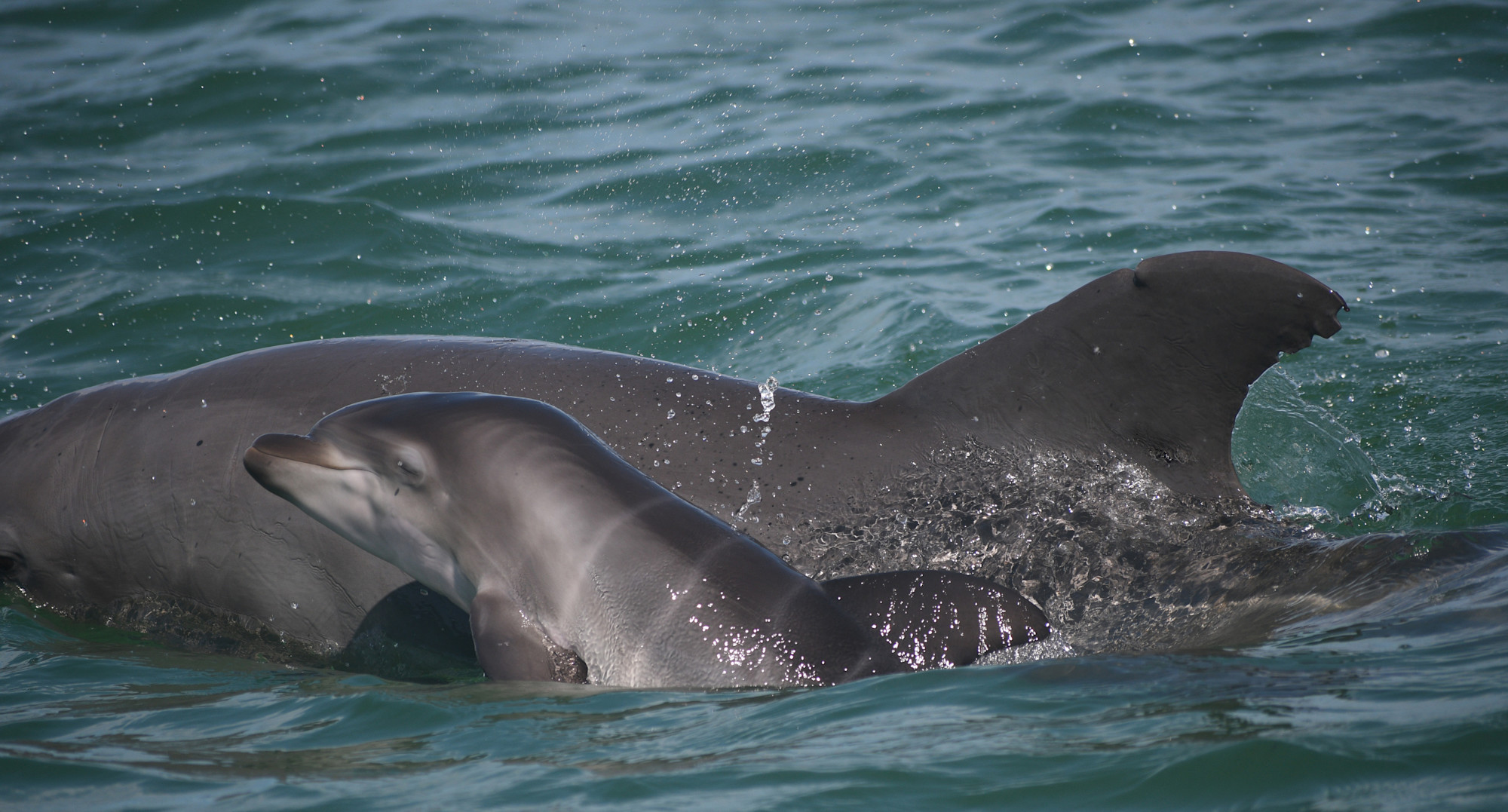
Research-Sarasota Dolphin Research Program-Calf-2021

Photo by the Sarasota Dolphin Research Program of Brookfield Zoo Chicago, taken under NMFS/MMPA Scientific Research Permit.

Research That Drives Dolphin Conservation Action

SDRP’s success comes from long-term field research. For more than 55 years, scientists have studied a group of about 170 bottlenose dolphins that live in Sarasota Bay year-round. They can recognize nearly every individual dolphin, including some that are up to 67 years old.

Core Research Activities Include:

  • Scientists monitor the dolphins that live in Sarasota Bay all year. They conduct monthly boat surveys to obtain photos to identify each dolphin, track where they go, who they are with, what they do, and how they are doing.

  • SDRP manages the Gulf of Mexico Dolphin Identification System, which is a collaborative database of dolphin photos from 46 different groups around the Gulf, including Mexico and Cuba. This helps track where dolphins travel and what happens to stranded dolphins.

  • Scientists monitor the abundance of the fish dolphins eat and study tagged fish and sharks to understand how they affect dolphin behavior.

  • Periodically, scientists and veterinarians check the health of small numbers of resident dolphins. This helps for learning about life history, and exposure to pollution.

  • Using well-known dolphins with detailed backgrounds, scientists study dolphin behavior, communication, and how they respond to people.

  • Long-term monitoring also uses underwater listening stations to hear and study dolphin sounds and their ecosystem.

  • SDRP trains students and scientists from around the world. So far, they have helped more than 532 undergraduate interns, 116 graduate students, and 145 international colleagues from 53 countries.

  • Scientists share their expertise globally to help other species, like franciscana dolphins in South America, Mekong River dolphins in Cambodia, vaquita porpoises in Mexico, and bottlenose dolphins in the Galápagos, Greece, and Bermuda.

  • Research results are shared through scientific papers, presentations to other scientists, and presentations to schools, the public, and decision-makers.

  • Scientists create and test new tools, like special tags, to study where dolphins go, how they use their habitat, and how they use their sounds.

  • SDRP leads or helps with emergency dolphin rescues and checks on the rescued dolphins afterward to improve responses.

All of this research helps protect dolphins and their habitats and helps guide policies for marine mammals at local, national, and international levels.

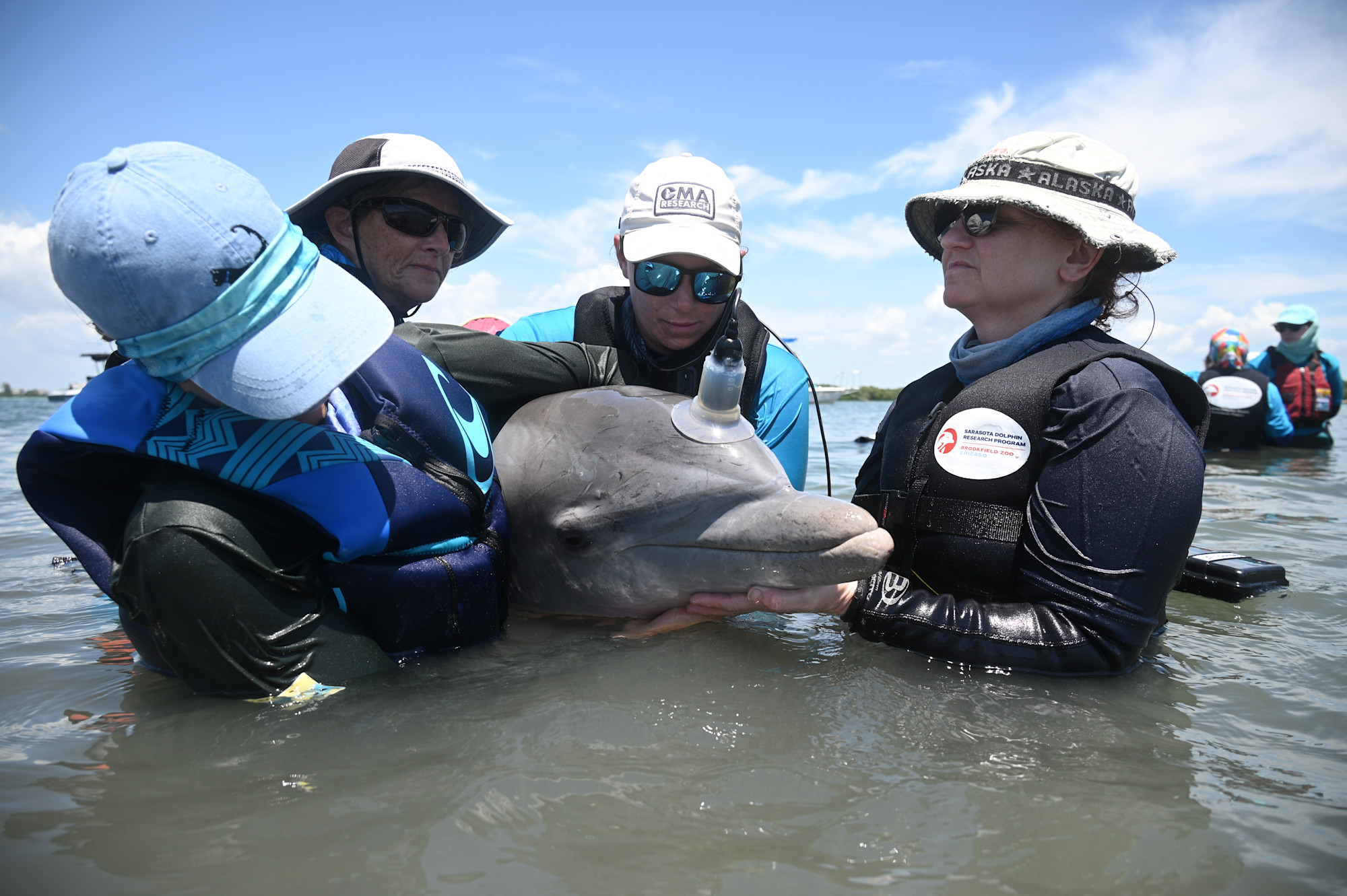
A group of researchers hold a medical device to a bottlenose dolphin, in a medical assessment.

Photo by the Sarasota Dolphin Research Program of Brookfield Zoo Chicago, taken under NMFS/MMPA Scientific Research Permit.

Dolphin Rescues

Dolphin conservation means taking action when animals are in danger. The SDRP plays a leading role in wild dolphin rescue operations, responding to entanglements in fishing gear, injuries, move out of their normal area, and strandings.

SDRP Dolphin Rescue Efforts

From 1985 to 2026, SDRP helped successfully rescue 37 bottlenose dolphins in the southeastern U.S.

Fourteen of these rescues happened in the SDRP study area. Each rescue is done by trained teams who work with federal permits to keep the dolphins safe.

  • Eight free-swimming dolphins were freed from entangling and embedded gear, typically through the use of long-handled tools.

  • Twenty-four dolphins were caught; fishing gear was removed and wounds were examined by veterinarians, or they were moved to more appropriate habitat, and then released safely.

  • Five dolphins were taken to rehab centers for treatment and later released.

Studies of the dolphins after they were released show that these rescues help the dolphin population stay healthy and strong.

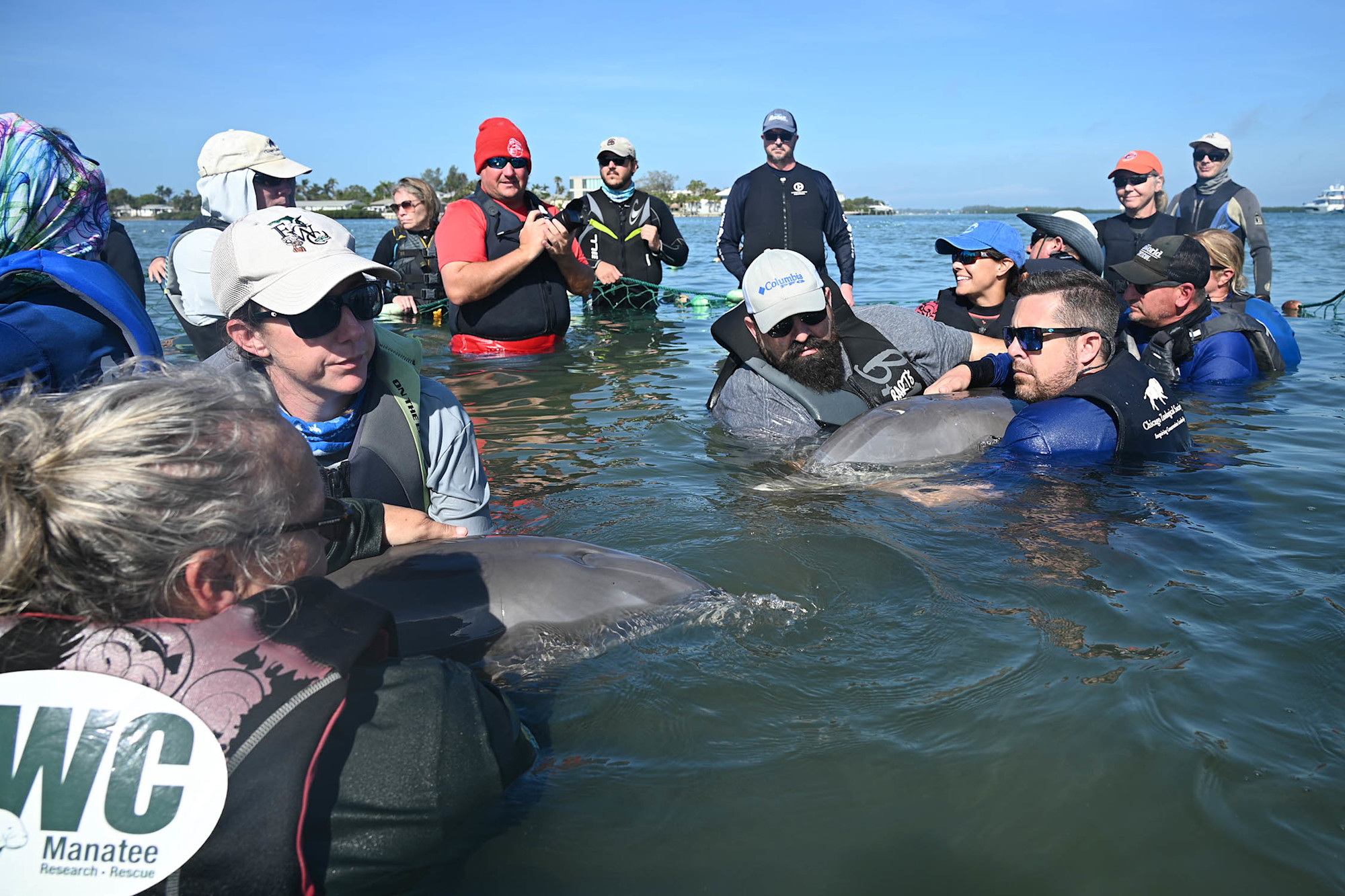
Stranding Network members get ready to release a mother and baby dolphin in Sarasota Bay after removing a dangerous fishing line from the calf’s tail.

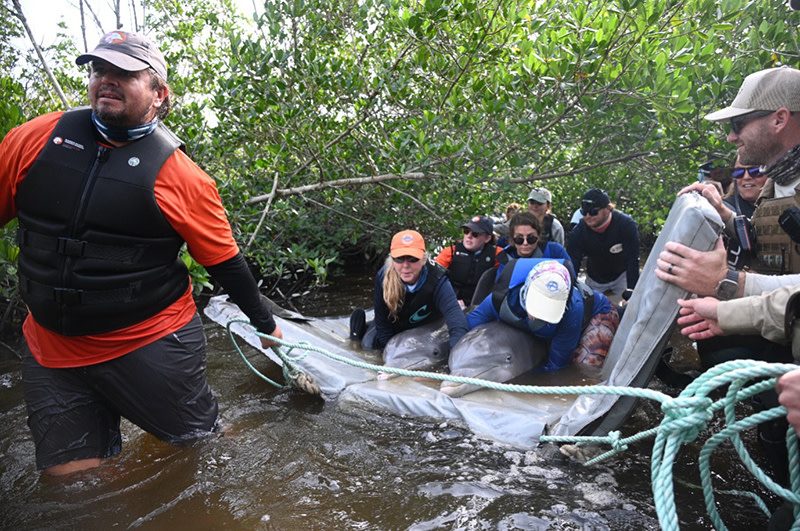
A group of researchers hold onto bottlenose dolphins in the water, rescuing them.

Photo by the Sarasota Dolphin Research Program of Brookfield Zoo Chicago, taken under NMFS/MMPA Scientific Research Permit.

Advancing Global Dolphin Conservation Science

SDRP doesn’t just work in Sarasota Bay — it leads dolphin research around the world. The program works with partners, uses new technology, and shares knowledge globally to protect dolphins.

Recent Research Highlights:

  • Research revealing microplastics in wild dolphin tissues, helping scientists understand pollution threats

  • Working with colleagues to understand how dolphins use their unique signature whistle names and other whistles.

  • Support for international conservation initiatives protecting endangered river dolphins in Cambodia

  • Conducting the first health checks, tagging, and tracking of bottlenose, Atlantic spotted, and rough-toothed dolphins over the West Florida Shelf, offshore of Sarasota.

  • Working with Woods Hole Oceanographic Institution to create a new way to attach satellite-linked tags to dolphins that ride the pressure wave and surface below the bows of boats.

  • First-ever tracking of Hawaiian spinner dolphins using satellite-linked tags.

  • Sharing data that helps the National Oceanic and Atmospheric Administration (NOAA) protect dolphins and respond to environmental disasters.

Every study strengthens conservation outcomes — not just for dolphins, but for the marine ecosystems they represent.

Research-Sarasota Dolphin Research Program-Pine Island Rescue-2024

Photo by the Sarasota Dolphin Research Program of Brookfield Zoo Chicago, taken under NMFS/MMPA Scientific Research Permit.

Why Dolphin Conservation Matters

Dolphins help show how healthy the ocean is. When dolphins are doing well, the ocean is healthy — and that helps people too. Through the Sarasota Dolphin Research Program, Brookfield Zoo Chicago uses years of research to protect dolphins and the ocean.

Sarasota Bay may feel far from Chicago, but they are connected by water. Water near Brookfield Zoo Chicago flows into Salt Creek, then into the Des Plaines River, the Illinois River, and the Mississippi River. That water eventually reaches the Gulf of Mexico, which connects to Florida’s coastal waters. What happens inland affects the ocean.

By studying, rescuing, and protecting wild dolphins in Sarasota Bay, Brookfield Zoo Chicago helps protect waterways, wildlife, and ecosystems everywhere. Caring for dolphins is not just a coastal responsibility — it’s something we all share.

Just Keep Swimming

Learn more about SDRP on their official website