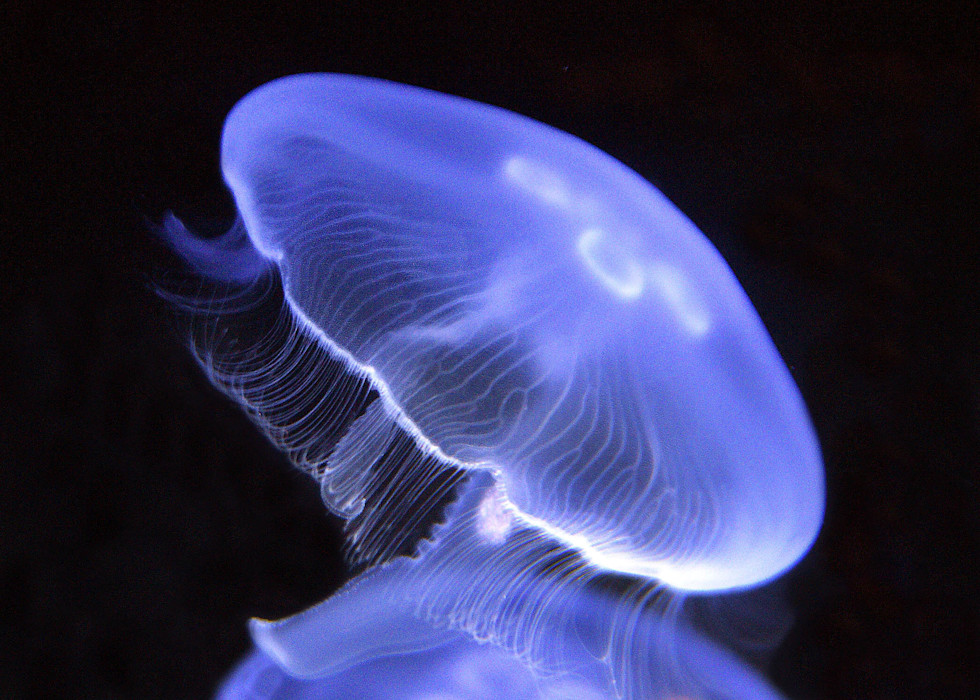
Get hands-on with the mysterious moon jellies!
Brookfield Zoo Chicago is introducing a brand-new Moon Jelly Encounter! Get ready for a hands-on, behind-the-scenes experience that brings you face-to-face with the mesmerizing world of moon jellies. We stepped into our moon jelly lab with lead animal care specialist Mike Masellis to ask him some questions about the mysterious jellies.
Where do moon jellies live at the Zoo?
Moon jellies (Aurelia aurita) live at The Living Coast at Brookfield Zoo Chicago. Behind the scenes, where you’ll meet them for the experience, they float in various life stages in specially designed water systems called pseudo-kreisel aquariums. “Kreisel” is a German word for a spinning top. Similarly, the systems are designed to prevent air from entering the rounded aquarium while they keep water constantly filtering and rotating in one direction. This is called a laminar flow, and it prevents the jellies from settling at the bottom of the aquarium.
Moon jellies are essentially just some proteins and water, so they are really easy to damage. This is why the aquariums also block off any pieces of the filtration system where jellies could get stuck.
How do moon jellies reproduce and grow?
Jellies start out as free-floating tiny planulae, or jelly larvae. Once they attach themselves to a hard surface in the ocean, they develop into polyps, until something called “strobilation” happens in response to shifting environmental factors.
Strobilation is the process of going from a polyp attached to a rock or other surface to becoming a jelly that is out in the ocean. During strobilation, each polyp can reproduce asexually and create pancake-like stacks. Then, each individual “pancake” will break off from the stack and become an ephyra (basically a juvenile jelly). It then eats and grows into the medusa stage, which is what most people recognize as a jelly.
Once they are medusa, they can also reproduce with sperm and eggs.
Using a microscope and screen, you’ll be able to see a polyp when you meet the jellies at Brookfield Zoo Chicago, as well as the jellies’ tiny meal.
What do moon jellies eat?
At the Zoo, we hatch brine shrimp, also called Artemia (some people may remember raising sea monkeys as kids; they are the same thing). We get them in a dry encysted form, then when we drop them in water, they hatch 24 hours later.
The cyst shells of the shrimp can actually be damaging to the jellyfish if they eat it — they can cause holes to form in the jelly, since they’re not digestible. So, after the shrimp hatch, we run a magnet through a bucket of them and pull the shells out while the living shrimp move away.
Since moon jellies at the Zoo are fed a diet largely of brine shrimp, we also feed the shrimp different species of algae or a fatty acid supplement after they are developed enough to eat. That way, even though the moon jellies are eating the same animal consistently, they get different nutrients each day based on the gut contents of the shrimp.
Using their oral tentacles (bigger tentacles in their center), the moon jelly will gradually pull the shrimp into their mouths — which are also their bottoms — and gastric pouches. A fed moon jelly will often be red, as the brine shrimp are red and the jellies are translucent.
You can feed the brine shrimp to moon jellies using a pipette during the encounter. You’ll be able to see the red brine shrimp slowly color the feeding jellies!
Can moon jellies feel?
Jellies have a nerve net, though they don’t have a brain. A small organ called a rhopalium tells them which direction is up and which is down. It also senses light. This is about the extent of what a jelly can sense.
They respond to stressors in their environment like temperature shifts, but overall, we don’t really know exactly what they feel.
Do moon jellies sting?
Jellies have two types of tentacles: fine tentacles around the bell edge, and oral arms coming from the center. These tentacles do have microscopic stinging cells called nematocysts on their underside, but they have a pretty mild sting.
During the encounter, you’ll get a chance to touch the bell of a jelly, but even if you were to brush their tentacles, you would only get microscopically “harpooned” – you likely would not feel it.
Why are moon jellies important to their environment?
Moon jellies are what’s called an indicator species. An indicator species provides early warnings about environmental changes. They act as nature’s messengers, reflecting the overall health of their ecosystem.
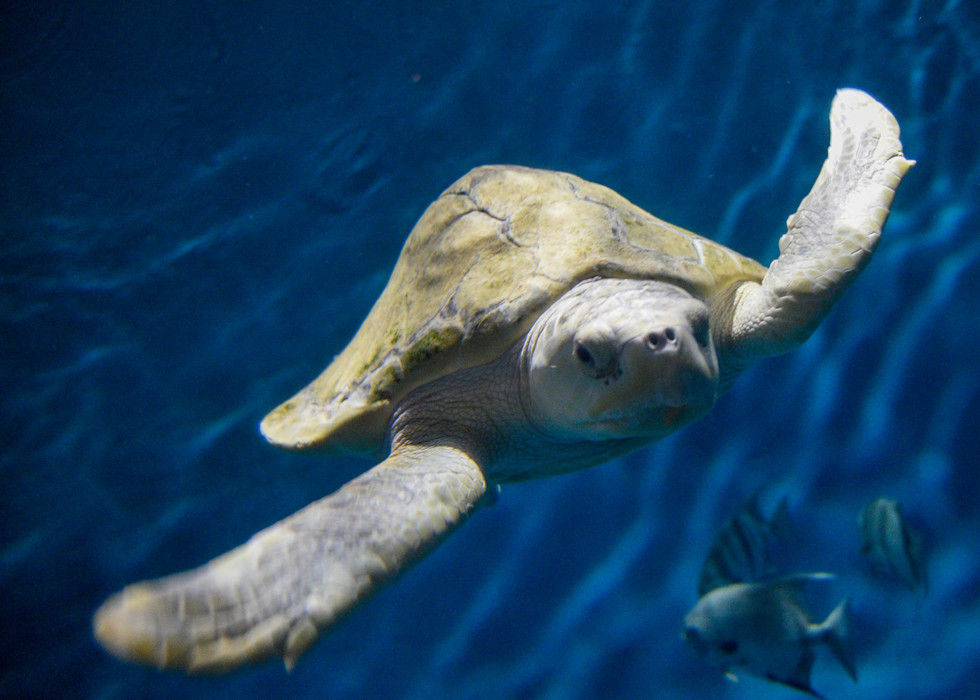
Jellies also may look like plastic to predators such as sea turtles in the wild, so predators may end up eating the plastic instead of the jelly in more polluted waters. Since animals can’t tell the difference, moon jellies are a reminder that it's up to humans to keep plastic out of our oceans!
Starting October through mid-November 2025, you can step into the lab with us to learn more about moon jellies. Register for the Moon Jelly Encounter now!