Zoo and Aquarium Radiology Database

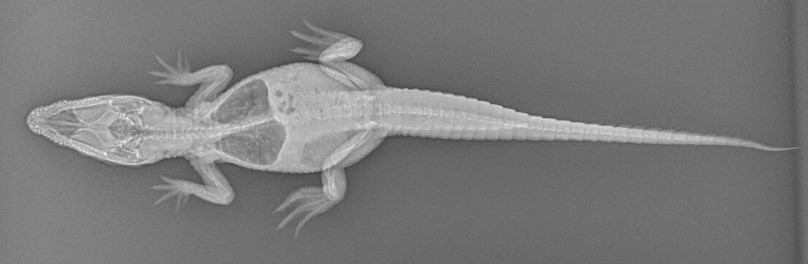
An x-ray of a dwarf crocodile.

A Global X-Ray and CT Imaging Resource for Zoo, Aquarium, and Wildlife Veterinarians

The Zoo and Aquarium Radiology Database (ZARD) is a collaborative, online veterinary imaging resource that provides access to high-quality X-rays and CT scans from over 500 animal species. Based at Brookfield Zoo Chicago, the ZARD brings together diagnostic imaging from leading zoological institutions across the United States.

What is the ZARD?

The ZARD is a centralized radiology database designed for veterinarians, researchers, and animal health professionals working with zoo, aquarium, wildlife, and aquatic species. By housing diagnostic images in one accessible platform, the ZARD helps clinicians compare anatomy across species and improve diagnostic accuracy for complex cases.

This shared resource supports:

  • Zoo and aquarium veterinary medicine

  • Wildlife health and conservation

  • Comparative anatomy and research

Supporting Veterinary Care for Zoo, Aquarium, and Wildlife Species

Diagnosing disease in non-domestic species can be challenging due to limited reference imaging. The ZARD addresses this gap by making peer-contributed diagnostic imaging available to professionals who care for animals under human care and in conservation settings.

The database enhances:

  • Early disease detection

  • Treatment planning

  • Cross-institutional collaboration

  • Training of students, interns, residents, and radiologists

Access the ZARD

Veterinary and allied animal health professionals, as well as students, teachers, and faculty, are welcome to explore the world of diagnostic imaging with us! Learn more about using the ZARD, register for an account, or access the database.

Leadership Partners

Diagnostic imaging for more than 500 species was primarily contributed by ZARD’s seven leadership partners:

This project was made possible in part by the Institute of Museum and Library Services (MG-249218-OMS-21).

Allied Research and Conservation Projects

The Great Ape Heart Project is dedicated to advancing the understanding, diagnosis, treatment, and prevention of cardiovascular disease in great apes. By coordinating cardiac-related research and establishing standardized approaches to cardiovascular health, we aim to improve the quality of life and longevity of great apes. Through global collaboration among zoos, research institutions, and sanctuaries, we foster a unified community committed to sharing knowledge and enhancing veterinary care for great apes under human care.

The ZooMu Network is funded by an NSF Research Coordination Networks Grant (RCN) to build a lasting network of biological collections staff who are equipped to work between collection types, and will open broad new opportunities for biological collections research by linking living and preserved collections, databases, and professionals.
Why is the ZARD Important?

By providing otherwise difficult-to-access diagnostic references, ZARD supports evidence-based veterinary care that enhances zoo and aquarium animal wellbeing, strengthens global wildlife conservation, and advances veterinary and comparative medical research.

Species in the Database

Birds

  • Andean condor

  • Attwater's greater prairie chicken

  • Blue-and-yellow macaw

  • Blue-bellied roller

  • Blue-throated macaw

  • Curl-crested aracari

  • Eastern crested guineafowl

  • Greater roadrunner

  • Guam kingfisher

  • Humboldt penguin

  • Hyacinth macaw

  • Inca tern

  • Northern helmeted currasow

  • Princess parrot

  • Red bird-of-paradise

  • Red-capped cardinal

  • Red-fronted macaw

  • Raggiana bird-of-paradise

  • Roseate spoonbill

  • Saddle-billed stork

  • Scarlet ibis

  • Scarlet macaw

  • Silver-beaked tanager

  • Spotted whistling duck

  • Superb starling

  • Tawny frogmouth

  • Trumpeter hornbill

  • Violet turaco

  • White ibis

  • Wrinkled hornbill

Herptiles

  • Blanding's turtle

  • Chuckwalla

  • Green crested basalisk

  • Home's hingeback tortoise

  • Jamaican boa

  • Papuan olive python

  • Puerto Rican crested toad

  • Rough-scaled plated lizard

  • San Esteban chuckwalla

  • Spiny-tailed monitor

  • Twist-necked turtle

  • Western hognose snake

Mammals

  • Addax

  • African lion

  • African painted dog

  • Amur leopard

  • Andean bear

  • Angolan colobus

  • Asian elephant

  • Asian small-clawed otter

  • Aye-aye

  • Barasingha

  • Bat-eared fox

  • Bighorn sheep

  • Binturong

  • Black and rufous elephant shrew

  • Black-footed cat

  • Bonobo

  • Borrean orangutan

  • Brush-tailed rat-kangaroo

  • Cape porcupine

  • Capybara

  • Caracal

  • Cheetah

  • Cotton-top tamarin

  • Domestic ferret

  • European rabbit

  • Egyptian fruit bat

  • Fennec fox

  • Fiji banded iguana

  • Fishing cat

  • Fossa

  • Giant anteater

  • Goeldi's monkey

  • Golden lion tamarin

  • Grant's zebra

  • Grevy's zebra

  • Guianan brown capuchin

  • Hamadryas baboon

  • Kirk's dik-dik

  • Linne's two-toed sloth

  • Matschie's tree kangaroo

  • Meerkat

  • Mexican wolf

  • Nine-banded armadillo

  • North American river otter

  • Ocelot

  • Pallas's cat

  • Polar bear

  • Prehensile-tailed porcupine

  • Prevost's squirrel

  • Przewalski's horse

  • Pygmy slow loris

  • Queensland koala

  • Red kangaroo

  • Red ruffed lemur

  • Red-necked wallaby

  • Red panda

  • Red-rumped agouti

  • Reticulated giraffe

  • Ring tailed lemur

  • Rock hyrax

  • Rodriguez flying fox

  • Royal antelope

  • Schmidt's spot nosed monkey

  • Screaming hairy armadillo

  • Serval

  • Short-beaked echidna

  • Southern tamandua

  • Six-banded armadillo

  • Panthera uncia: Snow leopard

  • Southern three-banded armadillo

  • Squirrel monkey

  • Visayan warty pig

  • Western grey kangaroo

  • Western lowland gorilla

  • White-bellied pangolin

  • White-cheeked gibbon

  • White-faced marmoset