We're celebrating Dr. Randy Wells' legacy!
After more than five decades of leading the Sarasota Dolphin Research Program (SDRP), the last 37 with Brookfield Zoo Chicago, Vice President of Marine Mammal Conservation Dr. Randall (Randy) Wells, who co-Founded and directed SDRP, is retiring from Brookfield Zoo Chicago this June. He will assume the role of Director Emeritus, and Dr. Katie McHugh will become the next Director of SDRP.
When Dr. Randy Wells began studying dolphins in 1970, he wasn’t planning on transforming the world of dolphin conservation. He was simply asking questions.
These questions about dolphins and other marine life started long before the birth of the Sarasota Dolphin Research Program (SDRP). As early as spring break vacations with his family in Panama City Beach, Florida, a young Wells would ask questions about the things that swam under the surface of the Gulf of Mexico. He watched bottlenose dolphins swim offshore and wondered who they were and how they spent their days. He didn’t know that one day he would be the one to answer many of these questions.
Wells’ curiosity was just the beginning of what would become a career that led to the development of the longest-running dolphin conservation research program in the world — and the creation of a passionate community dedicated to understanding and protecting marine mammals across the globe.
Transforming Bottlenose Dolphin Care and Conservation
Driven by his early curiosity, Wells sought opportunities to learn. When he was 16, his family moved to Siesta Key, Florida, and happenstance led him to meet Blair Irvine, who had his own questions about dolphins and was studying the interactions between sharks and dolphins.
But first, they wanted to know: Were the dolphins living in Sarasota Bay there all the time, or coastal travelers?
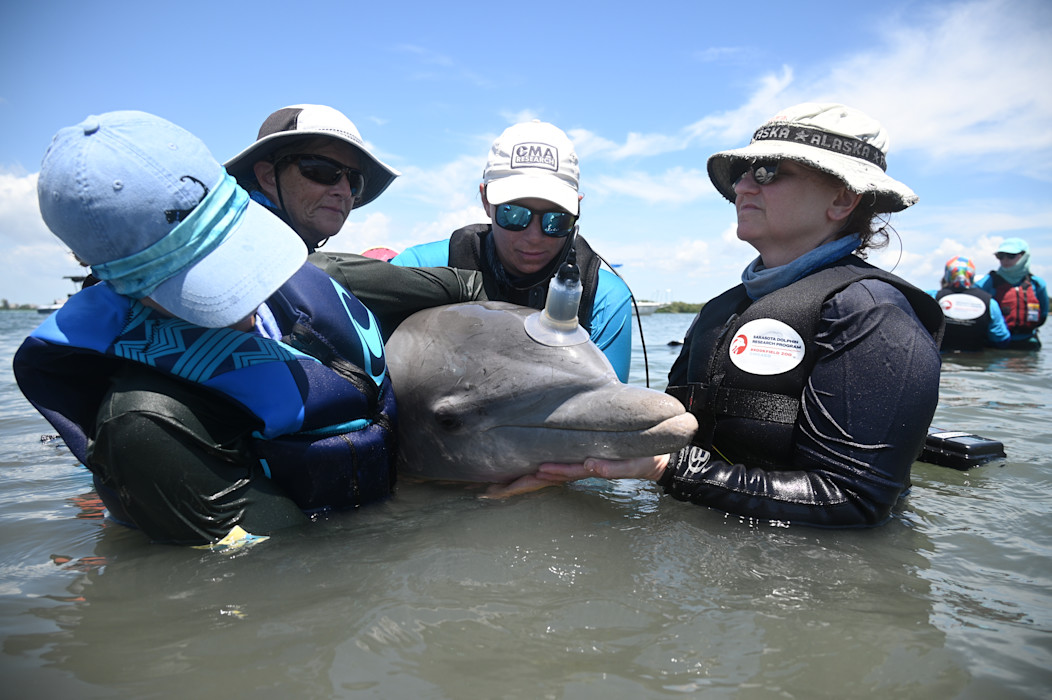
That was in 1970, when Wells helped co-found SDRP. In his role as a young research assistant, he began tagging and tracking bottlenose dolphin movements in the Bay, in pursuit of answers to the same mysteries that had captivated him as a youngster. What was each dolphin’s background? How old and how healthy were they? How did they interact with each other and other life around them? Had they had babies before? What did their whistles mean?
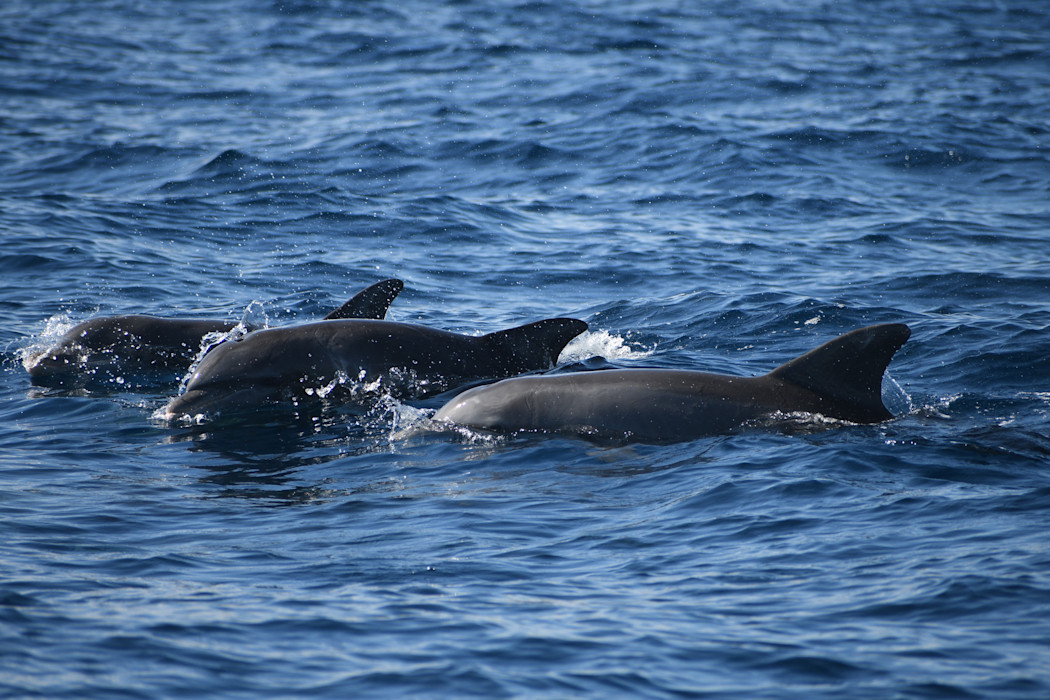
Very little was known about inshore bottlenose dolphin communities, about their home ranges or social structure, when Wells began his work. After that first question was answered — yes, the coastal dolphins in Sarasota’s bay were residents — it laid the foundation for new avenues of study. Today, after more than five decades of research, Wells can identify individuals in the Bay and know their lineages across multiple generations just by a quick glimpse of a dorsal fin. Under his leadership studying this long-term, year-round resident community of dolphins, SDRP has transformed the world’s understanding of bottlenose dolphins, their conservation, and even marine ecosystems around the world.
Though SDRP focuses on dolphins in one region, its effect has rippled outward from Sarasota Bay to the world. Hundreds of peer-reviewed publications and presentations, thousands of recorded dolphin vocalizations, millions of images, and more have provided an unparalleled body of scientific knowledge for marine mammal research. This knowledge has informed everything from environmental disaster response and dolphin rescues to conservation efforts off the coast of South America.
Along the way, Wells’ passion was contagious. He taught and inspired new generations of conservation leaders. Hundreds of scientists from other countries have come to Sarasota for training, with many taking the knowledge gained back to their countries to apply to marine mammal conservation in their own communities. His mentorship was a catalyst that prepared researchers to ask — and begin answering — their own questions about bottlenose dolphins.
Inspiring the Next Generation of Dolphin Conservation Leaders
In Sarasota, Wells formed a team of researchers who will continue to bring SDRP into the future with innovative research and strong partnerships. He was also committed to bringing new students alongside him. To date, SDRP has mentored more than 500 interns. Dr. Katie McHugh, who began as an SDRP intern with Wells in 2000, will now lead the team as the program’s next Director.
“Randy’s mentorship has helped me grow immensely as both a scientist and program manager,” said McHugh. “But what inspires me most is his inclusive and collaborative approach, building research and conservation partnerships across the globe while helping to engage and train hundreds of students and scientists at all stages of their marine mammal science and conservation careers."
McHugh, along with many others, stands as an example of Wells' ability to build a sustainable conservation community through his openness and attentiveness. Moving forward, the SDRP’s Gulf of Mexico Dolphin Identification System Curator Carolyn Cush believes the future of the program is bright. “Randy built the foundation and created the scaffolding that will allow his team to continue advancing science,” she said. “I’ll always appreciate his kindness, wit, and mentorship.”
In 1989, Brookfield Zoo Chicago’s sincere dedication to conservation and desire to give back to the wild resonated with Wells as he was looking for a new base of operations for the SDRP. With a foundation for ongoing dolphin research built in Sarasota, he sought a conservation partner to broaden SDRP’s impact. Brookfield Zoo Chicago brought on Wells and SDRP as an extension of our conservation mission. It also allowed Zoo veterinarians and animal care staff to learn from dolphins in the wild and Wells’ expertise.
When Director of Veterinary Education Programs and Senior Staff Veterinarian Dr. Jennifer Langan performs routine physical examinations on the animals at Dolphin Bay at Brookfield Zoo Chicago, she draws from her experiences gained through wild dolphin health assessments in Sarasota Bay. “I have always felt incredibly fortunate to be involved with the Sarasota Dolphin Research Program and to work alongside Randy,” she said. “His passion for understanding dolphins and protecting their future inspired my own commitment to advancing the health and welfare of dolphins, both in the wild and in professional care.”
Mark Gonka, Director of Marine Mammal Care and Conservation, feels energized by his opportunities to work with Sarasota Bay dolphins and with Wells himself. As a team leader at Brookfield Zoo Chicago, he understands just how much work it takes to make an operation like SDRP a success.
“Despite all the stress, Randy always found the time to talk to all the people involved,” Gonka said. “He has been incredibly supportive over the years of our Marine Mammal team.”
A Legacy of Ongoing Curiosity
The more researchers that interact with SDRP and inherit Wells’ infectious passion, the more questions they bring to the table. Though SDRP has made many discoveries over the years under Wells’ leadership, there’s so much left to study. That’s the thing about curiosity: it never stops asking questions, and SDRP’s researchers are excited to keep pursuing answers under McHugh as Director, with guidance from Wells as Director Emeritus.
“At its core, conservation begins with curiosity—asking questions about the natural world and committing to finding answers,” said President & CEO Dr. Mike Adkesson. “Dr. Randy Wells built a career around that pursuit, transforming curiosity into scientific discovery and discovery into meaningful conservation action.”
Wells isn’t done, either. He’s as committed to the field as he’s ever been, now free to spend more time on the research and conservation work he loves. In addition to his role as Director Emeritus of the SDRP, he will continue to serve in his positions as co-founder and board member of the Dolphin Biology Research Institute and as a Scientific Advisor to the U.S. Marine Mammal Commission. And, of course, he will continue his collaborations with colleagues around the world.
What are dolphins in deeper offshore waters up to? How will dolphin populations be affected by increasing threats from humans? What else are dolphins communicating to one another with their unique clicks and whistles? And — an ongoing question for all conservationists — how do we inspire the public to care deeply and make real changes to save dolphins? These are just some of the questions left to answer.
Thanks to Wells, the work has only just begun.
Brookfield Zoo Chicago is deeply committed to the future of the Sarasota Dolphin Research Program and to the Sarasota community that has supported it for generations. Together with our donors, partners, researchers, and friends, we will continue to build on Randy's remarkable legacy while pursuing new opportunities to advance marine mammal conservation, scientific discovery, and public engagement.
Photos by the Sarasota Dolphin Research Program of Brookfield Zoo Chicago, taken under NMFS/MMPA Scientific Research Permit.