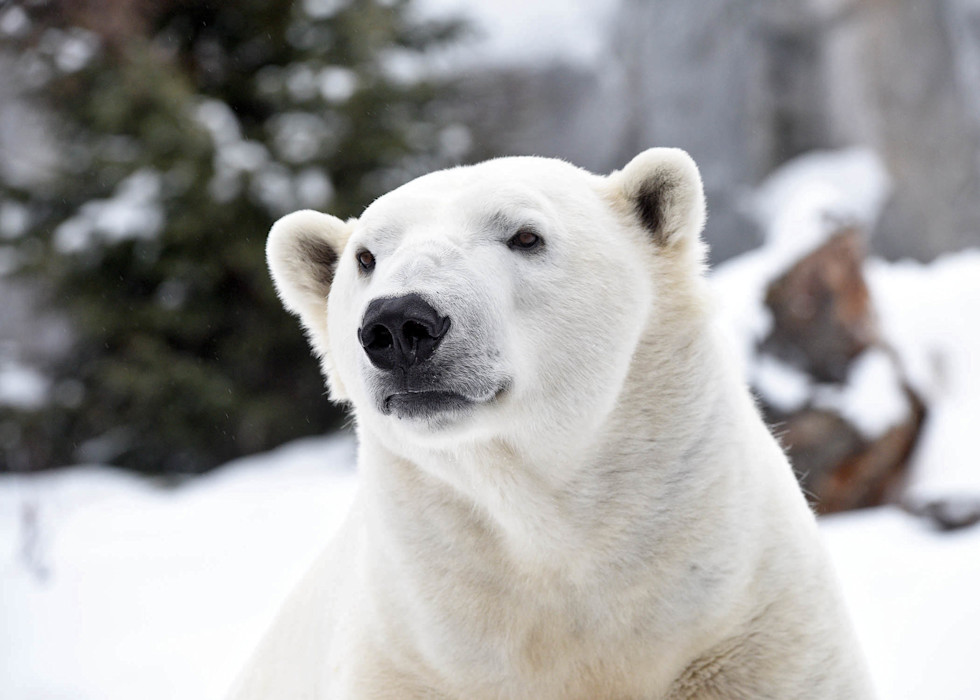
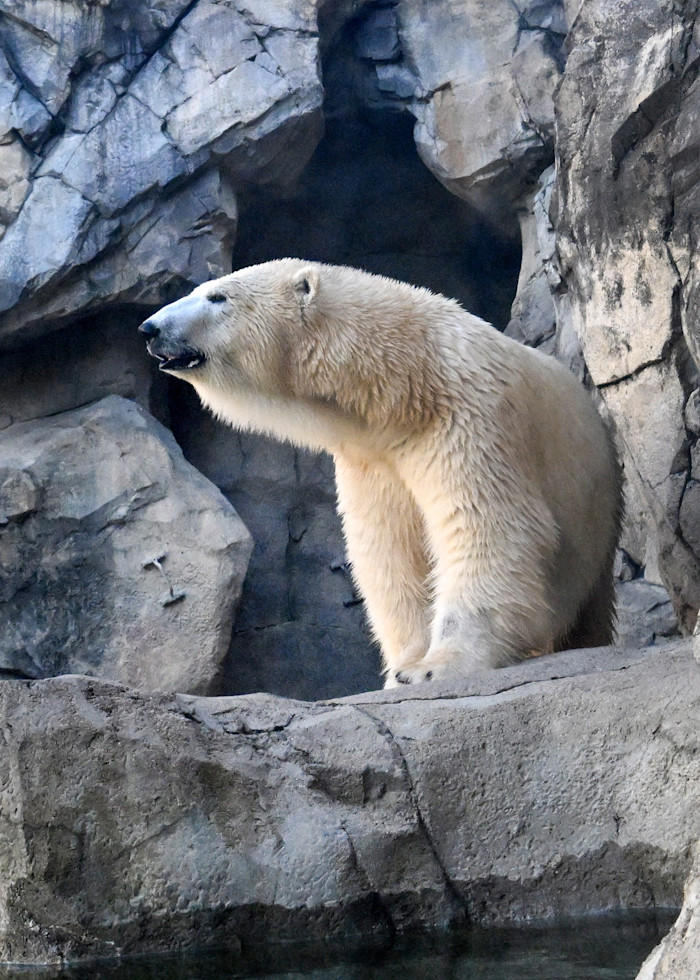
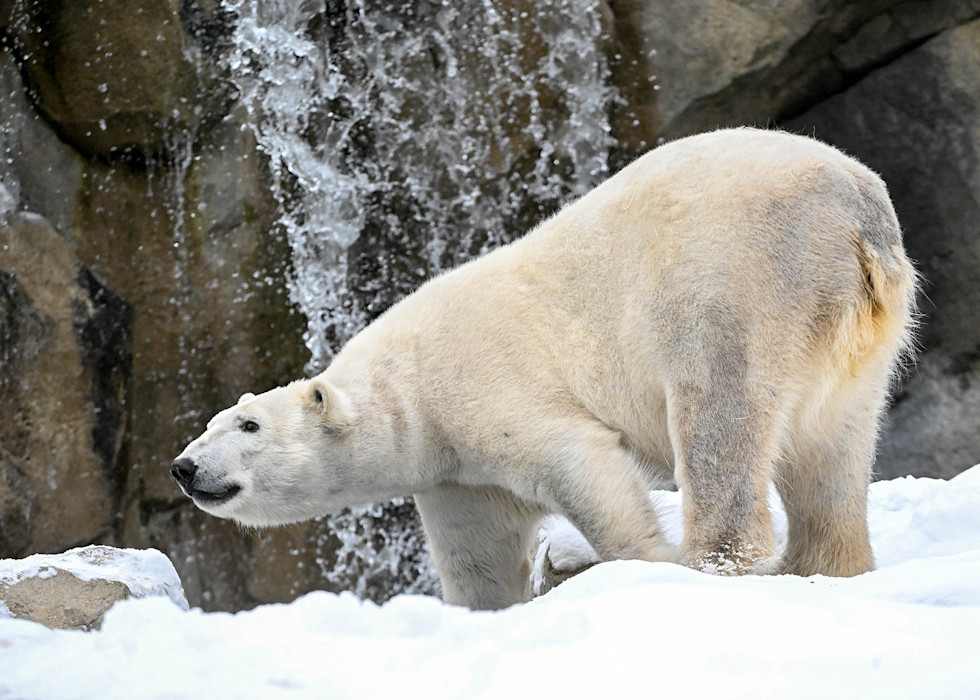
Brookfield Zoo Chicago’s collaborative research provides new insights into polar bear mothers and cubs.
In a snow-covered den in the Arctic, a polar bear mother begins one of nature’s most delicate tasks of raising her newborn cub. Polar bear cubs are born blind, tiny, and completely dependent on their mothers. For the first few months of life, everything they need including warmth, milk, and safety comes from mom while in the den.
But without zoos, it would be nearly impossible to study this critical time period — scientists can’t see inside wild polar bear dens. Conditions are harsh and complicated in the Arctic, and polar bear dens have precise conditions that need to be kept stable for cubs to be born and survive. As polar bear populations rapidly decline, it’s more important than ever that we understand what polar bear mothers need so we can protect their next generation.
Are Polar Bears Going Extinct?
Polar bears were the first species listed as threatened under the Endangered Species Act in 2008, primarily due to climate change. Now, research suggests that up to two-thirds of the global polar bear population could disappear by the end of the century.
Rising temperatures are changing the Arctic. Ice melts, forcing the bears to swim further in search of prey, which leads to long fasting periods and increased strain on their fat reserves. These conditions are particularly dangerous for young bears and breeding adults.
So what are zoos doing about it?
How Zoo Research Can Help Save Polar Bear Cubs
At Brookfield Zoo Chicago and other accredited zoos, we can use cameras to watch denning polar bears without disturbing them. This research is just one example of how zoos offer unique opportunities to better understand threatened species.
In partnership with San Diego Zoo Wildlife Alliance, the lead zoo on the study, our scientists carefully observed videotapes of new polar bear mothers inside their dens. In 2025, we then published a study, co-authored by Vice President of Animal Welfare Science Dr. Lance Miller, on what the first 30 days of a polar bear cub’s life with mom looks like.
Studying Polar Bears in Their Dens
Our scientists discovered that during the first ten days of life, the cubs spent most of their time resting on their mothers, nestled in cradled positions. The mothers rarely moved, focusing instead on resting, licking, and nursing their cubs.
These quiet times of care build the foundation for the cubs’ survival. As the days passed, the cubs’ behavior slowly began to change. They squirmed and wiggled less, slowly learning to control their movements. Nursing took up about 12% of their day, providing the energy they needed to continue to develop and physically grow.
Each mother showed her own subtle habits. One mother stayed close to her cub nearly all the time, while another occasionally left for a few minutes. These differences likely reflect small environmental changes such as food access or human presence, but all the mothers shared the same level of care and dedication. Their gentle licks, quiet vigilance, and long hours of rest spoke to the deep instinct that guides maternal care.
By the end of the first month, the cubs were sturdier and more independent, though they still relied completely on their mothers. In the wild, they would not see the outside world for many more weeks.
Thanks to our careful observations and partnership with other zoos, researchers are uncovering the hidden story of polar bear development. Now, we have a good idea what polar bear mothers and their babies are up to during the most fragile stages of a cub’s life—and what they need to thrive.
Working Together to Protect Polar Bears
When we make discoveries that couldn’t be made in the wild, our findings inform global conservation strategies. In this case, conservation policymakers no longer have to guess what polar bears need in their early days—they can rely on research from accredited zoos.
But if we want to stand a chance against threats to polar bears, we have to work together. By pooling our resources and knowledge, we are better informed and equipped for more research as we protect threatened species.
That’s why Brookfield Zoo Chicago is helping lead a new group to preserve the species’ population. The Polar Bear Population Alliance (PBPA) launched in 2025, bringing together accredited zoos to address the urgent challenges of a small, aging, and inconsistently reproducing population of polar bears in zoos.
Through strengthened zoo partnerships, the PBPA will also bolster our scientific understanding of polar bears. We can also work with NGOs, federal agencies, scientists, and Native and tribal communities to create interconnected management plans, breeding strategies, and habitat protection—things the public rarely sees.
For example, the Arctic National Wildlife Refuge (ANWR) in Alaska needs our conservation action. The ANWR coastal plain recently reopened for oil and gas leasing, creating and exacerbating risks for polar bears during denning season.
Their snow-covered dens are hard to identify. And now, we know that mothers huddle close to their cubs, rarely leaving. They can’t simply respond to disturbances by moving or reacting quickly.
The collaborative study provides conservation groups and policymakers with new data so that they can make a scientifically informed case for denning polar bear mothers and cubs. Every bit of research counts!
As polar bears snuggle up in their dens, we have so much left to learn about their mysterious reproductive process. Thankfully, Brookfield Zoo Chicago and the PBPA are committed to seeking answers to pivotal questions as fast as possible—and you can help too!
How You Can Help Save Polar Bears
• Vote for polar bears by supporting policies that reduce carbon emissions. Carbon emissions warm the planet, melting the ice polar bears rely on for hunting and travel.
• Celebrate International Polar Bear Day on February 27 by learning more about the species. Head to Polar Bears International for educational events and videos.
• Write to your representatives to save the Arctic National Wildlife Refuge.
• Visit polar bears Hudson, Hope, and Amelia Gray at Brookfield Zoo Chicago! You can adopt one of the polar bears to support their care and our conservation initiatives.