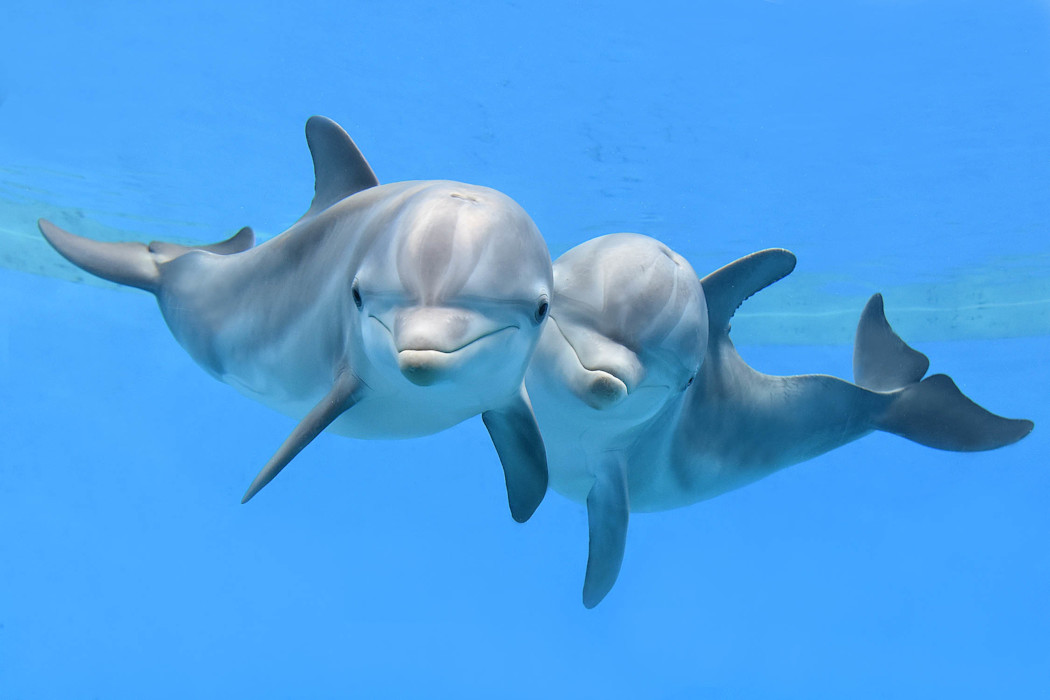
From practicing “feeding on the fly” to monitoring calf fetal development through ultrasounds, Brookfield Zoo Chicago’s preparations are well underway to welcome two bottlenose dolphin calves in the months ahead.
Moments after birth, a dolphin calf instinctively begins swimming toward the surface. There, it takes its first breath then gently dives back underwater to begin an extraordinary journey.
While it may be easy to celebrate a live birth as the conclusion of a long pregnancy, for dolphins, the first minutes, days, and weeks after birth are only the beginning. Dolphin development is full of remarkable firsts, major milestones, and uncertain outcomes. They must learn to swim and rest alongside mom, nurse while on the move, and navigate a complex social group.
Preparation for these milestones begins long before birth. Helping the baby begins with caring for mom.
At Brookfield Zoo Chicago, animal care and veterinary teams are supporting pregnant bottlenose dolphins Allison and Allie with specialized training and regular health monitoring—including weekly ultrasounds—as they expect calves this summer and winter, respectively. Though supporting the expectant mothers may look different based on the different stages of their journeys and their individual needs, Zoo veterinary and care teams always keep the big picture in mind. They work tirelessly to support healthy pregnancies, prepare the females for the challenges of newborn care, and learn as much as possible about a species that continues to inspire curiosity around the world.
Allison and Allie are preparing for the same milestone, but they are entering this season from different places. Allison has not had many opportunities to care for a newborn calf, while Allie is an experienced mother.
Preparing for Motherhood
For Allison, preparation focuses on reinforcing natural maternal behaviors while building familiarity with the routines she’ll rely on to care for a newborn calf. Through voluntary training sessions, she practices behaviors designed to mirror situations she may encounter in the months ahead.
These sessions are a little like a refresher course, helping her rebuild maternal skills. Navigating nursing, movement, and protection of a calf swimming by her side 24/7 will become easier with experience.
One of those behaviors is known as “feeding on the fly”—the ability to continue eating while swimming with her calf in tow. This skill is harder than it sounds, and it plays an important role in caring for a newborn calf.
“A newborn calf is constantly learning–and constantly swimming alongside mom,” said Mark Gonka, Director of Behavioral Husbandry and Interim Director of Marine Mammal Care and Conservation at Brookfield Zoo Chicago. “Feeding on the fly allows mom to get the nutrition she needs while keeping her calf safely in her wake as it learns important early-life behaviors. It’s one of the many ways we’re preparing both Allison and Allie for the realities of caring for a newborn.”
In a calf’s earliest weeks of life, mom and calf spend nearly every moment together. Calves travel alongside their mothers in a position called slipstreaming. This allows them to use mom’s movement to help conserve energy while building strength and coordination. Slipstreaming is one of the first developmental milestones calves reach as they build the confidence to navigate the habitat independently, interact with other dolphins, and adapt to a dynamic social structure. For mom, her ability to eat while swimming keeps the calf protected in her slipstream while it’s adapting and growing.
A Hopeful New Chapter
For Allie and her care team, the calf expected this winter carries special meaning.
The experienced mother lost a calf last year due to complications during birth. The calf inhaled meconium—a natural substance during birth—resulting in a sad outcome. It’s a complication even human births can encounter at times, but there’s no indication that the expected calf faces a similar risk. The loss was heartbreaking for the dedicated care team that supports Allie every day and for the community that rallied behind the Zoo in hopeful anticipation of the long-awaited calf’s arrival.
“There are times when everything goes exactly as planned and moments when outcomes are beyond our control,” said Dr. Jennifer Langan, Senior Staff Veterinarian and Director of Veterinary Education Programs at Brookfield Zoo Chicago. “Allie demonstrated strong maternal behaviors both during the birthing process and thereafter that were a good sign despite the early loss of her calf. We are hopeful that Allie will continue to do well as she enters her final trimester and through the postpartum period.”
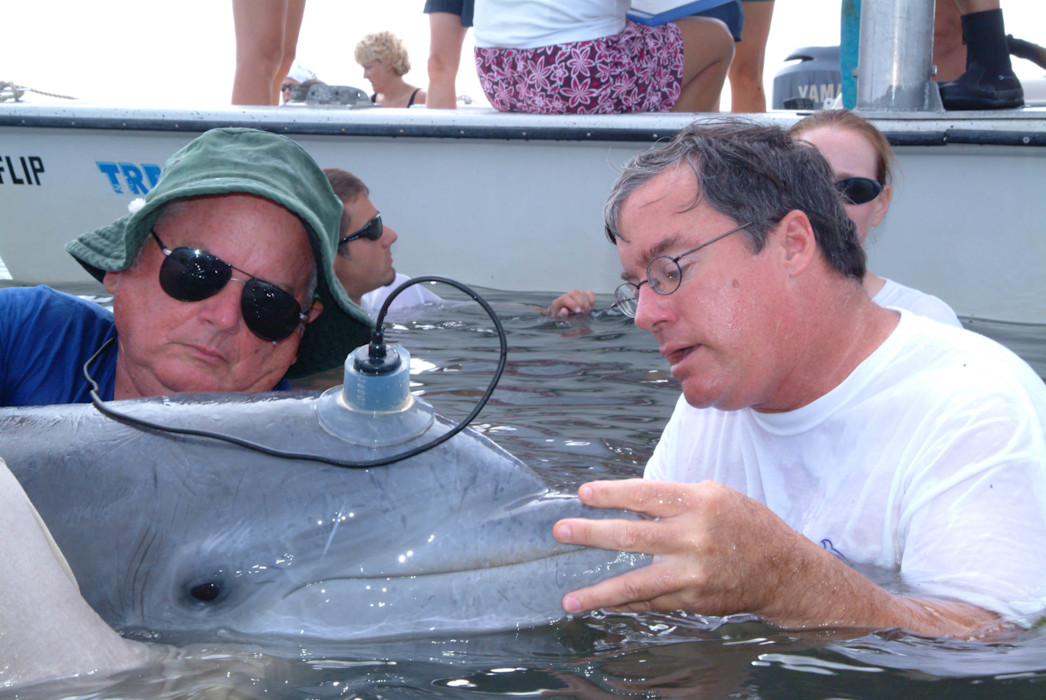
Through the trusted bonds and relationships built between her and the Zoo team, Allie participates in voluntary examinations, ultrasounds, and bloodwork. This willing participation offers her caregivers the ability to closely monitor both her health and the calf’s development.
Preparing for Dolphin Delivery
While much of the focus is on nurturing healthy pregnancies, the animal care team is also preparing for the hours and days immediately after birth.
“While we aim to avoid human intervention in the birthing process, it’s still an all-in effort for our animal care team,” said Gonka. “Every team member has a role to play, documenting milestones down to the second.”
As each dolphin approaches her anticipated delivery window, care team members will be onsite around the clock. Dolphin Bay’s underwater viewing offers the animal care team much-needed visibility on both mom and calf after birth. They’re closely watching for nursing attempts and signs of milk production while also documenting every breath the calf takes and how frequently those breaths occur. These interactions and milestones during the earliest stages of development provide another way for the team to understand care needs, both in the moment and for future births.
One of the newest additions to Dolphin Bay is a custom-engineered dolphin health platform that was part of a recent $10 million facility renovation. This hydraulic lift system allows animal care and veterinary teams to work alongside the dolphins in a shallow-water environment when needed. For moms and newborn calves, that flexibility could prove especially valuable if the need for emergency intervention arises.
This close monitoring, attention to detail, and adaptability demonstrates the steadfast care and support of the Zoo’s animal care and veterinary teams.
Every Dolphin Calf Teaches Us Something New
No two dolphin births unfold in exactly the same way. Each mother brings her own history, experience, and needs while each calf begins life at its own pace.
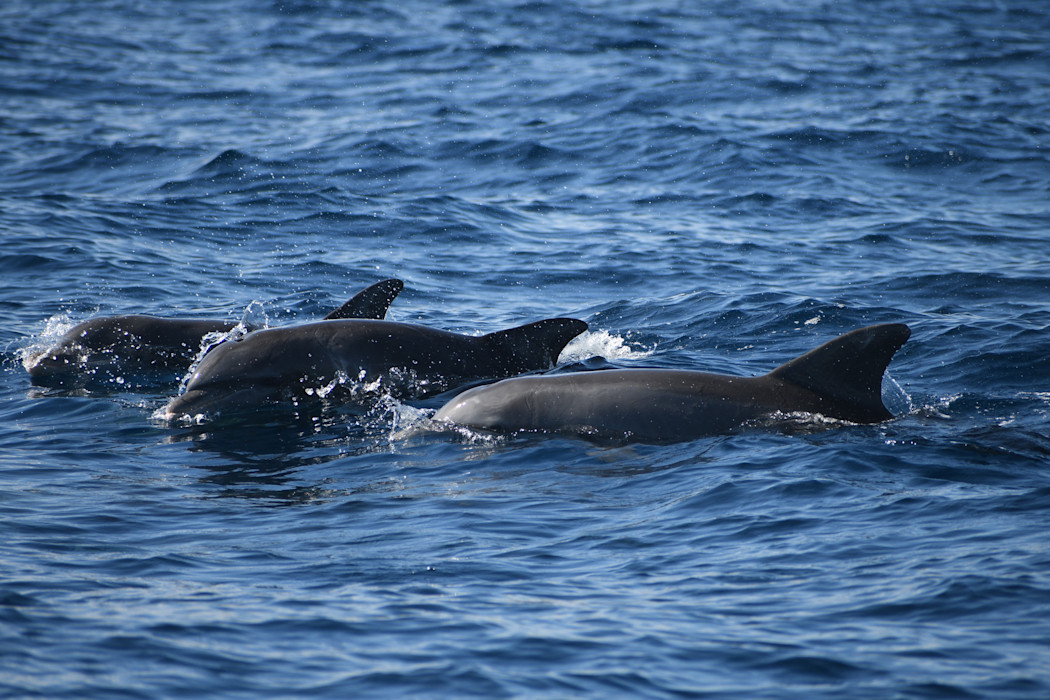
What the team learns from Allison and Allie will become part of decades of work to better understand bottlenose dolphin reproduction, maternal care, early calf development, and communications. Brookfield Zoo Chicago’s research on nursing behavior, together with its work through the Sarasota Dolphin Research Program (SDRP), helps connect what care teams observe at Dolphin Bay with what researchers are learning from dolphins in the wild.
That knowledge can shape how future mothers are prepared and how newborn calves are supported, giving teams what they need to recognize the earliest signs that a calf is doing well.
While there are still many unknowns, we do know that Allison and Allie are surrounded by people who know them closely, have prepared for a range of possibilities, and will be there for every moment leading up to and following the first breath.