Brookfield Zoo Chicago's veterinarians monitor animal hearts, big or small.
From humans to dolphins, all animals may face heart disease as they get older. Our board-certified veterinarians monitor hearts, big or small, all around the Zoo as part of preventative care.
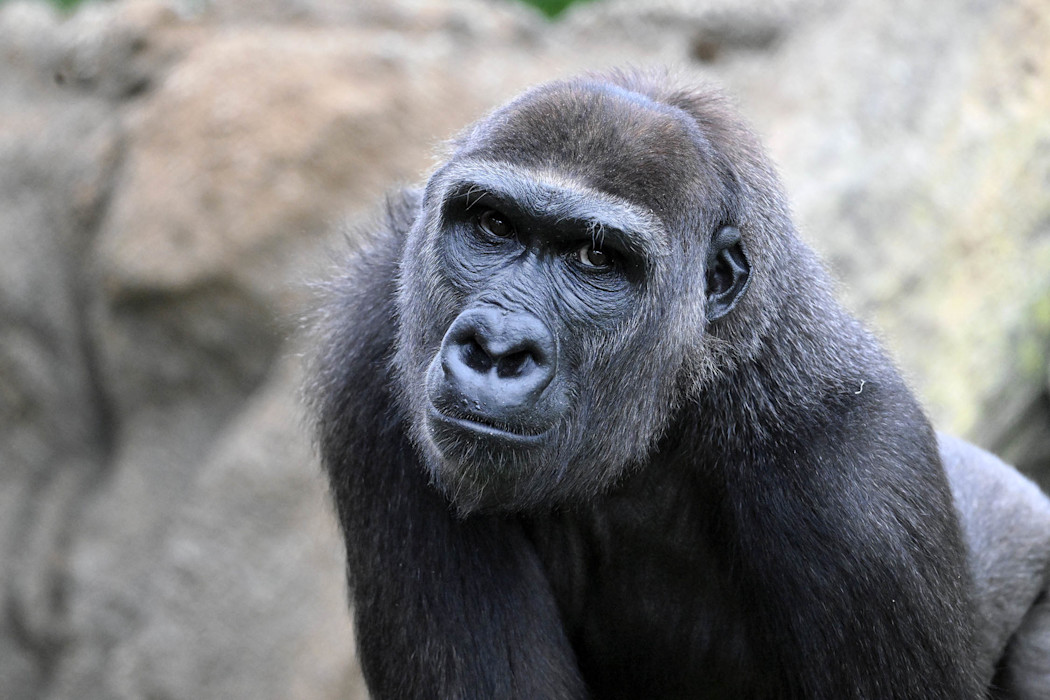
New facilities at Bramsen Tropical Forests allow care teams to begin training the gorillas to present their chests so that veterinarians can listen to their hearts. They’ve prepared electrolyte baths for an aging fire-bellied toad to treat heart arrhythmias. Even one of the oldest bats at the Zoo needed to have his blood pressure checked.
This health care is particularly important for geriatric animals who have had long lives and may be dealing with late-in-life health challenges. Whether it’s preventative care or treatment for existing conditions, we keep a close eye on the animals that have been with us for many years. We make sure they stay comfortable and have a high quality of life.
Geriatric Hearth Health Care for Tapeko
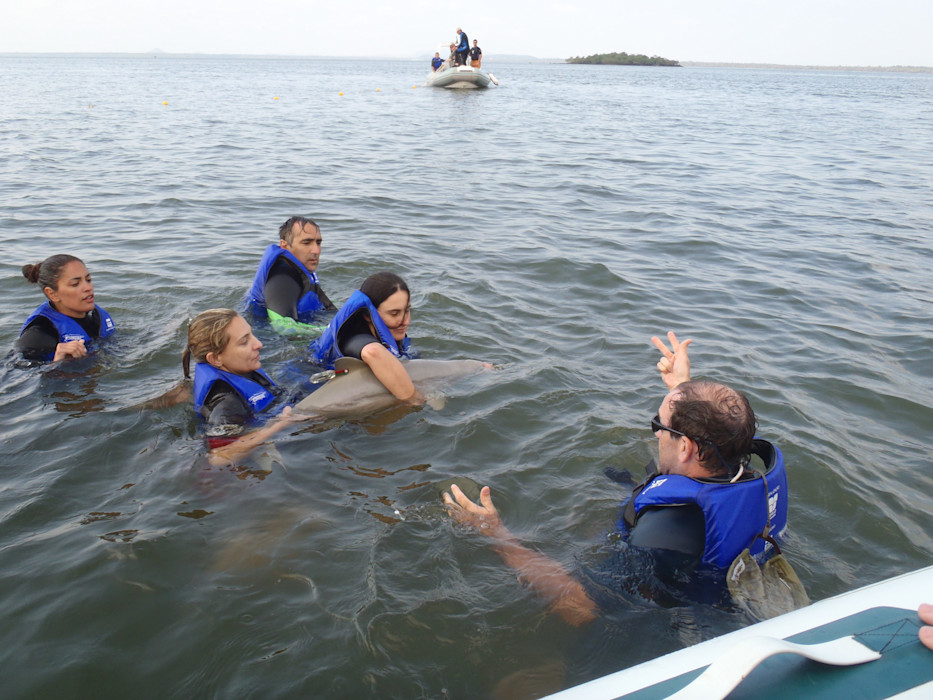
In Dolphin Bay, bottlenose dolphin Tapeko voluntarily floats with her belly facing Senior Veterinarian Dr. Jennifer Langan for an electrocardiogram (ECG) tracing. Since she trusts her care team, she lets them temporarily place two suction cups on either side of her chest. The ECG helps us record her heart’s electrical activity and provides an opportunity to monitor her heart rate and rhythm.
Tapeko is 44 years old, far surpassing a dolphin’s life expectancy of 28 to 29 years in professional care. In fact, she’s one of the oldest animals at the Zoo! As a part of her geriatric care, we monitor her heart, looking closely at everything from its chambers and valves to major arteries and veins.
Over the past few months, we’ve been keeping a particularly close eye on her after noticing some changes in the size and function of her heart. Using the expertise of veterinary cardiologists, ECGs, and our cardiac monitoring protocols, we’ve monitored her heart’s rhythm and electrical activity, which have begun to show signs of heart disease.
This detailed monitoring is possible for two reasons. First, our veterinarians have been a part of health assessments for free-ranging dolphins in Sarasota Bay alongside the Sarasota Dolphin Research Program (SDRP). They have been at the forefront of dolphin health alongside other marine mammal partners monitoring heart rate and breathing and doing in-water ultrasounds with wild dolphins. Few other wildlife veterinarians have had this opportunity.
Dolphin heart anatomy and physiology aren’t the same as humans’ or other animals’. Their hearts are shaped differently — a little closer to an actual heart shape — and they support very complex breathing physiology as the dolphin surfaces and dives. Though there’s still a lot to learn about dolphin heart disease, our experience and research have given us a deeper understanding of how to look at and listen to bottlenose dolphin hearts. Like a patient transferred to a hospital full of specialists for a challenging condition, Tapeko is in good hands with the best-of-the-best marine mammal veterinarians working together to care for her.
Second, many animals at the Zoo go through an enriching training program with our animal care team that provides the animals with the opportunity to participate in their own veterinary care. Without this, veterinarians would have fewer opportunities to identify geriatric health conditions before they progressed significantly.
All of this allows us to help care for Tapeko through old age, keep her comfortable, and best manage signs of geriatric decline. Unfortunately, even the very best doctors can’t slow the progression of age, and Tapeko’s heart is wearing out after a long life, just like a human’s might.
“Changes in heart function are often progressive. While we can manage some of the clinical signs and the progression of her disease, it is not reversible,” said Dr. Sathya Chinnadurai, Senior Vice President of Animal Health, Welfare & Science at Brookfield Zoo Chicago. “So we know that as we pay close attention to her comfort and her health, we will slowly start to see declines in her heart function.”
The Beating Heart of Dolphin Bay
Tapeko’s long life is a testament to the quality of her care. With veterinarians, partner cardiologists, and her beloved animal care staff surrounding her, she’s learned some unique skills.
Not every dolphin is patient enough to participate in the complex geriatric care that Tapeko has received. But she’s been at Brookfield Zoo Chicago for over 35 years. Through a close and trusted relationship, her animal care specialists and veterinarians have made her comfortable with participating in numerous behaviors that support her health care, from voluntary blood and urine collection to routine body temperature checks and ultrasounds.
Because of this, her veterinary team calls her a “model citizen” of Dolphin Bay. She pre-dates every current marine mammal staff member at the Zoo. Many of them have learned from her, sharpening their knowledge and skills to care for the rest of the dolphins.
“Tapeko has been a cornerstone in both making other animals comfortable and providing our staff with opportunities to learn about dolphin and marine mammal medicine,” said Langan.
Tapeko is also a matriarch of the habitat as mother to Noelani and Allison. She swam alongside them through the remodeling of Dolphin Bay and their trip to Minnesota Zoo, research projects, pregnancies and births, and so much more.
“Tapeko is a very special dolphin to me,” said Director of Behavioral Husbandry Mark Gonka. “She was actually the very first dolphin I had the pleasure of learning from when I first started my career at Brookfield Zoo Chicago back in 1998. She is a very patient and confident dolphin and is the glue that holds our dolphin group together. Every dolphin that has ever crossed paths with Tapeko ends up loving her.”
Her impact on dolphins and people alike has spanned the years, inspiring our staff and guests to care more deeply about her and her species. We have been honored to care for Tapeko, a strong heartbeat of Brookfield Zoo Chicago.
Advancing Hearth Health Care for All Animals
Tapeko is one of many well-loved geriatric animals at the Zoo. Her care is one example of how we monitor cardiac health and tailor preventative health care to a species. Other animals receive the same attention so that, like her, they can live long, healthy, and comfortable lives.
We work with specialized veterinary cardiologists to further advance our heart health care for a variety of species around the Zoo. Recently, Dr. Dana Buoscio, our primary cardiologist who has worked with the Zoo for over 10 years, visited to give the bachelor gorillas a cardiology exam. Like Tapeko, gorillas at the Zoo receive regular heart checkups. Thanks to our partnership with the Great Ape Heart Project (GAHP), we can draw on gorilla cardiology information from zoos around the world to help assess how the gorillas are doing. They are still strong and healthy, but our preventative care program will help us spot and respond to any health conditions as they appear in old age.
Our on-site veterinarians make this level of committed care possible. Whether it’s a one-ounce toad or a gorilla that weighs several hundred pounds, heart health is just as important in animals as it is in humans, and a critical part of how we proactively care for species throughout Brookfield Zoo Chicago.