The Sarasota Dolphin Research Program helps care for dolphins worldwide!
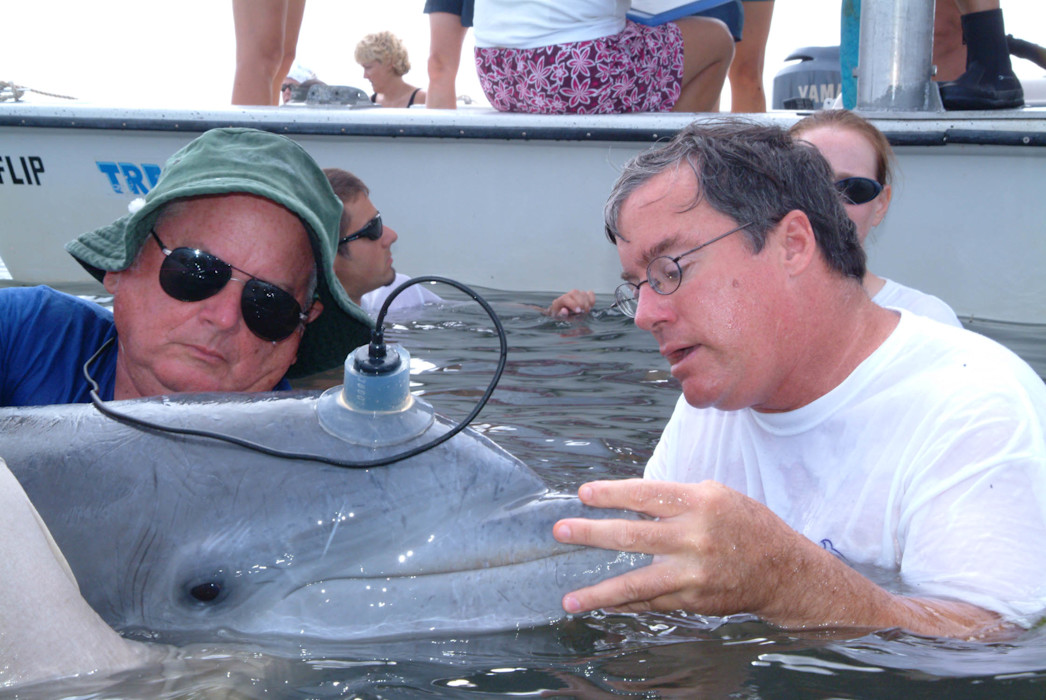
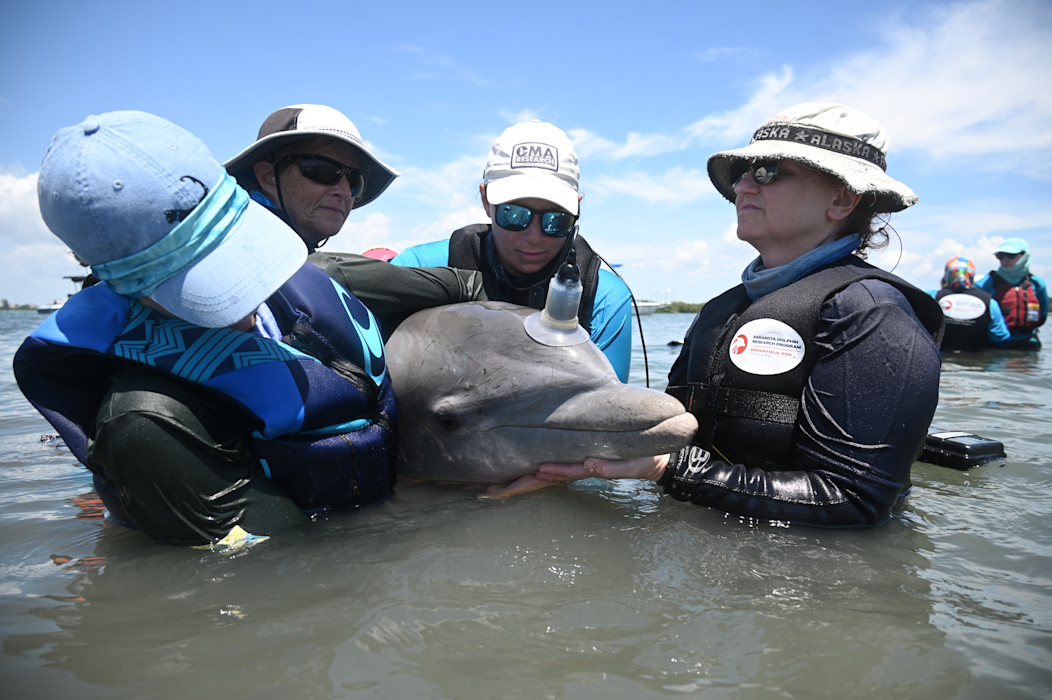
Brookfield Zoo Chicago’s Sarasota Dolphin Research Program (SDRP) is the world’s longest-running dolphin conservation research program. By studying a long-term resident community of dolphins in Sarasota Bay, Florida for more than 55 years, our research has charted paths across the globe. We don’t just help Sarasota’s bottlenose dolphins. We also support the care and conservation of dolphins and porpoises in many different countries.
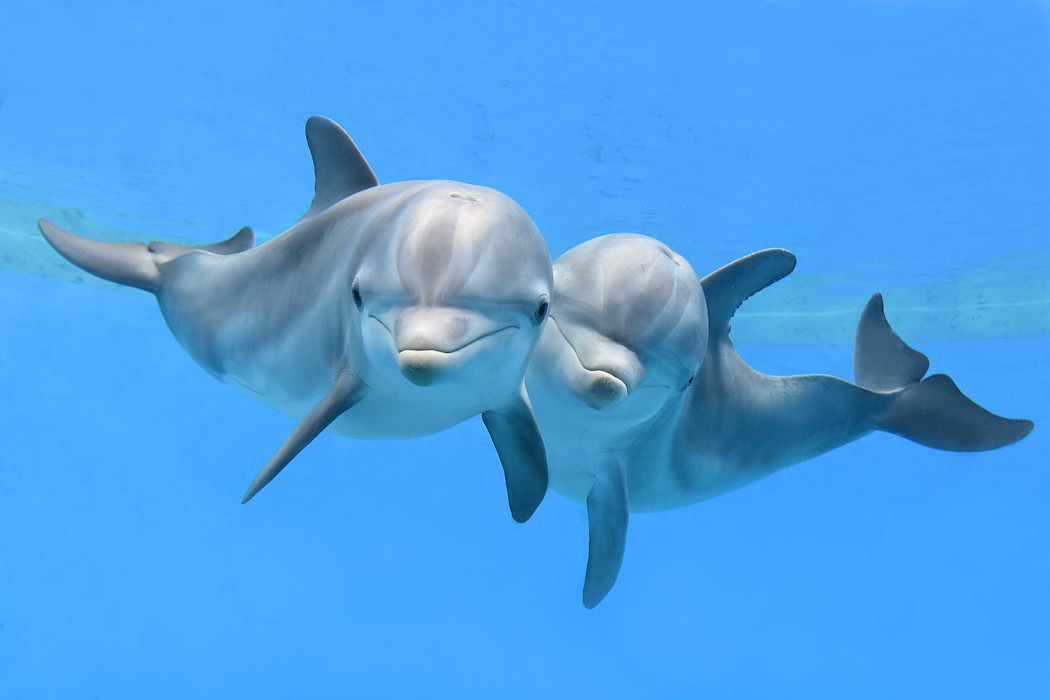
There are more than 40 dolphin and porpoise species in the world. They live in every ocean, tropical, temperate, and icy seas; coastal and open waters. Some species are found in freshwater rivers, and even lakes. 12 of these species — and even more subspecies and subpopulations — are listed as Endangered or Critically Endangered on the International Union for Conservation of Nature’s (IUCN) Red List.
Representatives from more than 50 countries have traveled to Sarasota for training and collaboration as we learn about the complexities of dolphin life and what it will take to save them. And together, SDRP and our partners have followed many of these species, endangered or otherwise, into the waters of the world to better know and care for them.
The Galápagos Islands, Ecuador
As a natural laboratory, Sarasota Bay is often a testing ground for new ways to study bottlenose dolphins (Tursiops truncatus). We're able to develop pioneering technology that supports researchers outside the Bay, too.
In 2026, SDRP Field Manager Aaron Barleycorn and Co-Founder and Director Emeritus Dr. Randy Wells traveled to the Galápagos Islands to help the Cetacea Galápagos Program tag bottlenose dolphins using our TADpole, a pole-mounted Tag Attachment Device. With this novel tool, developed in collaboration with Woods Hole Oceanographic Institution, we can attach satellite-linked tags to free-swimming dolphins surfacing at the bow of a boat, without the need to handle them.
Satellite telemetry involves tracking a tagged animal’s location, and in many cases documenting its dive patterns, from signals sent to satellites orbiting the Earth. This was the first time satellite telemetry was used with bottlenose dolphins in the Galápagos, and it was the first time we brought the TADpole out of the United States! These tags help scientists in the Galápagos understand where the dolphins are swimming and what habitats they use.
Over the past several years, Research Associate Kim Bassos-Hull and Senior Scientist and Program Manager Dr. Krystan Wilkinson have also taught researchers from the Galápagos Science Center how to use underwater acoustic tag tracking to study marine ray movements around the archipelago.
These cross-collaborative training opportunities between SDRP and our Galápagos partners have helped expand the application of these technologies in remote areas. When we bring our technology out of Sarasota Bay and train others to use it, we’re a part of making it possible for everyone to better understand dolphins, including ourselves!
Argentina and Brazil
The franciscana dolphin (Pontoporia blainvillei) is a small coastal and estuarine species struggling to survive along the coasts of Argentina, Brazil, and Uruguay. One of the most threatened cetaceans in the Southwestern Atlantic, they are often caught in gillnets and other fishing gear.
Gillnets are fixed walls of netting hanging in or drifting on the water. They’re a common danger to sea turtles and marine mammals, entangling them and making it difficult (or impossible) to breathe, eat, and move.
In 2003, SDRP began an ongoing relationship with the Argentina-based conservation organization AquaMarina. Franciscana dolphins don’t typically have the same distinctive markings as bottlenose dolphins, making it difficult to use photo identification to identify individual animals.
So we helped the AquaMarina team use radio and satellite-linked tags during 2005 to 2008 and 2010 to understand the franciscanas’ ranging patterns in Samborombón and San Blas Bays in Argentina. In 2011 and 2013, Brazilian researchers invited an SDRP team including Wells, Barleycorn, now-Director Dr. Katie McHugh, and Lab Manager and Senior Researcher Jason Allen, along with AquaMarina, to use satellite telemetry to learn about the movements of a small population of franciscanas threatened by harbor development in Babitonga Bay, Brazil.
Today, we know that the species has definable home ranges, and this knowledge helps with targeting threats to those areas. When conservationists understand threats to a species, we can work with surrounding communities to mitigate risk.
The Gulf of Ambracia, Greece
All dolphins have complex social behaviors and ranging patterns. But some dolphins stay in one place year-round, like Sarasota Bay, and others migrate. A huge part of SDRP’s research is tracking and defining those ranges and communities.
Across the Atlantic Ocean, another resident population of dolphins lives in the Gulf of Ambracia in western Greece. A group of scientists called the Ionian Dolphin Project (IDP) have come together to work under the Tethys Research Institute to study the dolphins in the Gulf.
The Gulf’s narrow opening to the Ionian Sea keeps it isolated and highly polluted. In 2023 and 2024, IDP invited Barleycorn to collect samples from the dolphins to assess environmental contaminant loads. By gathering biological samples, scientists and researchers can look closely at how dolphins are affected by their environment.
Over the years, SDRP has also supported IDP with advice on wildlife-friendly tourism campaigns. Studying each other’s dolphin neighbors prepares us to work with other resident populations as we learn from each other.
Bermuda Pedestal
More than 20 years ago, SDRP and Dolphin Quest began trying to understand the movements and dive patterns of bottlenose dolphins near the Bermuda Pedestal in the middle of the Atlantic Ocean.
By tagging the dolphins with satellite-linked transmitters during 2003, 2005, and 2016, we learned that they dive more than 3,000 feet down searching for food — a sharp contrast to the dolphins in the shallow waters of Sarasota Bay, who reach the bottom of the bay at less than 20 feet. We also found that some dolphins remained near Bermuda during tracking while others ranged widely through the Sargasso Sea.
To bolster our research and better understand the residency patterns near Bermuda, in 2015, SDRP, Dolphin Quest, and other partners also established the Bermuda Cetacean Sightings Project, a photo ID database. Sample Coordinator and Staff Researcher Robyn Allen oversees this effort.
Studying both inshore (close to shore) and offshore (deep sea) dolphins allows us to broaden our understanding of the factors driving dolphin behavior. Conservationists need to understand these factors to provide adequate protection to these animals.
While Sarasota’s dolphins live inshore, we’ve also studied bottlenose dolphins, Atlantic spotted dolphins (Stenella frontalis), and rough-toothed dolphins (Steno bredanensis) over the West Florida Shelf in the Gulf of Mexico, and spinner dolphins (Stenella longirostris) near the Hawaiian Islands.
Gulf of California, Mexico
While many cetacean species are struggling in the wild, none are so endangered as the small, dark-eyed vaquita (Phocoena sinus). There may be as few as 10 of these little porpoises left swimming in the northern Gulf of California, Mexico. Though they’re shy and evasive, that doesn’t keep them from getting caught in gillnets as illegal fishing takes over the Gulf.
Within a decade of SDRP’s beginnings, Wells was one of the first researchers to assess how the vaquitas were doing. Even back then, in 1979, the survey of the population’s numbers raised red flags.
SDRP joined a large collaborative international team in 2017 to try to bring vaquitas to a safer environment. The goal was to protect them until their habitat was free of gillnets. But the risk of transferring them proved to be too high, and the project was put aside.
Though we can’t save every dolphin or porpoise, we can continue to raise awareness. SDRP and other conservationists have learned a lot about protecting endangered marine mammals from their vaquita efforts. Hopefully, we can apply what we’ve discovered to save other species before their numbers drop dramatically.
In a continued effort to protect the species, Brookfield Zoo Chicago participates in the Association of Zoos and Aquariums’ (AZA) SAFE: Saving Animals From Extinction Vaquita program. The program’s primary goal is to work with Mexico to get rid of illegal gillnets and create sustainable fisheries.
The Mekong River, Cambodia
A small, remnant population of Critically Endangered Irrawaddy dolphins (Orcaella brevirostris) swim through a small section of the Mekong River in Cambodia just south of Laos. They are one of the few remaining freshwater populations of this species. They navigate strong currents and dodge gillnets and electro-fishing in a fight to survive.
Their numbers have declined, sometimes at a mysteriously fast rate — something SDRP has been a part of investigating since 2012. Along with participating in workshops and surveys on the river, Allen helped build the FinBase photo ID database specifically to monitor this population. Cambodian researchers have also come to Sarasota for training.
In 2025, Allen spent four days as a part of a group swimming 75 miles along the dolphins’ range, accompanied by a safety team in boats and kayaks. The relay is called the Dolphin Swim, and it raises funds for World Wildlife Fund Cambodia to support dolphin conservation.
The swimmers stopped in villages next to the river to connect with communities and raise awareness. The locals living alongside the Irrawaddy dolphins were excited about the swim. For many of them, the Irrawaddy dolphin is important to their culture and tourist economy.
Dolphin conservation is more than just research and innovative technology. It’s also about empathy. As the swimmers encountered challenges an Irrawaddy dolphin might face on the river, they connected more deeply with the endangered animal's struggles. Bringing that empathy to community is at the heart of SDRP’s work, no matter where we are in the world.
Photos by the Sarasota Dolphin Research Program of Brookfield Zoo Chicago, taken under NMFS/MMPA Scientific Research Permit