The James & Elizabeth Bramsen Tropical Forests turns one!
Help us celebrate opening one of the nation’s largest primate habitats by making the most of your visit.
Catch Primates Overhead
Like humans, primates value choice. Spanning nearly three acres, Bramsen Tropical Forests includes both indoor and outdoor spaces for primates. With habitats connected by overhead sky tunnels, they have options for where they want to spend their day.
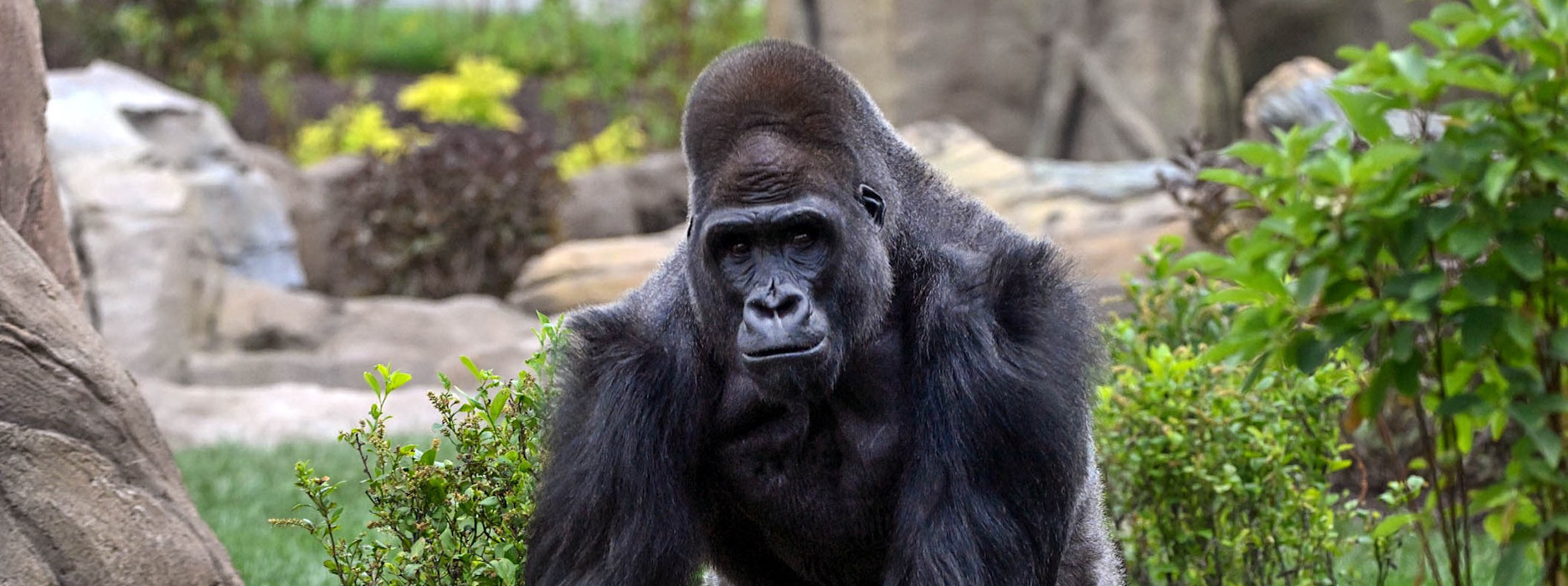
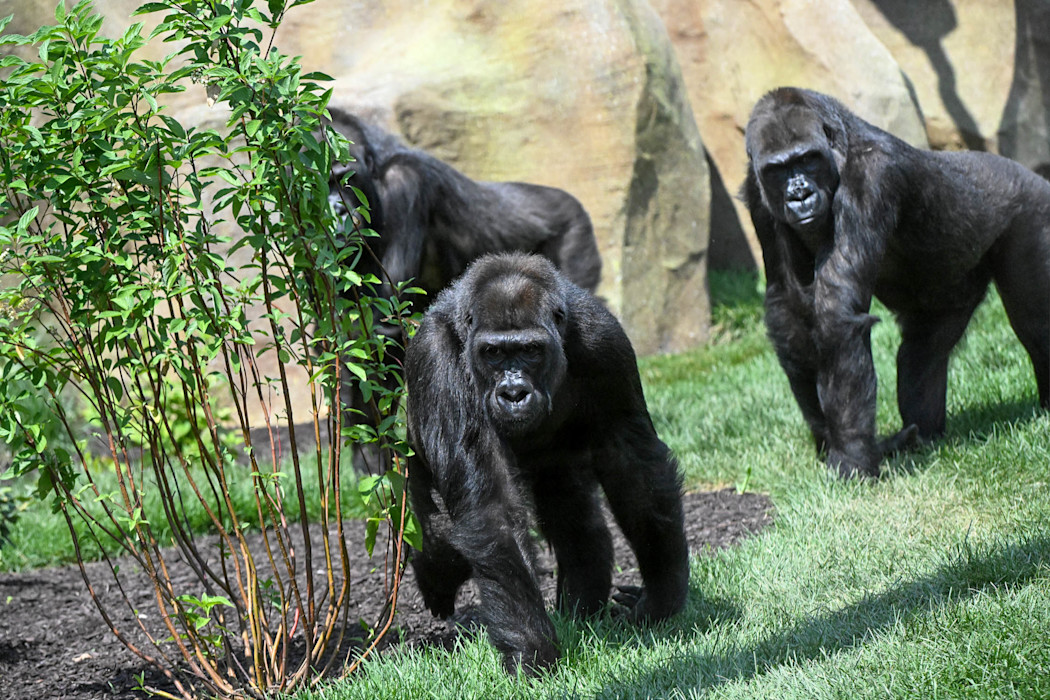
There will be days when the gorilla troop stays inside to avoid the weather, and other days, they might venture out to enjoy the sun and wind on their faces! Once they’re outside, they can also stay low on the ground or climb to a higher perch. If you don’t see any gorillas at first, try looking up. They may be munching lettuce right above you.
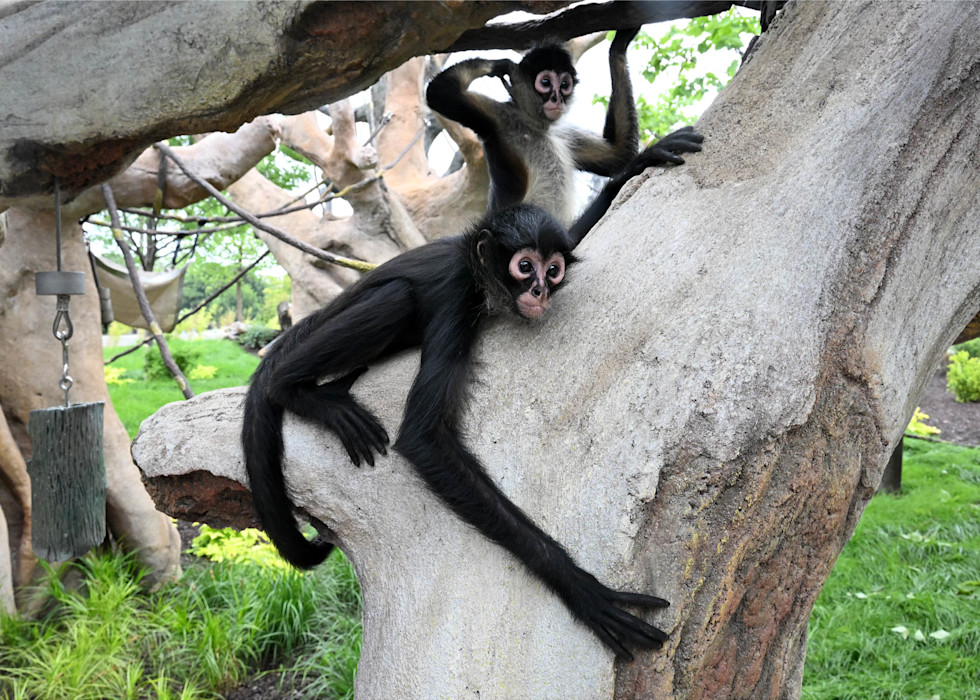
For the best chance to see primates moving through their sky tunnels, head to Bramsen Tropical Forests in the morning. The gorillas typically travel through their tunnels around 10:30 a.m. during a Zoo Chat with animal care specialists. You can also catch a spider monkey Zoo Chat at 2:30 p.m.
Get Up Close and Observe
One of the goals of Bramsen Tropical Forest is to connect guests with primates up close. Tunnels and panoramic windows allow you to see gorillas face-to-face — literally! You can spot the family troop grooming, playing, dozing, and more in their favorite spots. And you can’t miss the smell. Male silverback gorillas in particular can broadcast their presence with a strong odor. Like scientists and conservationists, you can observe natural behaviors closely to learn more about what primate life is like.
Be sure to stop by the tunnel that takes you inside the Asian ape habitat. The gibbons are playful and curious. They’ll likely head right up to the window to check you out!
Pretend to Be a Primate
Hands-on activities help you better understand primate behaviors and features. Test your strength against your favorite primate in a tug of war simulation, climb bamboo shoots outside the Asian ape habitat, and measure your hand against primate palms with an interactive sign. Every step of the way helps you imagine what it’s like to be a primate.
Learn How to Identify the Gorillas
Are you watching the bachelor brothers, or the family troop? Where is the male silverback of the family troop, Jontu, and what is he doing? Can you spot Binti, the oldest of the female gorillas? Primates have complex social dynamics, and knowing who you are looking at will help you better spot those complexities.
It’s easy to tell male gorillas apart from females – they are way bigger! If there are two bigger gorillas in one yard, that’s the bachelor troop. If there are more gorillas, it’s the family troop. But if you want to get more specific with the female gorillas, head to the windows along the farthest gorilla yard for a 3D modeled nose interactive. Researchers use unique nose patterns to identify gorillas in the wild, so you can, too, with a few tips and tricks.
Watch Animal Care in Action
One exciting feature of the Bramsen Tropical Forests is that our animal care specialists can now engage with the western lowland gorillas through mesh training panels outdoors, where you can see it! In exchange for their favorite pieces of fruit, the gorillas present their shoulders, feet, chests, and even tongues to animal care specialists.
These training sessions prepare the gorillas for veterinary visits and strengthen the bond between them and their care team, similar to how we might get ready for a doctor’s visit or prefer a familiar nurse or doctor. When an animal voluntarily shows their shoulder or opens their mouth, for example, it’s possible to give them a vaccination or brush their teeth. Not only do these trainings provide the gorillas with mental enrichment, but they also allow the primates to stay healthy and live longer in professional care.
If you see the training panels open, be sure to stop and watch animal care that usually happens behind the scenes.
Didn’t get to catch a training session? Watch President & CEO Dr. Mike help train Barney the gorilla on episode 1 of Wild Rounds with Dr. Mike.
Admire the Art
Bramsen Tropical Forests features one-of-a-kind art installations from local and global artists! Modernized replicas of the Zoo’s former wayfinding structures guide your path as you spot artistic accents throughout the space.
Stopping at the gorilla habitats, see a wire sculpture of a baby gorilla riding on its mother’s back created by the Snares to Wares Initiative. Based in Uganda, Snares to Wears transforms confiscated poaching snares into handcrafted wildlife sculptures. This program works with communities living near Murchison Falls National Park to support local income and reduce illegal hunting. The gorilla sculpture represents another aspect of our global conservation and the power of community to combat threats to wild animals.
Keep your eyes peeled for a hand-painted floor-to-ceiling leafy mural by Ortega Studios covering the interior walls of the Gorilla Conservation Center’s dayroom. It depicts a tropical rainforest, which is the natural habitat of western lowland gorillas.
Save Wild Gorilla Habitats by Recycling Cell Phones
Bring your old electronics, such as cell phones, to two Ecocell drop off stations located outside the gorilla habitats and in the Gorilla Conservation Center dayroom. Many electronics contain coltan, which is a mineral used to build smartphones and other devices. Coltan is incredibly rare and mainly mined in the natural habitat of endangered mountain gorillas.
That’s where Ecocell comes into play: they turn unwanted cell phones into funds for gorilla conservation. Recycling also reduces the need for mining in wildlife habitats. Recycle your phone at the Zoo to help protect wild gorillas!
Apply to Be a King Conservation Leadership Academy Science Scholar
Okay, not everyone can be a King Conservation Science Scholar – but high school students passionate about animals and conservation can apply! The King Conservation Leadership Academy education program is designed to give teens hands-on leadership experience while building their connection with nature.
Bramsen Tropical Forest’s Gorilla Conservation Center is now home to a dedicated classroom for King Scholars with state-of-the-art technology. It also arguably has the best view of any classroom with a balcony overlooking the gorilla habitat and its above ground terrace where the gorillas like to doze. It's the perfect new home for the conservation leaders of tomorrow, inspiring students as they learn how to care for our world together.
Come Back for a Chance to See Different Species
Several smaller primate species call Bramsen Tropical Forests and Tropic World home. As our outdoor primate habitats evolve, different species may explore or rotate through the yards. You might spot an Angolan colobus in the same habitat with the gorillas, or a red-tailed guenon swapping out with the gibbons. Keep coming back to see species interacting with new spaces — or even each other — throughout the seasons!
Help Us Keep Primates SAFE
Expanding our primate care and conservation through Bramsen Tropical Forests has allowed us to further invest in the Association of Zoos and Aquariums’ (AZA) SAFE: Saving Animals From Extinction programs. We are currently a part of SAFE Gorilla, Orangutan, and Colobus. These programs keep us connected with AZA partners and global conservation initiatives. Another part of participating in SAFE programs means offering guests opportunities to help us care for threatened species. As you connect with the primates, take action to protect their wild counterparts:
Download the PalmOilScan app and look for the FSC certified logo to support products and companies that use sustainably sourced palm oil. The palm oil industry threatens the survival of orangutans, gorillas, and other native species as their habitat is destroyed.
Learn about threats to endangered mountain gorillas in Rwanda with our Gorilla Trek virtual reality experience.
Plan ahead to recycle your electronics on your Zoo visits.