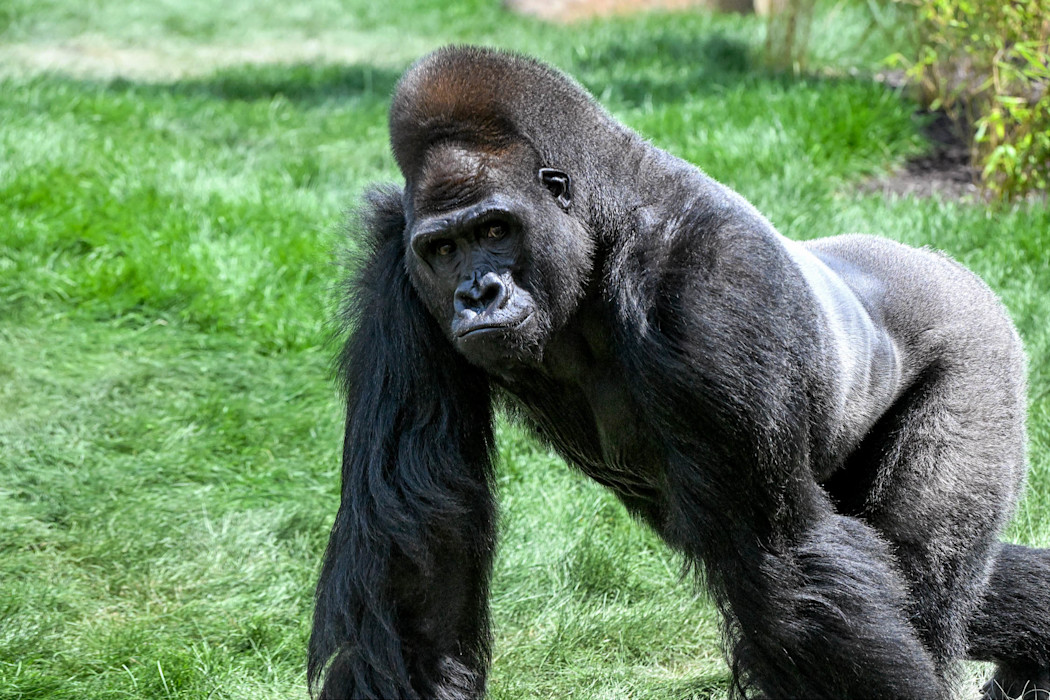
What is a gorilla bachelor troop? Learn about this unique social structure of all-male groups and meet Shango and Barney, the new Western lowland gorilla brothers at Brookfield Zoo Chicago.
The James & Elizabeth Bramsen Tropical Forests is officially ready for both animals and guests, and with it, the Zoo will introduce two newcomers — a pair of western lowland gorilla brothers named Shango and Barney! Coming from Zoo Miami, they form the Zoo’s first-ever bachelor troop.
Bramsen Tropical Forests has two distinct gorilla habitats: one for the bachelor troop and one for the family troop. In the wild, gorilla troops have their own home ranges and typically avoid contact with opposing troops to keep conflict at bay. This is why it’s important for Barney and Shango to have their own space at the Zoo!
What's the difference between a bachelor troop and a family troop?
Gorillas typically have two natural social structures: a family troop, made up of one dominant male gorilla and several female gorillas and their young, or a bachelor troop of only male gorillas.
When a male gorilla is born, he spends his early years learning from and playing with all members of the family, including his mother, other females and adolescents in the group, and the troop’s silverback. The adult male gorilla in charge, called a silverback, is draped in a distinctive saddle of pale hair across his back and serves as a family troop’s protector and leader.
Adolescence is an important time for young male gorillas, when they are called blackbacks. This is when they start developing the important social skills they will need to become a successful silverback. But as their social behavior changes, the troop’s silverback becomes less tolerant of them. This means it's time for the young male gorilla to head out.
In the wild, blackback males typically start to look for opportunities to leave the troop at around eight years old. Blackbacks will often form associations in the wild for protection and companionship until they are old enough to start their own family troops.
Bachelor Troops in Zoos
In zoos, the Assocation of Zoos and Aquariums’ (AZA) Species Survival Plan (SSP) carefully plans the movement between troops to keep the zoo population stable and genetically diverse. It also makes recommendations for social groupings, ensuring that male gorillas are given the opportunity to express species-typical behavior and maintain social bonds. While some males are chosen to create new family groups when they mature, others remain in bachelor troops well into adulthood.
Shango and Barney, for example, are full brothers. They have lived together their entire lives, and as a result they have a very strong bond with each other. They sit and rest together, eat near each other, and even play together.
What is a bachelor troop like?
Gorilla behavior can vary a lot from group to group and day to day.
Bachelor gorilla interactions often include aggressive behaviors that may be unfamiliar or even scary to us. But for male gorillas, these natural behaviors help them maintain social hierarchy. Posturing, loud or challenging noises, or even chest beating, throwing objects, and chasing are important tools for communication between bachelor gorillas.
Occasionally bachelor males will engage in physical fights, but these are typically brief. They may compete over new enrichment that they both receive, test the current dominance hierarchy, or even just play fight. Though these fights might look or sound alarming, they rarely result in any serious injuries.
All of these behaviors help bachelor gorillas assert their boundaries in the troop and build confidence with their fellow bachelors. When the bachelor gorillas know who is above and below them in the hierarchy, they understand their place in the troop. For silverbacks that eventually go on to lead a family troop, these interactions help them to gain the leadership skills they need to be successful in protecting their troop.
If you notice these behaviors in Shango and Barney, don’t worry — they are maintaining a healthy relationship in their own way!
What to expect when you visit Barney, Shango, and gorillas at the Zoo
Because gorillas — and particularly male gorillas — are very protective of their space, it’s important to be respectful of them when you visit. Remember, they are just moving in, and this is a big change for them! Just like it takes us time to adjust after a transition, the gorillas are still learning what it’s like to live in their new habitats. To be respectful of the gorillas’ territory at the Zoo, avoid slamming or tapping on the glass, and try to move around the space in a quiet and calm manner.
As the brothers settle into their new bachelor pad, they will be able to express species-typical behaviors and maintain the complex social bonds they have with each other. Healthy social behavior is essential for positive gorilla wellbeing, and Brookfield Zoo Chicago is honored to be able to give Shango and Barney a new home where they can thrive.